S006 / Industries/ 009 Research & Public Sector

009 / 011

Research & Public Sector

Turn your data into results the public can rely on.

Webisoft helps research organizations and public programs modernize how they manage data: collection and quality control, secure collaboration across institutions, open-data publishing, and grant and program reporting.

A senior, in-house team since 2016. SOC 2 Type II, AWS Partner.

In business since 2016AICPA SOC 2 Type II HIPAA compliantAWS PartnerGreat Place To Work Certified, Sep 2026 to Sep 2027, Canada
001/

Public sector

Research and public sector transformation

Important work stalls when the data lives in formats and tools that nobody can share or trust. Field data arrives in instrument files and spreadsheets, partners cannot access it, funders want reports in their format, and the dataset that supports a published result cannot be reproduced two years later. The science is sound. The data management is not.

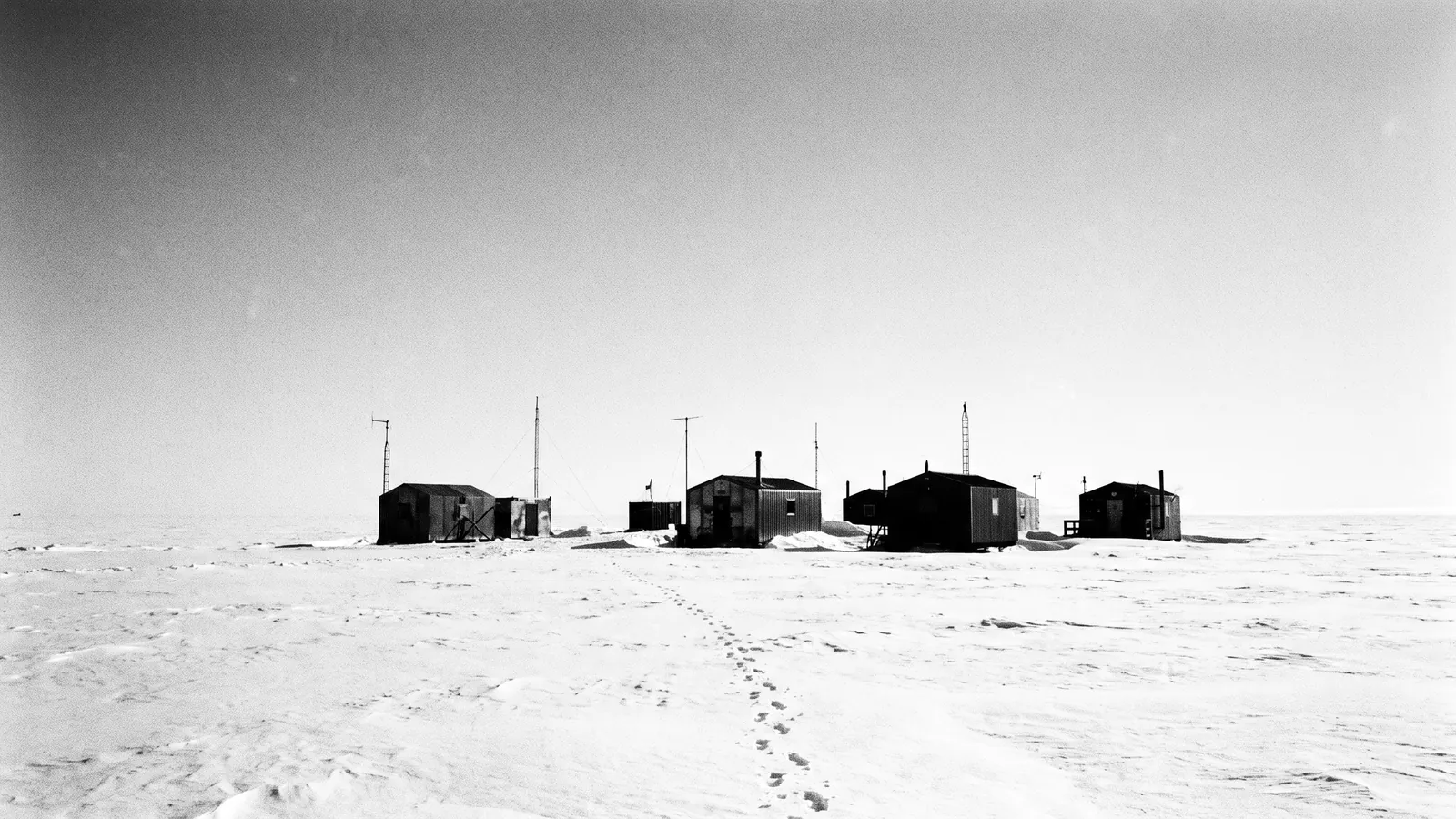
Our work in this sector includes production systems for a polar-research foundation.

Polar research station
002/

How

Data that is findable, shareable, and defensible

  1. One trusted dataset

    Data from instruments, field teams, and partner institutions collected into one platform with provenance, versioning, and quality flags. Every number traces back to the instrument, the station, and the processing step that produced it.

  2. Collaboration without email

    Partner institutions, principal investigators, and program staff work on the same data with access set per project and per role. Sharing is a permission, not an attachment.

  3. Reporting funders accept

    Grant reports, program indicators, and open-data releases generated from the platform in the formats your funding agencies and the public require.

003/

How we modernize research and public programs

We help research foundations, institutes, non-profits, and public programs modernize their data platforms, and we connect them to the instruments, repositories, and reporting systems they depend on.

Designed for organizations accountable to funders, partners, and the public.

  1. 01

    Data you can trust

    Collection, storage, metadata, versioning, and quality control for research and program data in open formats.

  2. 02

    Secure collaboration

    Shared workspaces, role-based access across institutions, embargoes, and audit trails for who changed what.

  3. 03

    Data the public can use

    Public portals, APIs, standard metadata, licences, and persistent identifiers such as DOIs for datasets.

  4. 04

    Reporting on time

    Indicators, outcomes, and financial reporting in the formats funding agencies and oversight bodies require.

  5. 05

    Connected systems

    Instruments and sensors, institutional and domain repositories, GIS, statistical tools, and federated identity.

004/

Services

Our services for research and public organizations

  1. /001

    Advisory

    A fractional CTO or technical review for organizations planning a data platform, a funding application, or a modernization. We audit the current data, tools, and data management plan, then leave your research director with a roadmap the organization owns.

  2. /002

    Data platforms

    Custom data platforms, collaboration tools, and the infrastructure behind them, built for data residency, long-term preservation, and accountability requirements.

  3. /003

    Digital services

    Public-facing portals, field data apps, and researcher tools from MVP to scale, built accessible and bilingual where your mandate requires it.

  4. /004

    AI and automation

    OCR on archival documents and field forms, automated data quality checks, classification of records, and assistants that answer questions from your own datasets with citations.

Methodology

Our transformation methodology

We run research and public sector projects on short cycles and prove each release with one program or one dataset before it goes organization-wide. You see it working on your own data before you commit to it. Here is how a typical project runs.

  1. 1

    Connect

    Talk, under NDA, with a team that has already modernized data platforms for research organizations.

  2. 2

    Estimate

    We map your data sources, partners, and reporting obligations, then give you a scoped estimate of timeline and cost that fits a grant or procurement cycle.

  3. 3

    Deliver

    Once you approve the scope, we deliver in short iterations and demo each one with your real datasets and users.

  4. 4

    Launch

    We migrate existing data with validation reports, pilot with one program or team, fix what researchers find, then roll out.

  5. 5

    Support

    We monitor integrations and infrastructure, maintain preservation and access policies, and keep improving the results.

Hiring models

Ways to engage our research and public sector team

(3)
  1. H/001

    Dedicated team

    A dedicated team assigned to your data platform, coordinated by a consultant who keeps delivery aligned with your research and reporting goals.

  2. H/002

    Team extension

    Add senior specialists who already know scientific data formats, metadata standards, and public-sector accessibility rules into your existing team, working on your process and tools.

  3. H/003

    Project-based

    We take the project end to end: discovery, delivery, integration, data migration, rollout, and support, with one project manager as your point of contact and deliverables mapped to your funding milestones.

007/

Research capabilities

Where we add value on research and public sector work

Research and public data has to be correct, attributable, and available long after the project that created it ends. These are the areas where our work goes deeper than a shared drive with a folder structure.
  1. Data ingestion and quality

    Pipelines that accept instrument files, field forms, partner submissions, and spreadsheets, validate them against schemas and ranges, and record provenance for every record. Bad data is quarantined with a reason, not silently accepted.
  2. Metadata and standards

    Standard metadata schemas, controlled vocabularies, and persistent identifiers applied at ingestion so datasets are findable, citable, and interoperable with repositories and open-data catalogs.
  3. Multi-institution access and governance

    Access per project, per partner, and per dataset with embargo periods, data-sharing agreements enforced in the platform, and audit logs that satisfy ethics boards and partner institutions.
  4. Field and remote data capture

    Mobile and tablet apps that capture observations and samples offline in remote locations and sync when a link returns, with GPS, photos, and chain-of-custody for physical samples.
  5. Open data and public portals

    Public portals and APIs for publishing datasets, maps, and dashboards, built accessible and bilingual, with download tracking and citation support so impact can be reported to funders.
  6. Grant and program reporting

    Outcome metrics, activity tracking, and financial data reported in the formats each funder requires, generated from the platform so a reporting deadline is an export rather than a month of assembly.

How we work

How a research and public sector engagement runs

(4)
  1. 1

    Data and stakeholder discovery

    We interview principal investigators, program staff, data managers, and partner institutions, and we inventory every data source, format, and reporting obligation. The output is a written architecture, a data model and metadata plan, an integration inventory, and a milestone-priced delivery plan sized to your funding cycle that the organization keeps.
  2. 2

    Ingestion and governance first

    We set up data ingestion, validation, and access control before the user-facing tools, because trust in the data is what everything else depends on. You review progress at each milestone with your real datasets in a staging environment.
  3. 3

    Migration, pilot, then rollout

    We migrate historical data with validation reports your data managers sign off on. We launch with one program or team with a support channel open, fix what researchers find, then roll out across the organization and its partners.
  4. 4

    Operate and preserve

    Post-launch we monitor pipelines and infrastructure, maintain preservation, backup, and access policies, and deliver improvements on a steady cadence. Your data managers get the admin tools and your institution holds the repositories, which matters when a funder asks how the platform outlives the grant.

Proof

We have delivered production systems for a polar-research foundation.

SOC 2 Type II / HIPAA / AWS Partner / Clutch 4.9/5

FAQ (012)

Research & Public Sector questions buyers ask us

001What is a data management plan, and what do funders require?

A data management plan describes how a project will collect, document, store, share, and preserve its data, and funders increasingly require one: the Tri-Agency Research Data Management Policy in Canada requires plans for certain funding opportunities from NSERC, SSHRC, and CIHR, and the NIH Data Management and Sharing Policy and NSF requirements do the same in the United States. The plan is only as good as the systems behind it, because reviewers now ask where the data went after the grant closed. A well-built platform implements the plan directly, with metadata captured at ingestion, access rules that match the plan, and preservation that outlasts the project.

002What are the FAIR principles, and what do they mean in practice?

FAIR stands for findable, accessible, interoperable, and reusable, and it describes what a dataset needs so that other researchers and machines can locate it, get to it under clear conditions, combine it with other data, and reuse it with confidence. In practice that means persistent identifiers, rich standard metadata, controlled vocabularies, open file formats, and explicit licences, and it does not mean everything must be open. A well-built platform assigns identifiers and metadata at ingestion rather than at publication, because retrofitting them later rarely happens.

003What is a research data repository, and should an organization build or use one?

Repositories are services that preserve and publish datasets with identifiers and metadata: general ones such as Zenodo and Dryad, national services such as Borealis and the Federated Research Data Repository in Canada, domain repositories such as the Polar Data Catalogue, and institutional repositories at universities. Most organizations should deposit in an existing repository for the published version and build only the working platform that produces it. A well-built working platform exports datasets and metadata in the repository's format and records the DOI it received, so the published record and the working data stay linked.

004What is Indigenous data sovereignty, and what does OCAP mean for a platform?

Indigenous data sovereignty is the right of Indigenous peoples to govern data about their communities, lands, and members. In Canada the First Nations principles of OCAP, standing for ownership, control, access, and possession, set out that First Nations own their information, control how it is used, decide who may access it, and may hold it physically, with related frameworks for Inuit and Metis research and the international CARE principles alongside FAIR. A well-built platform enforces these commitments in the system, with community-controlled access rules, agreed data locations, and audit logs, rather than relying on a policy document.
005What does grant and program reporting involve technically?

Each funder wants its own report: financial statements by budget category, milestones, outcome indicators, publications, and training numbers, on its own schedule and in its own template, and a project with several funders must allocate costs and outputs across them. Public programs add performance measurement frameworks and results reporting to oversight bodies. A well-built platform records activities, outputs, and spending against funder and budget codes as they happen, so a report is an export rather than a month of reconstruction.

006Which privacy and research ethics rules apply to data about people?

Research involving people in Canada generally requires research ethics board review under the Tri-Council Policy Statement, and in the United States institutional review board oversight under the Common Rule, with consent, de-identification, and secondary-use rules flowing from that review. Privacy law adds its own layer: the federal Privacy Act for federal institutions, provincial public-sector acts such as FIPPA in Ontario and Quebec's access-to-documents law, and PIPEDA or Law 25 for private organizations, sometimes with data-residency expectations. Confirm the regime with your ethics office and counsel; a well-built platform ties each dataset to its approved purposes and enforces access accordingly.

007What makes a dataset reproducible years after it was collected?

A reader must be able to get the exact version of the data behind a result, know which instrument, calibration, and processing code produced it, and open it without proprietary software. That takes versioned, immutable releases with checksums, provenance recorded for each processing step, open formats such as CSV, NetCDF, or GeoTIFF, metadata in standards such as ISO 19115 for geospatial data or DataCite for citation, and a persistent identifier for each release. A well-built platform makes a release a first-class object with its own identifier rather than a folder someone promised not to touch.

008How is instrument and sensor data handled from remote field sites?

Stations and instruments in the field produce files in formats such as NetCDF, HDF5, and vendor-specific logs, often sent over satellite links with little bandwidth or carried out on drives at the end of a season. Time synchronization, calibration metadata, and quality-control flags have to travel with the data, and most programs distinguish raw data from successive processed levels. A well-built pipeline ingests each format with validation, preserves the raw files untouched, and records every processing step that produced a higher level.

009Which accessibility and official-language obligations apply to public-facing portals?

In Canada, federal institutions fall under the Accessible Canada Act and the Official Languages Act, Ontario applies WCAG-based requirements under the AODA, and Quebec has its own government accessibility standards and French-language requirements. In the United States, Section 508 applies to federal agencies and a recent rule under ADA Title II sets WCAG 2.1 AA as the standard for state and local government web content. A well-built portal is tested against WCAG from the first template and manages bilingual content as structured data rather than as two copies of a site.

010What open-data and open-access obligations do funders and governments impose?

The Canadian federal granting agencies require open access to funded publications and encourage or require data deposit, Canada's open government directive requires federal departments to publish eligible data under an open licence, and the US Office of Science and Technology Policy has directed agencies to make federally funded research outputs publicly available. Each regime has exceptions for sensitive, personal, or Indigenous data and embargoes for data still in use. A well-built platform treats publication as a workflow with approval, licence selection, and identifier assignment, with restricted data staying restricted by rule rather than by habit.

011How is collaboration across institutions governed?

Multi-institution projects run on data-sharing agreements that define who may access what, when results may be published, and how embargoes and authorship work, with each institution bringing its own policies and identity systems. Federated login through academic identity federations and researcher identifiers such as ORCID avoids managing a separate account for every collaborator. A well-built platform encodes the agreement as access rules per project and dataset and logs every access so a partner institution can audit its own obligations.

012What does public procurement require from a software project, and how do you plan around it?

Public bodies and publicly funded organizations buy through tenders, standing offers, and grant-funded contracts that ask for security questionnaires, privacy impact assessments, accessibility conformance, insurance, data-residency commitments, and often ownership of the source code, with budgets tied to fiscal years and grant milestones. Timelines are set by the procurement calendar, not by the delivery plan. A well-planned project is scoped in phases that each deliver a usable result within one funding period and arrives with the compliance documents the procurement office will ask for.

Research & Public Sector

What would you improve first?

Costs, speed, revenue or hours of manual work. Tell us what matters most and we will show you how we would approach it.

  1. 001

    We read every request

    Someone who has worked in your sector, not a sales queue.

  2. 002

    We reply with a first view

    How we would approach it, and a time to talk.

  3. 003

    Scope under NDA

    We review what you run today and come back with scope, timeline and cost.

NDA available on request