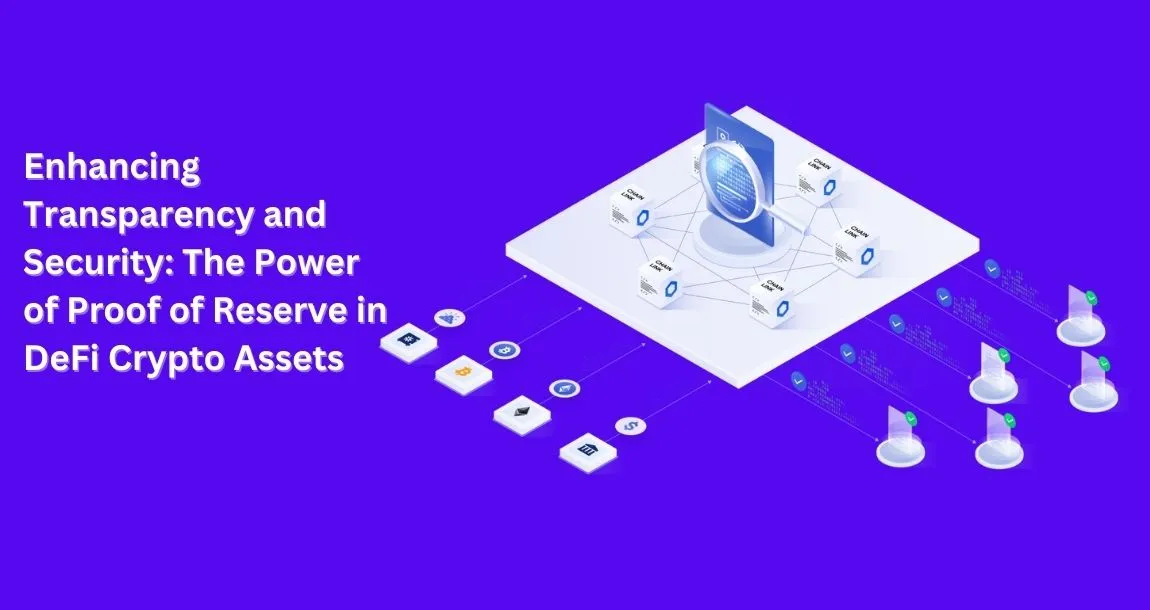
Centralized exchanges and custodial DeFi platforms hold billions of dollars in user deposits, and most of them operate as black boxes. Users transfer assets, see a balance on a dashboard, and have no independent way to confirm the platform actually holds what it owes. The collapse of FTX in November 2022, which left an estimated $8 billion shortfall in customer funds, showed exactly what that opacity can hide.
Proof of Reserve addresses the problem with evidence instead of promises: a cryptographic demonstration that customer liabilities are backed by real, verifiable assets. This guide covers what Proof of Reserve is, how the Merkle tree verification process works step by step, how audits are conducted, where the method falls short, and what implementing it on your own platform involves.
What is Proof of Reserve?
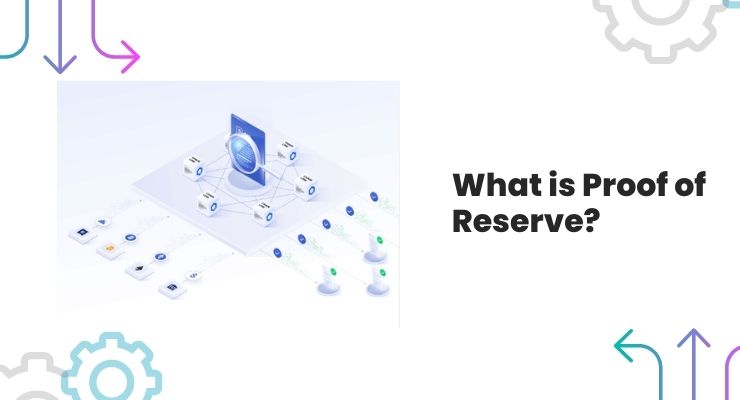
Proof of Reserve (PoR) is an attestation that a crypto custodian, exchange, or asset issuer holds enough assets on-chain to cover everything it owes its customers. The core claim is simple: verifiable reserves are greater than or equal to outstanding liabilities.
Proving that claim takes two separate exercises:
- Proving reserves: the platform demonstrates control of specific on-chain addresses, typically by signing a message with the corresponding private keys or moving a nominal amount at an agreed block height. The balances at those addresses are public, so anyone can sum them.
- Proving liabilities: the platform commits to a complete list of customer balances, usually as a Merkle tree, so the total owed can be compared against reserves without publishing every account in plain text.
A neutral third party, either an audit firm or an automated on-chain oracle, checks that the two sides match. When they do, users have cryptographic grounds to believe the platform is fully reserved rather than operating fractionally, lending out deposits, or masking a hole in its balance sheet.
This matters because custodial balances are not blockchain balances. When you deposit funds on an exchange, your account balance is a row in the operator's internal database. The chain shows what the operator holds in aggregate; it says nothing about whether those holdings cover the internal ledger. Proof of Reserve connects the two.
Why is Proof of Reserve Important for Custodied Assets?
To understand the risk PoR addresses, look at how custodial platforms actually manage deposits.
Exchanges pool user funds into omnibus wallets. A hot wallet layer stays connected to the network and services withdrawals, similar to the float a bank branch keeps in its tills. The bulk of deposits moves to cold storage: offline keys that shrink the attack surface for theft. Each user receives a deposit address, but the platform controls the keys behind every address, and assets shuttle between hot and cold storage based on liquidity needs.
The consequence is that on-chain analysis alone can tell you what a custodian holds, but never who owns what, or whether internal liabilities exceed those holdings. Nothing in this architecture technically prevents a platform from crediting users with balances it no longer fully backs. Proof of Reserve closes that gap by forcing the internal ledger into a verifiable form and reconciling it against on-chain assets.
Risks a Proof of Reserve Commitment Mitigates
- Misappropriation of deposits: customer assets that are silently lent out, staked, or used as trading collateral show up as a reserve shortfall the moment liabilities are reconciled against on-chain holdings.
- Withdrawal failures: a fully reserved platform can honor redemptions even during a run. Fractional operations fail precisely when withdrawal demand spikes, which is when users most need access.
- Late discovery of insolvency: regular reconciliation surfaces balance sheet holes early, while they are still small enough to fix, instead of after a collapse.
Attestations Versus Full Audits
Precision matters here. Most Proof of Reserve engagements are agreed-upon-procedures attestations, not full financial audits. The auditor verifies a defined set of facts at a specific block height: these addresses held these balances, and this Merkle root commits to these liabilities. A full audit would also examine off-chain debts, counterparty exposure, and internal controls. PoR is narrower, faster, and cheaper, which is why it can run monthly or even continuously, but it should be read for exactly what it is.
How Does a Proof of Reserve Audit Work?
The mechanics rest on one data structure: the Merkle tree. It is what lets a platform commit to millions of customer balances with a single hash, and what lets each customer verify their own inclusion without seeing anyone else's data.
Understanding the Merkle Tree Technique
A Merkle tree, named after cryptographer Ralph Merkle, is a hash tree. Each data record, in this case a customer's account identifier and balance, is hashed to form a leaf. Leaves are paired and hashed together, those results are paired and hashed again, and the process repeats until a single hash remains: the Merkle root.
Two properties make this useful for reserve audits:
- Tamper evidence: changing any leaf, even by one unit, changes every hash on the path above it and therefore the root. A published root is a binding commitment to the entire dataset.
- Efficient inclusion proofs: proving that a specific leaf belongs to the tree requires only the sibling hashes along its path to the root, a logarithmic number of hashes rather than the whole dataset. A tree with millions of leaves yields proofs of a few dozen hashes.
Merkle Trees in Blockchains
The same structure sits inside every major blockchain. Block headers in Bitcoin and Ethereum commit to their transactions through a Merkle root, which is how a light client can verify that a transaction is included in a block without downloading the full chain. Proof of Reserve applies the identical technique to an exchange's liability ledger.
Merkle Sum Trees: The Proof of Reserve Variant
A standard Merkle tree proves membership, but a reserve audit also needs the total. Proof of Reserve implementations therefore use a Merkle sum tree, in which each node carries both a hash and the sum of all balances beneath it. The root then commits to two things at once: the exact set of customer accounts and the total liability figure.
The sum tree also defends against a known manipulation: inserting fake accounts with negative balances to shrink apparent liabilities. Verification tools check that every node's balance is non-negative and that sums add up correctly at each level, so a negative entry anywhere breaks the proof.
How is a Proof of Reserve Audit Conducted?
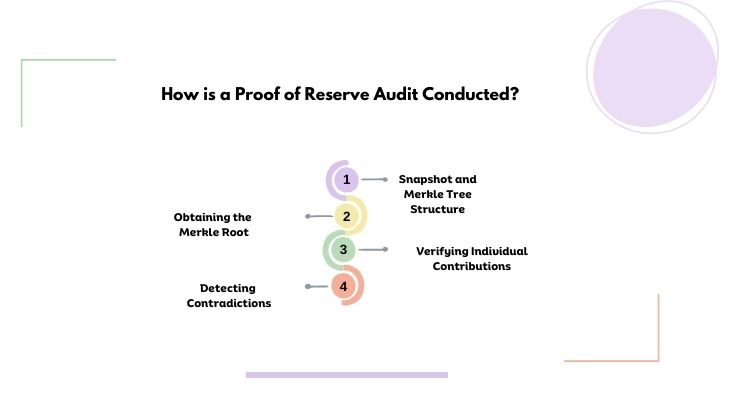
An independent auditor follows a repeatable sequence. Here is the process end to end.
1. Snapshot at a Fixed Block Height
The auditor freezes the picture at an agreed moment: a specific block height on each relevant chain, plus a simultaneous extract of the platform's internal balance ledger. Both sides of the comparison must refer to the same instant, otherwise ordinary deposit and withdrawal flow would create false discrepancies.
2. Verify Control of Reserve Addresses
The platform proves it controls the claimed reserve addresses, typically by signing an auditor-chosen message with each address's private key or by sending a prescribed transaction. The auditor then sums the balances at the verified addresses directly from the chain. Signature verification is the load-bearing step: a list of well-funded addresses proves nothing unless key control is demonstrated at the snapshot time.
3. Build the Liability Tree and Publish the Root
Every customer balance from the snapshot is hashed into a Merkle sum tree. Account identifiers are salted and hashed so the published tree does not expose customer identities. The auditor confirms the tree's total equals the internal ledger total, and the Merkle root is then published, often on-chain or on an audit portal, as the binding commitment.
4. Compare Reserves Against Liabilities
The verified on-chain reserve total is set against the liability total committed in the root, asset by asset. Full backing means reserves meet or exceed liabilities for each individual asset, not just in aggregate dollar terms, since a surplus of one token does not honor withdrawals of another.
5. Users Verify Their Own Inclusion
Each customer receives their leaf data and the sibling hashes on their path to the root. Recomputing the hashes up the tree and matching the published root confirms their balance was counted, at the correct amount, in the audited liabilities. This step is what separates PoR from a traditional audit: verification is distributed to the people with the strongest incentive to check.
6. Detecting Discrepancies
Manipulation has nowhere to hide. Understating a user's balance breaks that user's inclusion proof. Omitting accounts shrinks the liability total in a way the omitted users can detect the moment they try to verify. Overstating reserves fails at signature verification. Each check is independent, so falsifying the result requires defeating all of them at once.
Automated On-Chain Proof of Reserve
Point-in-time attestations are increasingly complemented by continuous, oracle-based verification. Chainlink Proof of Reserve feeds, for example, monitor the collateral behind wrapped tokens and stablecoins and publish reserve status on-chain. Smart contracts can consume the feed directly and halt minting or borrowing automatically if reserves fall below circulating supply, turning what used to be a monthly PDF into a programmatic safety control.
Advantages of Implementing Proof of Reserve
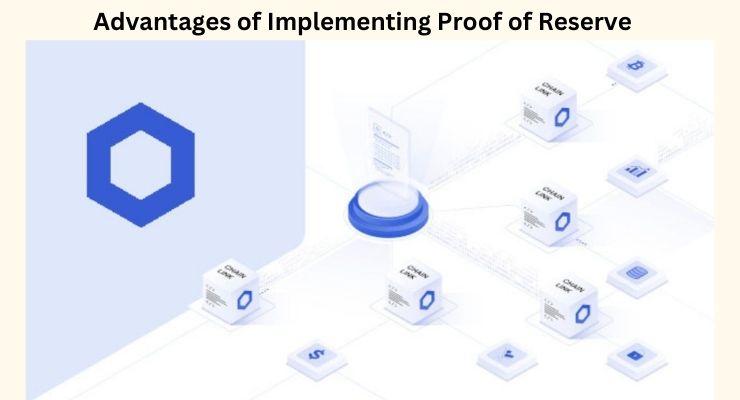
A Proof of Reserve program pays off on both sides of the custody relationship.
Benefits for Custodial Institutions
Restoring Trust
After repeated failures of custodial platforms, skepticism is the default posture of serious depositors. A recurring, independently verified PoR program is the strongest available signal that a platform holds what it owes, and it differentiates the platform from competitors who ask to be taken at their word.
Catching Internal Errors Early
Even honest operators accumulate reconciliation drift: bugs in accounting code, mishandled chain reorganizations, unrecorded fees. An external reconciliation against on-chain reality catches these errors before they compound, and the published trail makes tampering by insiders harder as well.
Regulatory Positioning
Regulators are converging on custody and disclosure requirements for crypto platforms across major jurisdictions. An operating PoR program with a documented audit trail puts a platform ahead of those requirements instead of scrambling to meet them later.
Benefits for Users
Confirmation of Proper Asset Handling
Users can verify, mathematically, that their balance is included in the platform's audited liabilities and that reserves cover the total. Trust shifts from the brand to the proof.
Due Diligence Before Depositing
Published audit history lets prospective users evaluate a platform's solvency posture before wiring in assets: how often attestations run, whether coverage is asset by asset, who the auditor is, and whether a self-service verifier exists.
Ongoing Accountability
A platform that publishes a Merkle root every month has committed itself publicly, on a schedule. Skipped or delayed attestations become a visible warning sign, giving users a leading indicator instead of finding out after withdrawals freeze.
Building Trust in Your DeFi Platform with Proof of Reserve Audits
DeFi's structural advantages, lower cost, fast settlement, and global access, only convert into deposits if users trust the platform holding their assets. Transparency mechanisms are becoming a baseline expectation, alongside features like DeFi staking that give users verifiable on-chain positions.
Regulators, investors, and end users are all asking the same question: can you prove you hold what you owe? Answering it credibly takes purpose-built software, not a periodic PDF.
How Webisoft Helps You Implement Proof of Reserve
Webisoft is a Montreal-based software and blockchain development company that builds custody and transparency infrastructure end to end, including:
- Merkle sum tree liability engines with per-user inclusion proofs
- Independent audit portals that publish full reports, roots, and methodology
- Self-service Merkle verifiers so customers can check their own balances
- Decentralized lending platforms, crypto wallets, exchanges, and DeFi platforms with reserve reporting designed in from the start
Why an Independently Hosted Audit Site Matters
Exchanges and custodians often run assurance work but keep the results internal, which wastes most of the trust value. An independently hosted audit site should give users:
- The full audit report, not just a summary badge
- The procedures the third-party auditor actually performed
- The published Merkle root for each attestation period
- Aggregate reserve and liability figures, per asset
Adding a Merkle Verifier for Customers
A self-service verifier moves users from reading about the audit to participating in it. The customer supplies or fetches their leaf data, the tool recomputes the hash path, and a match against the published root confirms their account and balance were included. Every user who verifies adds one more independent check on the platform's liabilities.
Concerns and Limitations of Proof of Reserves
Proof of Reserve is a solvency signal, not a guarantee. Anyone relying on it should understand where its coverage ends.
- Point-in-time only: an attestation proves the position at one block height. Assets can be borrowed just before the snapshot and returned just after, which is why frequency matters and why continuous oracle-based monitoring is stronger than a quarterly report.
- Liabilities can be incomplete: the proof covers the ledger the platform presents. Off-chain debts, loans, and obligations to non-customer creditors sit outside the tree, so a platform can pass PoR and still be insolvent overall.
- Key control is not exclusive ownership: signing from an address proves access to a key. It does not prove the assets are unencumbered, or that no other party holds the same key.
- Auditor trust remains: a colluding or negligent auditor undermines the process. Methodology disclosure and user-side verification limit this dependency but do not remove it.
- Privacy trade-offs: publishing balance data, even hashed, leaks distribution information. Newer schemes use zero-knowledge proofs to demonstrate solvency without revealing individual balances, and serious implementations are heading in that direction.
Despite the caveats, PoR is becoming the baseline disclosure standard for custodial crypto businesses. The practical position is to treat it as necessary but not sufficient: demand it, verify your own inclusion, and read what the attestation actually covers.
Final Words
Proof of Reserve gives users, regulators, and investors something custodial crypto has historically lacked: a way to check claims instead of trusting them. A well-built program combines verified on-chain reserves, a Merkle sum tree of liabilities, per-user inclusion proofs, and an independently hosted portal where anyone can inspect the results.
Regular attestations keep the signal current, and automated on-chain feeds close the gaps between them. Platforms that adopt full reserve transparency protect themselves from the failure modes that have taken down their competitors, and they earn deposits from the skeptical users those failures created.
If you are planning a Proof of Reserve implementation for your exchange or DeFi platform, contact Webisoft. Our team builds the full stack: liability engines, audit portals, Merkle verifiers, and the platform itself.
Monthly is a reasonable minimum for exchanges and custodians, because infrequent snapshots leave room to borrow assets around the audit date. Asset issuers such as stablecoin or wrapped-token projects increasingly use continuous on-chain oracle feeds that check collateral on an ongoing basis and can halt minting automatically if reserves fall short.
Proof of Reserve is a narrow attestation performed at a specific block height: it verifies that on-chain assets under the platform's control cover the customer liabilities committed in a Merkle tree. A full financial audit goes further, examining off-chain debts, counterparty exposure, and internal controls. PoR is faster and can run monthly or continuously, but it does not replace a complete audit.
The platform gives you your leaf data (a hashed record of your account and balance) plus the sibling hashes along your path to the Merkle root. You, or a verifier tool, recompute the hashes up the tree. If the result matches the published root, your balance was included in the audited liabilities at the correct amount.
A Merkle sum tree is a hash tree in which every node carries both a hash and the sum of all balances beneath it. The root therefore commits to the exact set of customer accounts and the total liability figure at the same time. It also defeats a known manipulation: fake accounts with negative balances break the proof because verification checks that every node's sum is non-negative and adds up correctly.
No. PoR proves reserves covered the presented liabilities at one moment in time. It does not capture off-chain debts, assets borrowed just for the snapshot, or encumbrances on the reserve addresses. Treat it as necessary but not sufficient: a strong positive signal, especially when run frequently, but not a blanket solvency guarantee.