Key takeaways
- Artificial Intelligence is technology that lets machines learn, think, and make decisions the way humans do, recognizing patterns and improving performance over time.
- AI works by analyzing large amounts of information, learning from past outcomes, and using those insights to act more accurately in the future.
- Everyday examples include voice assistants responding to commands and apps recommending content based on your data.
- AI is built to support humans rather than replace them, making tasks faster, smarter, and more efficient.
- This beginner friendly speech explains AI basics in plain language, covering what AI is, why it matters, and its growing role across industries.
Artificial Intelligence is reshaping our world, yet many people still struggle to understand what it truly is and why it matters. This Speech on Artificial Intelligence simplifies the topic for beginners by offering the basics of artificial intelligence explained in clear, everyday language.
Whether you need a simple speech on artificial intelligence for school or want to grasp the importance of artificial intelligence in modern life, this speech provides an easy and engaging introduction to AI, its impact, and its growing role across industries.
What Is Artificial Intelligence?
Artificial Intelligence is the technology that enables machines to learn, think, and make decisions the way humans do. In this Speech on Artificial Intelligence, it's important to understand that AI allows computers to recognize patterns, process information, and improve their performance over time.
This makes AI capable of tasks such as understanding language, identifying objects, solving problems, and offering recommendations based on data. At its core, AI works by analyzing large amounts of information, learning from past outcomes, and using those insights to act more accurately in the future.
When you see voice assistants respond to commands or apps suggest content you might like, you are witnessing the basics of artificial intelligence explained in everyday life. These technologies are built to support humans rather than replace them, providing tools that make tasks faster, smarter, and more efficient.
For beginners, this introduction offers understanding AI for beginners in a simple and approachable way, setting the foundation for exploring why AI matters and how it shapes the world around us.
Importance of Artificial Intelligence in Today's World
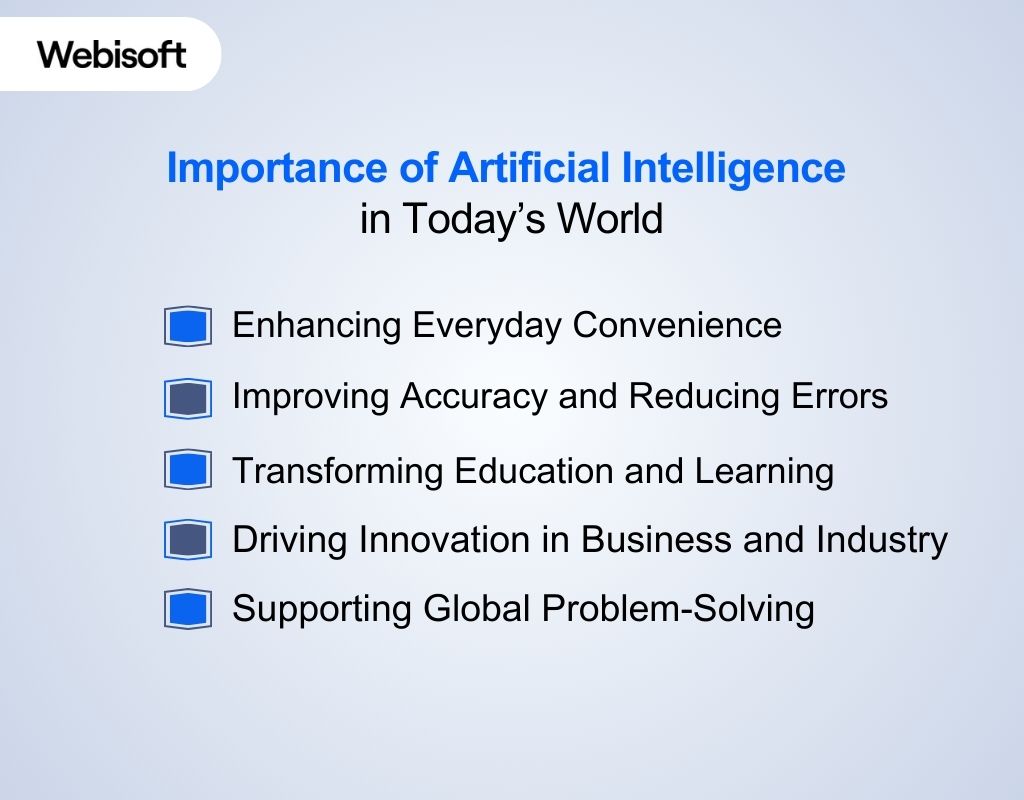
Artificial Intelligence has become essential in shaping how industries operate and how people interact with technology. In this Speech on Artificial Intelligence, understanding its rising influence helps show why AI is one of the most important innovations of our time.
The importance of artificial intelligence becomes clear when we explore how it enhances efficiency, accuracy, and decision-making across different areas of life.
Enhancing Everyday Convenience
AI powers many of the tools we rely on daily, from voice assistants and recommendation systems to navigation apps and smart home devices. These systems make everyday tasks faster, simpler, and more intuitive by learning from our behavior and adapting to our needs.
Improving Accuracy and Reducing Errors
AI systems analyze large amounts of data with precision, helping reduce human error in activities like medical diagnosis, fraud detection, climate monitoring, and quality inspection. This accuracy supports safer and more reliable outcomes across critical fields.
Transforming Education and Learning
AI strengthens education by offering personalized learning tools, automated assessments, and intelligent tutoring systems. It supports both students and teachers by identifying learning gaps and providing tailored solutions.
Driving Innovation in Business and Industry
Companies use AI to forecast trends, automate workflows, and improve customer support. By simplifying complex tasks and offering real-time insights, AI helps organizations make smarter decisions and stay competitive in a fast-changing world.
To fully realize these advantages, many organizations turn to generative ai consulting to design, implement, and scale intelligent solutions tailored to their specific needs. These services help businesses go beyond basic automation by leveraging generative models for content creation, decision support, and process optimization, while ensuring seamless integration with existing systems.
From generating personalized customer interactions to enhancing analytics and automating complex workflows, expert consulting enables companies to transform AI capabilities into practical, high-impact applications that drive growth and operational efficiency.
Supporting Global Problem-Solving
AI contributes to solving global challenges, such as detecting health outbreaks, modeling climate patterns, improving crop yields, and assisting disaster response. Its ability to process information quickly makes it a powerful tool for addressing large-scale issues.
Applications of Artificial Intelligence Across Different Sectors
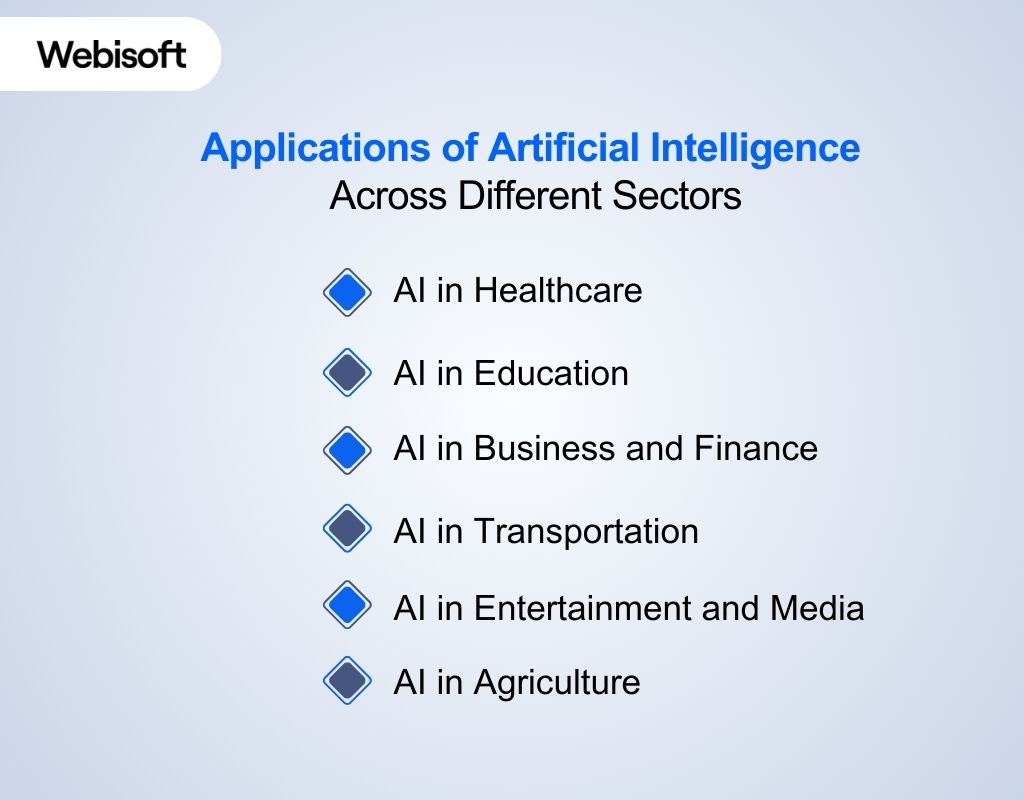
Artificial Intelligence plays a major role in shaping industries and improving how organizations operate.
In this Speech on Artificial Intelligence, it's important to highlight how AI is used in real-world scenarios, because these examples show the applications of artificial intelligence in ways anyone can understand. From simplifying daily activities to transforming complex industries, AI has become a core part of modern progress.
AI in Healthcare
AI supports doctors by analyzing medical images, predicting diseases, and helping with treatment planning. It improves accuracy and speeds up diagnosis, allowing medical teams to deliver better care. Virtual assistants, health monitoring systems, and automated record-keeping also enhance patient experience.
AI in Education
AI helps students learn at their own pace through personalized tools, smart tutoring systems, and automated assessments. Teachers benefit from AI systems that track student progress and offer insights into learning gaps. These tools make education more adaptive and effective.
AI in Business and Finance
Companies use AI to forecast trends, automate customer support, detect fraud, and analyze data faster than humans can. Chatbots, recommendation systems, and automated workflows showcase the uses of artificial intelligence speech when speaking about efficiency and customer satisfaction.
AI in Transportation
From smart traffic systems to self-driving technology, AI makes transportation safer and more efficient. It helps reduce congestion, predicts maintenance needs, and guides navigation apps to select optimal routes.
AI in Entertainment and Media
Streaming platforms use AI to recommend movies and music based on personal preferences. Content creators also rely on AI tools for editing, production, and analytics, making entertainment more personalized and engaging.
AI in Agriculture
AI monitors soil conditions, weather patterns, and crop health to help farmers make better decisions. Automated irrigation systems, drones, and yield predictions improve productivity and sustainability.
AI is transforming industries faster than ever, and adopting the right solutions early can help businesses stay ahead. Organizations looking to harness these capabilities can benefit from AI development services to explore how advanced technology can elevate their operations.
Benefits of Artificial Intelligence for Society and Industry
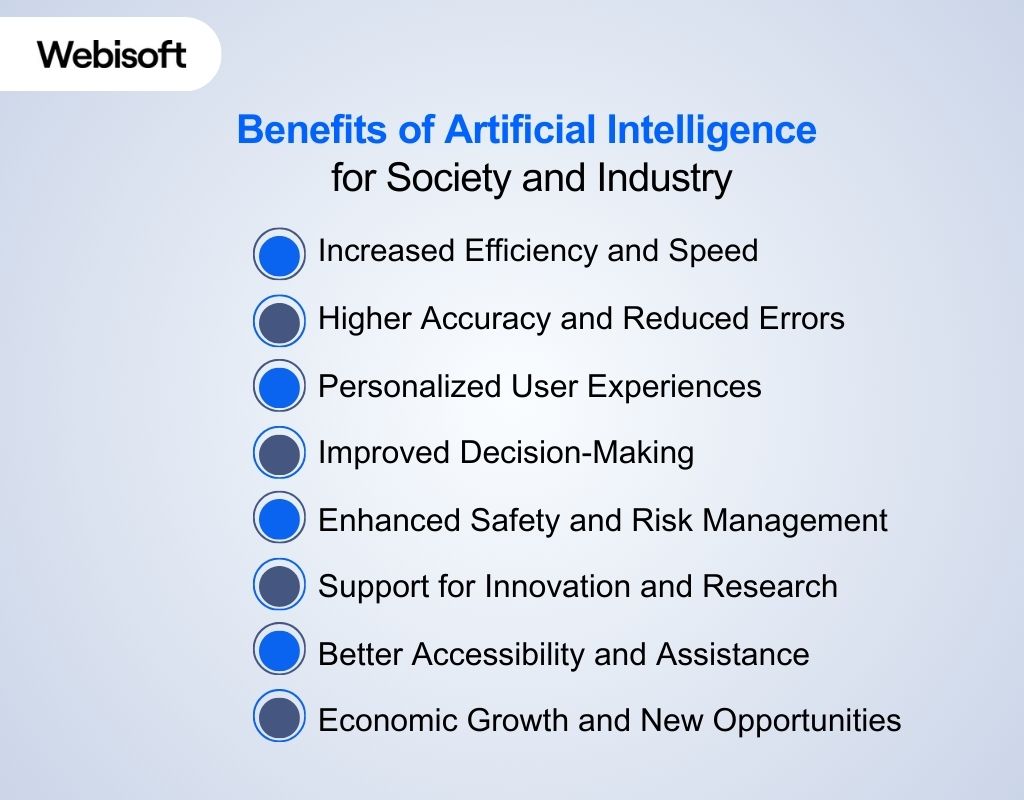
AI brings a wide range of advantages that shape how individuals, businesses, and entire systems operate. In this Speech on Artificial Intelligence, exploring these benefits helps audiences understand why AI has become one of the most influential technologies of our time. These points reflect the common themes found in a clear and meaningful benefits of artificial intelligence speech.
Increased Efficiency and Speed
AI completes repetitive tasks quickly, manages large volumes of data, and supports operations that would take humans much longer to handle. This frees people to focus on creative and strategic work.
Higher Accuracy and Reduced Errors
Automation powered by AI minimizes mistakes in areas such as healthcare, finance, transportation, and data entry. Machines excel at consistency, making processes more reliable.
Personalized User Experiences
From streaming platforms to online shopping, AI helps tailor suggestions based on individual preferences, creating more relevant and enjoyable digital experiences.
Improved Decision-Making
AI analyzes patterns, trends, and data relationships humans might miss. This leads to better predictions, stronger insights, and smarter decisions across industries.
Enhanced Safety and Risk Management
AI detects fraud, monitors security systems, and identifies threats faster than manual methods. These capabilities increase safety in critical environments.
Support for Innovation and Research
In fields like medicine, engineering, and climate science, AI accelerates research by running simulations, analyzing complex datasets, and helping experts discover solutions faster.
Better Accessibility and Assistance
AI tools such as speech recognition, language translation, and virtual assistants make technology more accessible to people with disabilities, improving communication and independence.
Economic Growth and New Opportunities
AI contributes to job creation in emerging fields, supports entrepreneurship, and enables new business models. It helps societies advance technologically and economically.
How AI Works: A Simple Explanation for Beginners
Artificial Intelligence becomes easier to understand when we break it down into simple concepts. In this Speech on Artificial Intelligence, this section presents the basics of artificial intelligence explained clearly by covering how AI is classified, how it learns, and how it processes information.
These ideas offera meaningful understanding AI for beginners, showing how machines think, learn, and solve problems.
Types of Artificial Intelligence
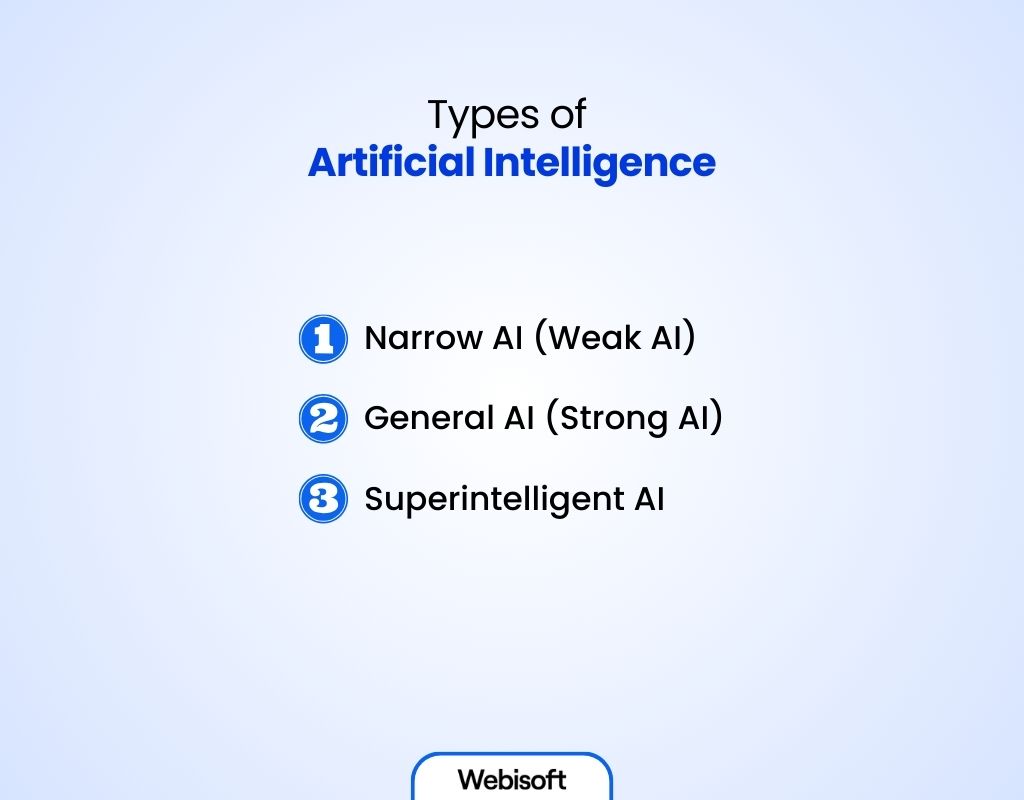
AI is grouped into different types based on how capable or advanced the system is. These categories help us understand where today's technology stands and what future systems aim to achieve.
-
Narrow AI (Weak AI)
Narrow AI focuses on performing one specific task extremely well, such as recognizing faces, suggesting movies, or filtering emails. These systems cannot think beyond their programmed purpose, but they power most of the AI used in everyday life. Voice assistants and recommendation algorithms are common examples of narrow AI.
-
General AI (Strong AI)
General AI would be capable of thinking, learning, and making decisions at the same level as a human across any domain. This kind of AI does not yet exist, but researchers continue working toward systems that can reason, problem-solve, and adapt the way people do. It represents a major goal in the evolution of intelligence.
-
Superintelligent AI
Superintelligent AI refers to a hypothetical form of AI that surpasses human intelligence in all areas, from creativity to reasoning. While it is still theoretical, it raises important discussions about ethics, safety, and the future relationship between humans and machines.
Key Subfields of Artificial Intelligence
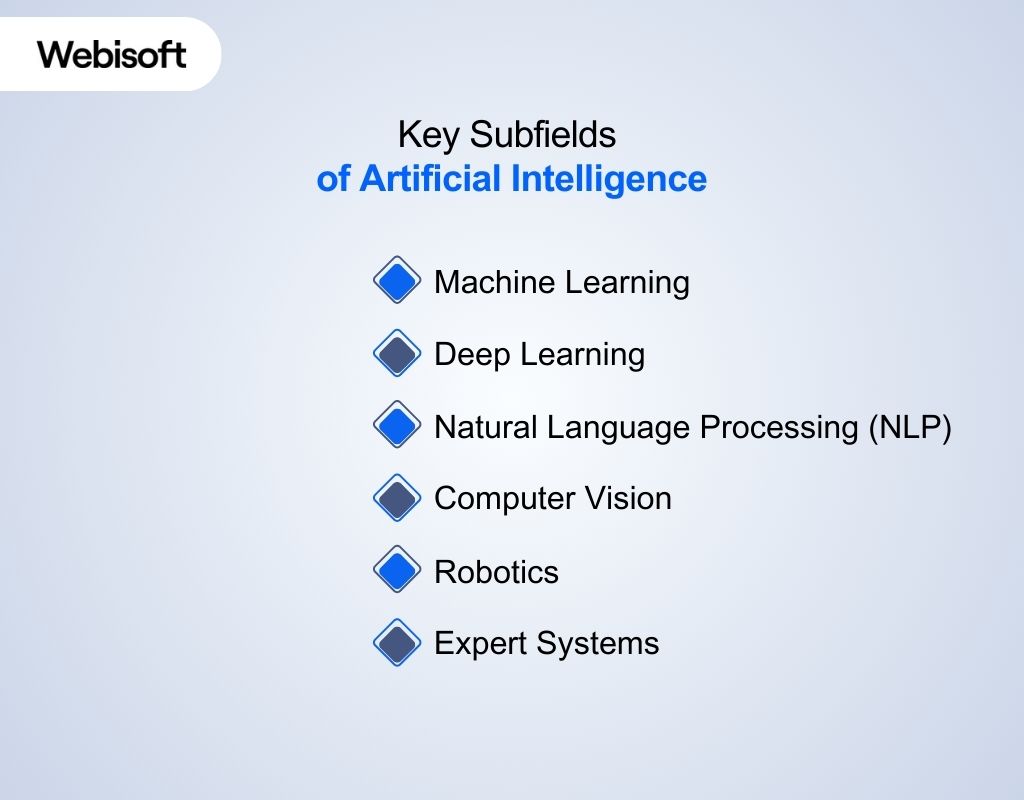
AI consists of many specialized areas, each responsible for helping machines interpret different types of information. These subfields work together to create systems that feel smart, useful, and responsive.
-
Machine Learning
Machine Learning (ML) allows computers to learn patterns from data and improve their accuracy over time. Instead of being programmed with rules, ML models study examples and adjust themselves to make better predictions. This technique powers email filtering, fraud detection, and personalized recommendations.
-
Deep Learning
Deep learning is a powerful part of machine learning that uses layered neural networks inspired by the human brain. These networks can understand complex patterns in images, speech, and text. Deep learning is behind technologies like autonomous vehicles, medical imaging analysis, and advanced language translation.
-
Natural Language Processing (NLP)
NLP helps machines understand and generate human language. It enables chatbots to respond naturally, translation tools to interpret sentences, and virtual assistants to recognize voice commands. NLP plays a major role in making technology feel more interactive and human-like.
-
Computer Vision
Computer vision allows machines to interpret visual information such as photos, videos, objects, and facial features. This technology is used in security cameras, diagnostic tools, self-driving cars, and social media filters. It teaches machines to "see" and understand the world visually.
-
Robotics
Robotics combines AI with mechanical engineering to build machines that can perform physical tasks. Robots can assemble products, assist in surgeries, explore dangerous areas, and support automation in industries. AI gives robots the ability to make decisions, adjust actions, and respond to their environment.
-
Expert Systems
Expert systems solve complex problems by imitating how human experts make decisions. They use structured knowledge, rules, and logical reasoning to offer guidance in fields like medicine, finance, and engineering. These systems help professionals analyze scenarios and make informed choices.
Learning Methods Used in AI
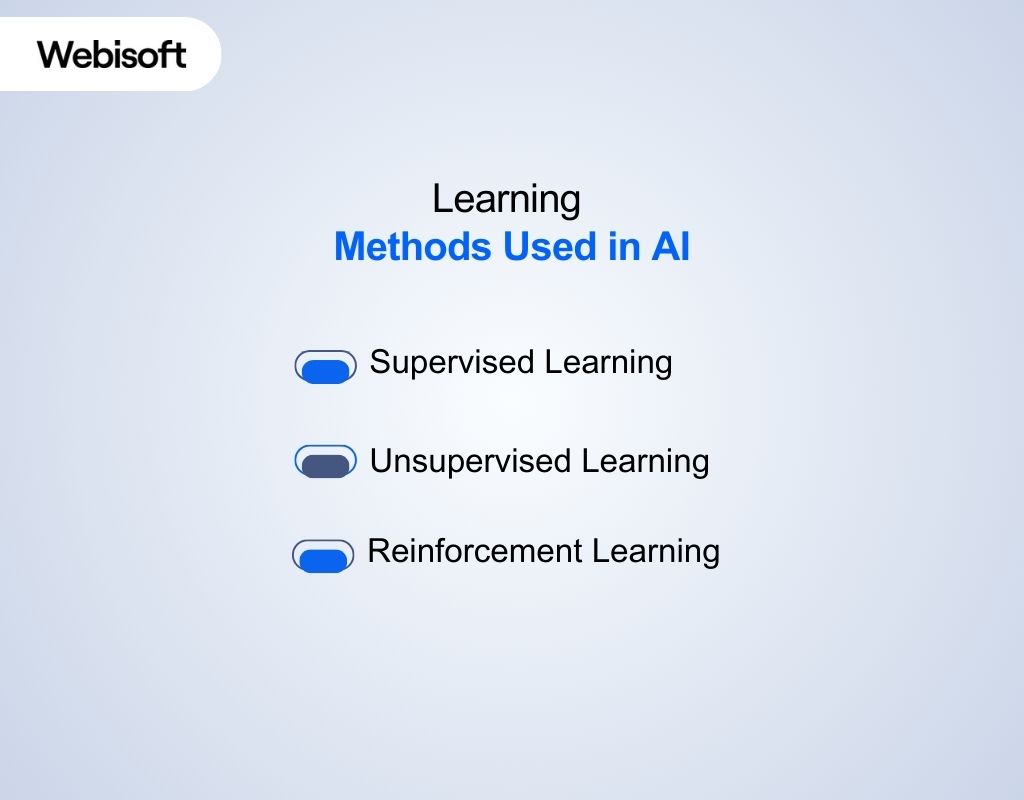
AI systems learn differently depending on whether they are given labeled data, unlabeled data, or an environment to explore. Each method helps machines improve in unique ways.
-
Supervised Learning
Supervised learning teaches machines using labeled data where the correct answers are already known. The system studies examples such as images or text and learns to match them to the right labels. This method is widely used in handwriting recognition, spam detection, and image classification.
-
Unsupervised Learning
Unsupervised learning works with unlabeled data, allowing the machine to discover patterns and relationships on its own. It groups similar data points, finds hidden structures, and identifies anomalies. This method is used in market segmentation, recommendation systems, and data exploration.
-
Reinforcement Learning
Reinforcement learning teaches machines through trial and error. The system interacts with an environment, receives rewards or penalties, and adjusts its behavior to achieve goals. This approach is used in robotics, gaming AI, and advanced decision-making models.
How AI Actually Learns and Makes Decisions
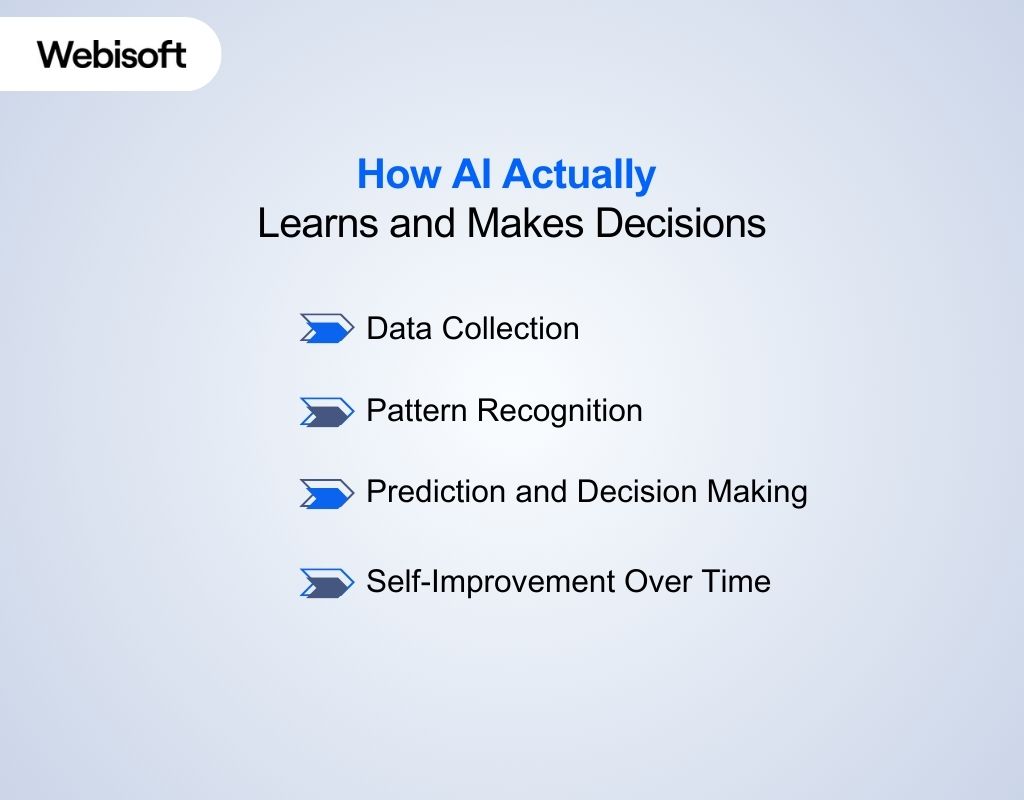
AI models follow key steps to transform raw information into intelligent decisions. These steps help machines simulate certain aspects of human learning and reasoning.
-
Data Collection
AI systems rely on large amounts of data to learn. This data comes from images, text, videos, sensors, or user interactions. The more high-quality data available, the more accurate and reliable the AI model becomes.
-
Pattern Recognition
Once trained, the AI begins recognizing patterns such as similarities, trends, or behaviors in the data. This pattern recognition allows the system to understand what it sees, hears, or analyzes.
-
Prediction and Decision Making
Using learned patterns, the AI predicts outcomes or selects the best action in a given scenario. This can include recommending a product, identifying objects in an image, or determining whether a message is spam.
-
Self-Improvement Over Time
As more data is provided, the system becomes smarter. It updates its internal models, corrects mistakes, and delivers more accurate results through continuous learning.
The Future of Artificial Intelligence
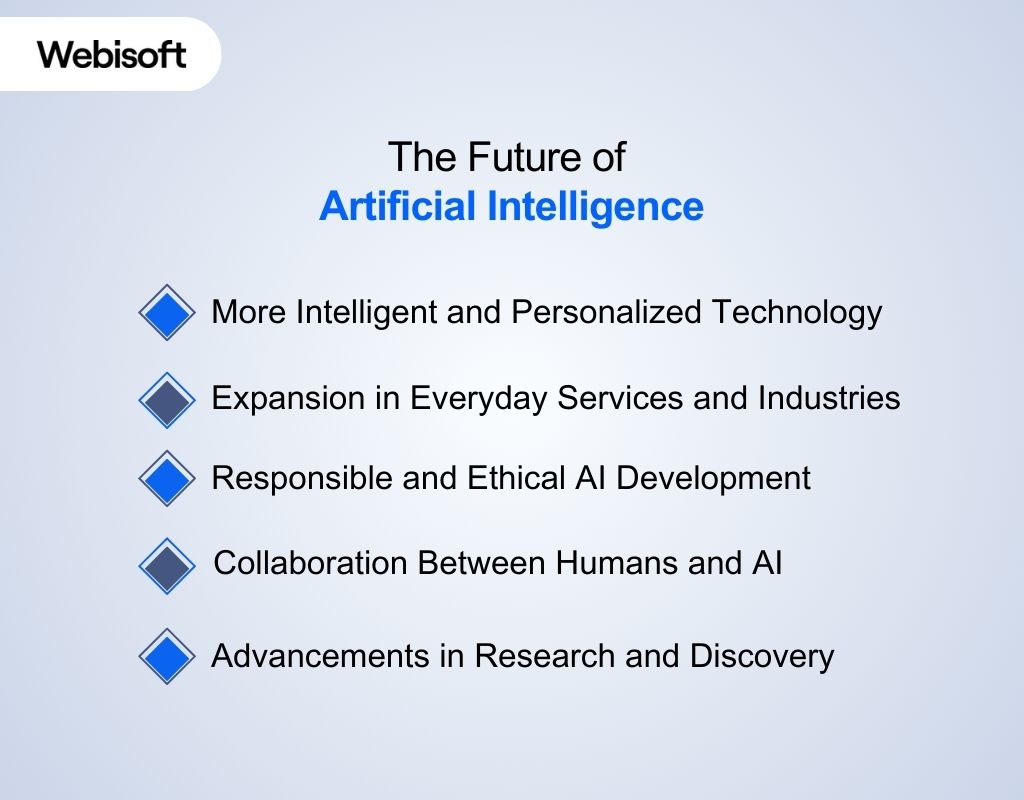
The future of AI holds tremendous promise as technology continues to advance at an exceptional pace. In this Speech on Artificial Intelligence, it's important to recognize that AI will not only enhance today's systems but reshape the way we learn, work, and connect in the years ahead. The future brings both opportunities and responsibilities that society must navigate together.
More Intelligent and Personalized Technology
AI will become even more capable of understanding human needs, emotions, and preferences. Future systems may tailor education, healthcare, and entertainment experiences with incredible accuracy, creating technology that feels more personal and intuitive.
Expansion in Everyday Services and Industries
From smarter cities to advanced transportation and efficient workplaces, AI will continue automating routine tasks and supporting professionals with deeper insights. Its role in the applications of artificial intelligence will expand across sectors like agriculture, energy, logistics, and science as new solutions emerge.
Responsible and Ethical AI Development
As AI grows stronger, the need for fairness, transparency, and ethical safeguards becomes essential. Future systems will require careful design to prevent bias, protect privacy, and ensure that AI is used responsibly for society's benefit.
Collaboration Between Humans and AI
AI is expected to become a partner rather than a replacement. Humans will focus on creativity, leadership, and problem-solving while machines handle analysis, automation, and pattern recognition. This collaboration will reshape jobs and create new opportunities.
Advancements in Research and Discovery
AI will accelerate breakthroughs in medicine, climate science, engineering, and space exploration. Its ability to process complex data will help researchers uncover insights that were previously out of reach.
Webisoft and AI Innovation
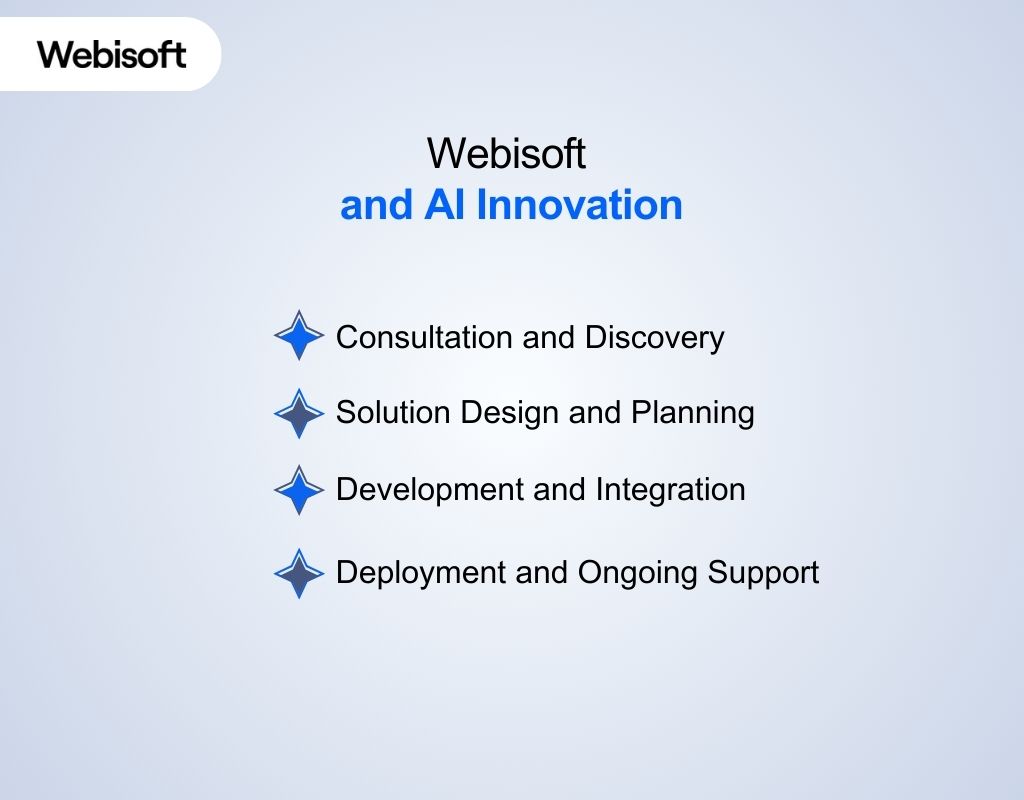
Working with AI can feel overwhelming, especially when you're unsure where to begin or how to turn complex ideas into practical solutions. Webisoft simplifies the journey by offering clear guidance, expert execution, and long-term support for businesses ready to adopt intelligent technologies.
Consultation and Discovery
We begin by understanding your goals, challenges, and the type of AI solution your business needs. Our team reviews your ideas, identifies opportunities, and outlines the value AI can bring to your operations.
Solution Design and Planning
Once your requirements are clear, we create a structured plan for your AI solution. This includes choosing the right technologies, mapping out workflows, and defining the features needed to achieve meaningful results.
Development and Integration
Our engineers build your AI system using reliable, scalable methods. Whether it involves automation, data intelligence, or machine learning, we ensure the solution integrates smoothly with your existing tools and processes.
Deployment and Ongoing Support
After development, your AI solution is launched with full testing and quality assurance. Webisoft continues to provide updates, improvements, and long-term support so your system remains efficient as your business grows. Webisoft helps transform AI concepts into real, impactful solutions. Get in touch today and explore how AI can elevate your business.
Closing Thoughts
Artificial Intelligence has become one of the most transformative technologies of our time, reshaping how we think, work, and interact with the world around us. Through this Speech on Artificial Intelligence, we explored the foundations of AI, its growing importance, the many ways it is applied across industries, and the benefits it offers to society.
We also looked at how AI learns, the subfields that make it powerful, and the promising future it continues to build. As AI evolves, it invites us to understand it more deeply and use it responsibly.
Whether improving everyday convenience, supporting essential services, or driving innovation, AI stands as a tool meant to enhance human potential. With the right knowledge and guidance, anyone can begin appreciating the possibilities it brings to our lives.
FAQs on Artificial Intelligence
What is Artificial Intelligence in simple words?
Artificial Intelligence is the technology that enables machines to learn from information, make decisions, and perform tasks that usually require human intelligence. It helps computers understand patterns, recognize objects, and respond intelligently.
How is AI used in daily life?
AI appears in everyday tools like voice assistants, navigation apps, online recommendations, spam filters, and smart home devices. These systems learn from user behavior to make technology more helpful and personalized.
Is AI difficult for beginners to understand?
AI can seem complex at first, but breaking it into basic ideas makes it easier. This Speech on Artificial Intelligence presents the concepts in simple terms, offering clear understanding for beginners and students.
How does AI learn from data?
AI learns by studying examples, recognizing patterns, and adjusting its predictions based on feedback. Techniques like supervised, unsupervised, and reinforcement learning help systems improve over time.
Will AI replace human jobs?
AI may automate some tasks, but it also creates new roles focused on creativity, problem-solving, and technology development. The future will likely involve collaboration between humans and AI rather than full replacement.
What is the future of Artificial Intelligence?
The future of AI includes smarter personalized tools, advanced automation, ethical safeguards, and innovations in research, communication, and global problem-solving. AI will continue expanding into more industries and everyday experiences.
How is AI used in business today?
Businesses use AI for customer support, data analysis, fraud detection, forecasting trends, and improving workflows. These tools help companies make faster, more informed decisions.