
At Webisoft, we audit blockchain systems as part of building them. Our blockchain consulting services cover smart contract review, network and node assessment, and compliance checks across Ethereum, Solana, Polygon and Hyperledger.
This guide explains what a blockchain audit actually involves: the types, the process step by step, the benefits, and the parts that trip teams up. It is the same ground we cover with clients before an engagement starts.
Blockchain adoption is growing fast, but so are security risks, smart contract flaws, and compliance demands. To manage these challenges, businesses must clearly understand what is blockchain audit is and why it matters.
Audits help uncover vulnerabilities early, verify system integrity, and ensure blockchain networks function as intended. A blockchain audit reviews technical components, security controls, and operational behavior to protect your system from failures and attacks.
In this guide, we break down the blockchain audit process, core components, the benefits of blockchain audit, and how blockchain audit services help organizations maintain transparency, trust, and long-term reliability.
What Is a Blockchain Audit?
A blockchain audit is a structured, in-depth examination of a blockchain network or application to confirm that it is secure, reliable, and functioning exactly as intended. When people ask what is blockchain audit, the answer goes beyond reviewing transactions, it involves evaluating the entire ecosystem, including smart contracts, consensus mechanisms, data integrity, and network configurations.
The goal is to ensure that every component performs correctly and adheres to required standards. Through blockchain auditing, experts verify the accuracy of on-chain data, check for vulnerabilities, and confirm compliance with industry or regulatory requirements.
A well-executed blockchain audit identifies weaknesses before they become threats, strengthens system trust, and ensures that decentralized applications, tokens, or enterprise blockchain platforms remain safe and dependable.
Types of Blockchain Audit
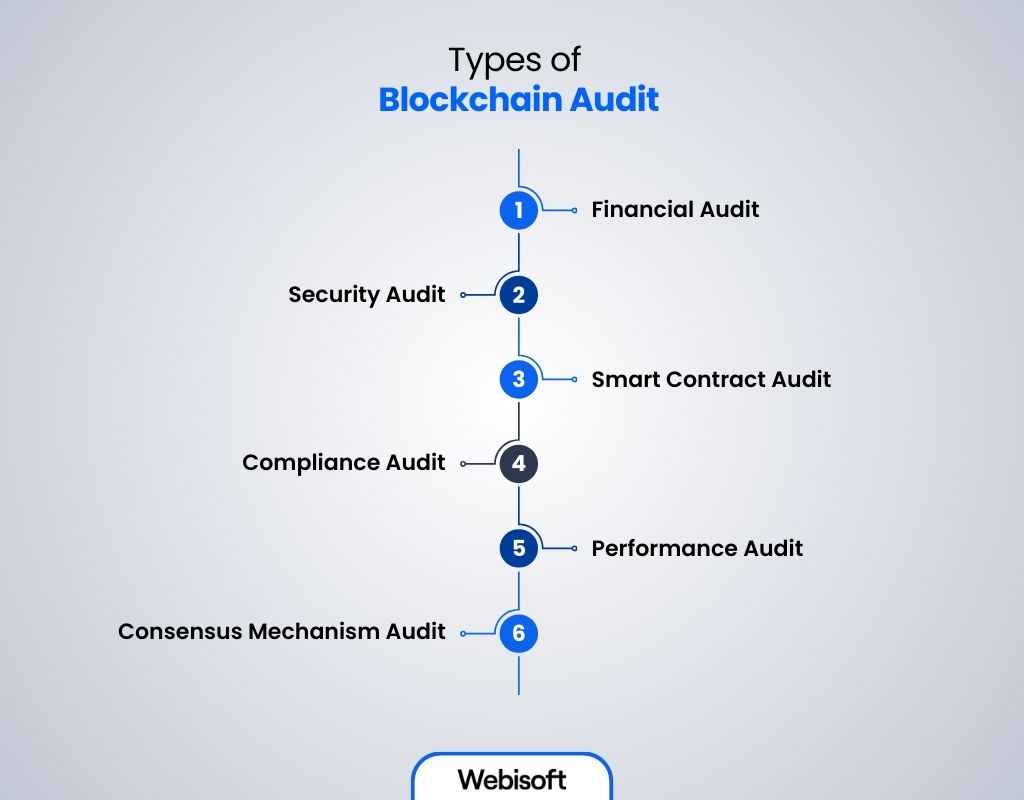
Blockchain systems require different types of audits depending on their structure, use case, and regulatory environment. Below are the key categories of blockchain audit that ensure a network remains secure, accurate, and compliant.
Financial Audit
A financial audit verifies the correctness of all financial activity recorded on-chain. Auditors review transactions, balances, asset ownership, and reporting workflows to ensure they comply with accounting standards and regulatory requirements. This helps organizations maintain financial transparency and prove the reliability of their blockchain-based financial records.
Security Audit
A security audit focuses on identifying weaknesses within the blockchain environment. It evaluates access control policies, encryption methods, node configurations, and potential attack vectors. By detecting vulnerabilities early, a security audit strengthens the network’s defenses and reduces risk exposure.
Smart Contract Audit
Smart contract audits thoroughly examine the contract’s code to detect bugs, logic errors, or vulnerabilities that could be exploited. Since smart contracts execute automatically and cannot be changed after deployment, this audit ensures they function securely, efficiently, and as intended without exposing users to financial or operational risks.
Compliance Audit
A compliance audit ensures the blockchain system aligns with applicable legal and industry regulations. Auditors check for adherence to frameworks such as data privacy laws, AML/KYC rules, and sector-specific standards. This protects organizations from legal penalties and ensures responsible, compliant use of blockchain technology.
Performance Audit
A performance audit measures how well the blockchain network handles real-world workloads. It evaluates transaction throughput, latency, resource usage, and scalability to determine whether the network can support operational demands.
These insights help optimize performance and improve system reliability, reinforcing why understanding what is blockchain audit is so important for growing networks.
Consensus Mechanism Audit
This audit examines the blockchain’s consensus algorithm, such as Proof of Work, Proof of Stake, or BFT-based models, to confirm it is secure, efficient, and attack-resistant. Auditors assess how nodes validate transactions, how the network handles failures, and whether any structural weaknesses could compromise integrity.
How Blockchain Audits Work
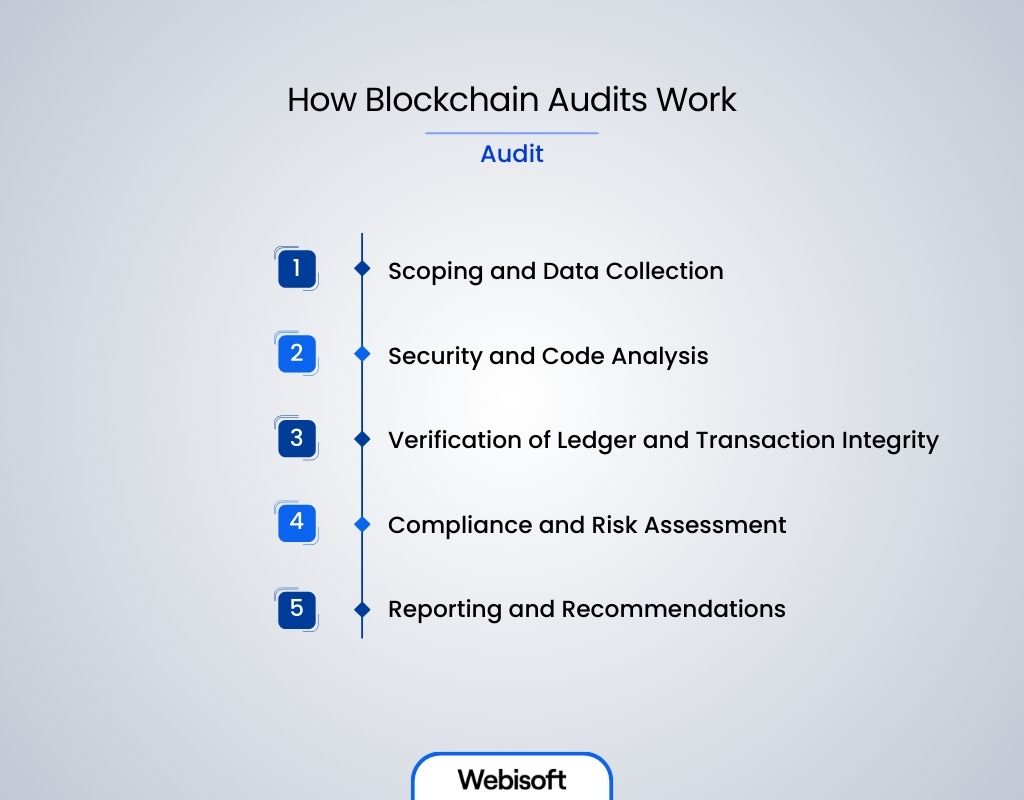
A blockchain audit examines the technical, security, and compliance layers of a blockchain system to ensure everything operates as intended. While each project is different, most audits follow a structured blockchain audit process that focuses on identifying vulnerabilities, confirming data integrity, and evaluating smart contract behavior.
Scoping and Data Collection
Auditors begin by defining what parts of the blockchain ecosystem will be reviewed, such as smart contracts, nodes, transactions, or integrations. They then gather essential data, including system architecture, code, transaction logs, and configuration details to understand how the network operates.
Security and Code Analysis
This stage combines manual review and automated tools to analyze smart contracts, node settings, and network configurations. Auditors look for vulnerabilities, logic flaws, permission issues, consensus risks, and potential attack vectors. This step may also include light penetration testing or simulation attacks to validate system resilience, further illustrating what is blockchain audit in a real-world context.
Verification of Ledger and Transaction Integrity
Auditors verify that recorded transactions match expected outcomes and haven’t been altered. This ensures the blockchain’s immutability functions correctly and that no unauthorized modifications exist within the ledger or smart contract execution.
Compliance and Risk Assessment
Auditors evaluate whether the blockchain system aligns with relevant regulations, privacy requirements, and industry standards. They also assess operational risks, governance structures, and documentation to ensure the system is both secure and compliant.
Reporting and Recommendations
After the review, auditors produce a comprehensive report outlining identified issues, their severity, and actionable steps for remediation. This final deliverable helps teams strengthen system security, fix vulnerabilities, and improve long-term reliability.
Benefits of Blockchain Audit
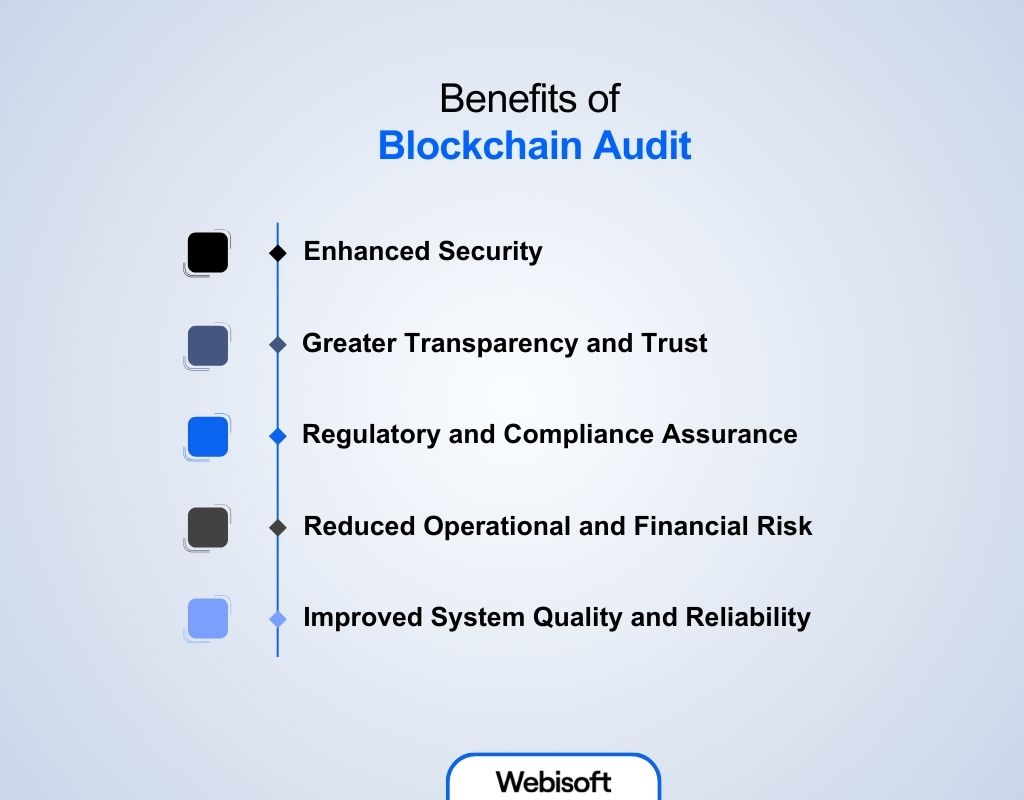
A well-executed blockchain audit strengthens the reliability and security of any blockchain ecosystem. Beyond validating transactions, the process helps organizations uncover risks early and maintain long-term trust. Below are the key benefits of blockchain audit for both enterprise and Web3 projects.
Enhanced Security
One of the most important outcomes of blockchain auditing is identifying weaknesses that could expose the system to attacks. By detecting vulnerabilities in smart contracts, network configurations, or node settings, audits help businesses reduce the risk of breaches, exploits, and financial loss.
Greater Transparency and Trust
Blockchain systems are built on transparency, but an independent audit strengthens this principle. Auditors verify that the ledger, transactions, and on-chain processes are accurate, helping organizations build credibility with users, investors, and regulators.
Regulatory and Compliance Assurance
Audits ensure the blockchain environment follows necessary laws and industry regulations. This is especially important in sectors like finance, healthcare, supply chain management, and tokenized assets, where compliance failures can lead to serious operational and legal consequences.
Reduced Operational and Financial Risk
By addressing vulnerabilities early, audits help prevent system failures, fraud, and unintended contract behaviors. This reduces both reputational and financial risk, ensuring smoother, safer network performance.
Improved System Quality and Reliability
Whether it’s a smart contract or a full blockchain network, an audit verifies that the system works as intended. This includes ensuring transaction accuracy, validating logic flows, and confirming that performance metrics meet operational goals.
Auditing a blockchain system can be complex, but the right expertise makes the process far more secure and manageable. Webisoft helps teams streamline audits with technical clarity and practical guidance. Connect with our experts to strengthen your blockchain system.
Key Components of a Blockchain Audit
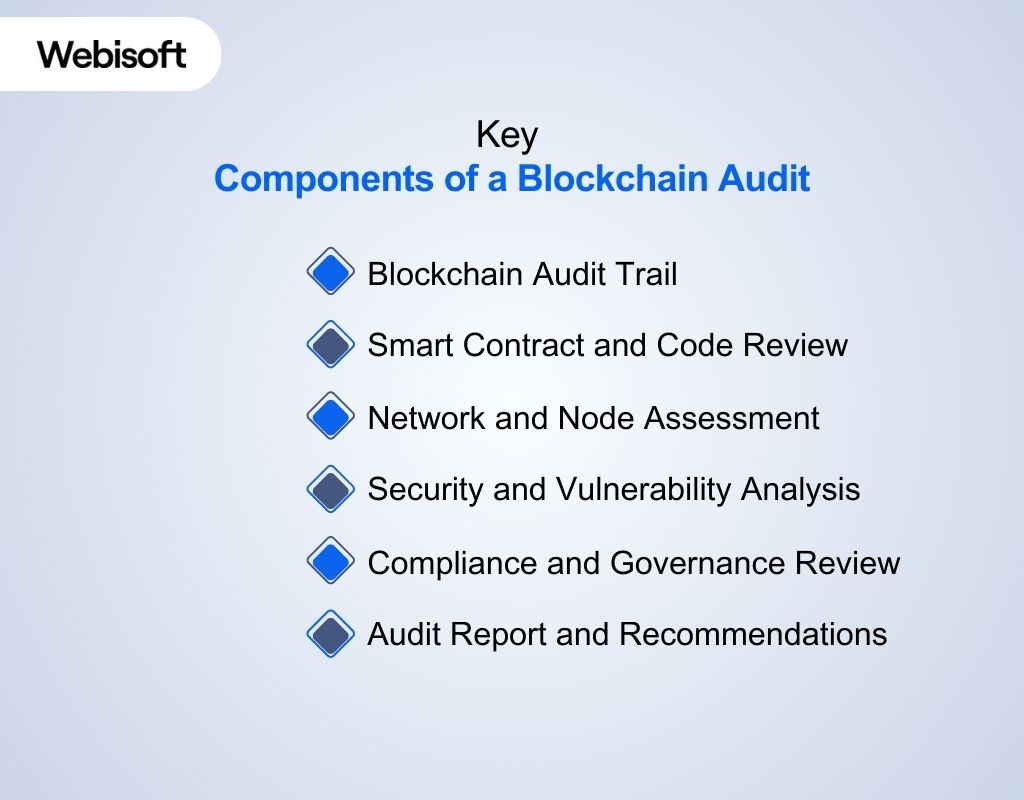
A thorough audit examines several critical elements of a blockchain system to ensure it operates securely, efficiently, and as intended. These components give auditors a complete understanding of how the network behaves and where improvements may be needed.
Blockchain Audit Trail
The audit trail provides a chronological record of every transaction and network activity. It helps auditors trace data flow, verify actions, and detect unusual behavior. Because blockchain data is immutable, the audit trail serves as a reliable foundation for validating system history.
Smart Contract and Code Review
For networks that use smart contracts, auditors evaluate the underlying code to identify bugs, logic errors, or security risks. This step is essential since smart contracts cannot be changed once deployed, making early detection of issues critical.
Network and Node Assessment
Auditors review how nodes are configured, how they communicate, and how they participate in consensus. This includes checking permission settings, encryption, and network architecture to ensure the system is robust and properly protected.
Security and Vulnerability Analysis
This component focuses on identifying weaknesses within the blockchain environment. Auditors look for misconfigurations, exposed attack surfaces, outdated dependencies, and potential entry points that could be exploited by malicious actors.
Compliance and Governance Review
This step examines how the blockchain aligns with relevant regulations, operational policies, and governance structures. It ensures that the system meets legal and industry expectations while maintaining proper oversight and accountability.
Audit Report and Recommendations
The final report summarizes all findings, highlights risk levels, and outlines actionable steps for improvement. It gives stakeholders a clear roadmap for strengthening their system and preventing future issues.
Challenges of Blockchain Audit
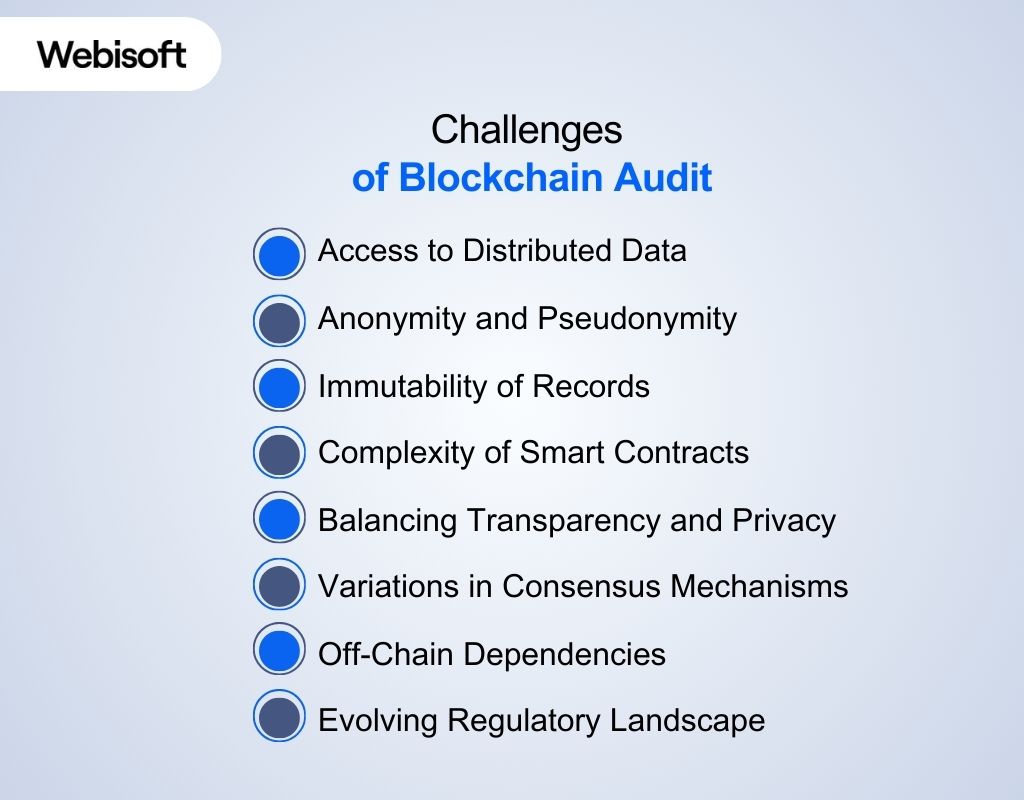
One reason it’s essential to understand what is blockchain audit is that auditing decentralized systems presents unique difficulties due to their immutable and often complex structure. These challenges require specialized tools, expertise, and methodologies to ensure a complete and accurate evaluation.
Access to Distributed Data
Because blockchain data is stored across multiple nodes, auditors may need to coordinate with different participants to gather complete information. Access levels can vary depending on whether the network is public, private, or permissioned.
Anonymity and Pseudonymity
Many blockchain environments obscure user identities, making it difficult to link transactions to real individuals or organizations. This creates challenges when investigating suspicious activity or verifying compliance requirements.
Immutability of Records
While immutability increases trust, it also means errors or fraudulent transactions cannot be corrected once recorded. Auditors must focus heavily on early detection, since reversing mistakes is not possible at the ledger level.
Complexity of Smart Contracts
Smart contracts often contain intricate logic and dependencies. Auditors must be able to interpret code, understand edge cases, and identify hidden vulnerabilities, tasks that require advanced technical expertise.
Balancing Transparency and Privacy
Some blockchain networks require confidentiality over certain data elements. Auditors must find ways to assess system behavior without violating privacy rules or exposing sensitive information.
Variations in Consensus Mechanisms
Different blockchains use different consensus models, each with unique risks and operational behaviors. Auditors must understand how these mechanisms validate transactions and where potential weaknesses may exist.
Off-Chain Dependencies
Not all relevant information is stored on the blockchain. Systems often rely on external databases, APIs, or oracles, all of which must be validated for consistency and integrity.
Evolving Regulatory Landscape
Blockchain regulations differ widely across jurisdictions and continue to change. Auditors must stay updated on legal standards to ensure networks meet the latest compliance expectations.
Future Trends in Blockchain Auditing
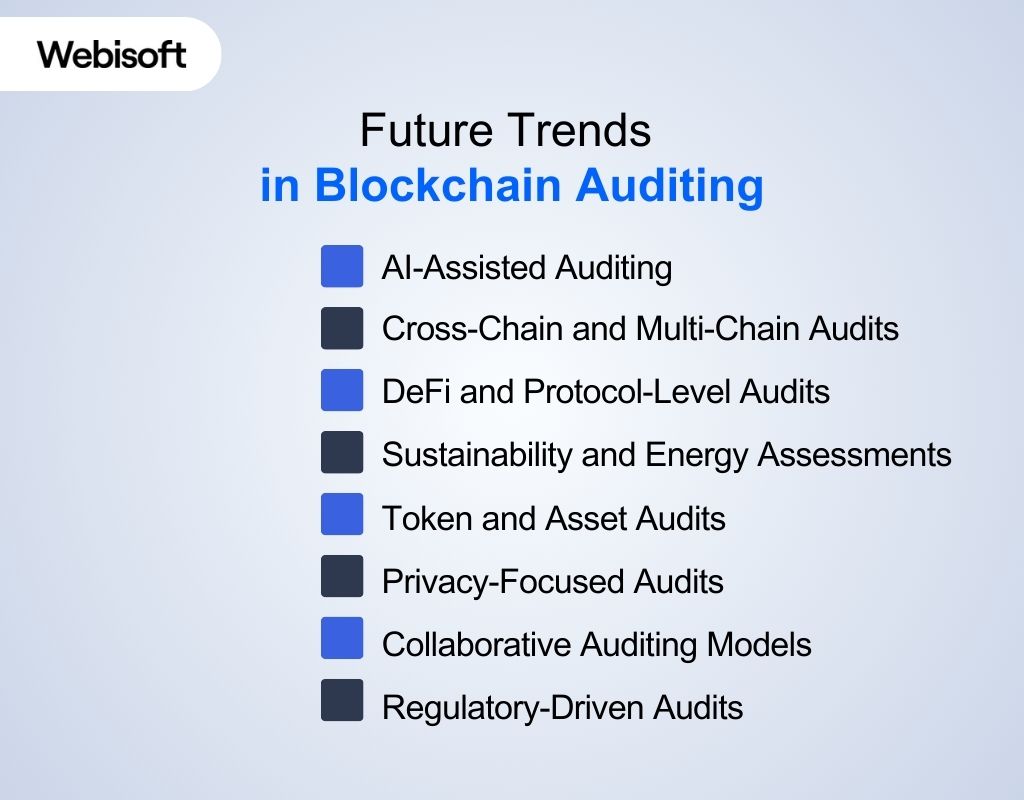
As blockchain adoption expands, the definition of what is blockchain audit is continues to evolve, with new tools and practices emerging to support more complex networks and regulatory expectations. Several emerging trends are shaping the future of how blockchain systems are reviewed and secured.
AI-Assisted Auditing
Artificial intelligence is increasingly used to analyze large volumes of on-chain data, detect unusual patterns, and automate routine checks. AI-driven tools can flag anomalies faster than manual methods, helping auditors focus on deeper technical risks.
Cross-Chain and Multi-Chain Audits
With more projects operating across multiple blockchains, auditors must evaluate bridges, interoperability layers, and cross-chain communication. This trend requires new tools and techniques to ensure security across interconnected ecosystems.
DeFi and Protocol-Level Audits
Decentralized finance continues to expand, bringing sophisticated protocols that handle significant value. Audits now focus on liquidity pools, yield mechanisms, governance modules, and economic attack vectors unique to DeFi systems.
Sustainability and Energy Assessments
As environmental concerns grow, audits may include evaluating a network’s energy consumption or its adherence to sustainable practices. This is especially relevant for blockchains using energy-intensive consensus models.
Token and Asset Audits
Auditors increasingly review token issuance, distribution, vesting schedules, and asset management processes to ensure fairness, regulatory alignment, and economic stability within blockchain ecosystems.
Privacy-Focused Audits
Privacy technologies, such as ZK-proofs and confidential transactions, require specialized auditing approaches. Future audits will examine how these features protect user data while maintaining system integrity.
Collaborative Auditing Models
As networks grow in scale and complexity, audits may involve multiple specialized firms working together. This collaborative approach combines expertise in code, infrastructure, compliance, and cryptography for a more comprehensive assessment.
Regulatory-Driven Audits
Governments worldwide are introducing rules for digital assets, stablecoins, and blockchain operations. This shift will increase demand for audits that ensure compliance with AML, KYC, tax reporting, and industry-specific regulations.
How Webisoft Supports Blockchain Audits

Conducting a blockchain audit requires deep technical knowledge, strong analytical tools, and experience across different blockchain architectures, which is why many organizations rely on professional blockchain consulting services to guide the process effectively.
Webisoft helps organizations simplify this process by delivering tailored audit support that strengthens security, improves performance, and ensures long-term reliability.
Comprehensive Audit Guidance
Webisoft’s team evaluates the full lifecycle of your blockchain system, from smart contracts to network configuration ensuring every critical layer receives proper attention. This comprehensive approach reduces risk and uncovers issues that may not be visible through standard reviews.
Technical Expertise Across Multiple Chains
Whether your project runs on Ethereum, Solana, Polygon, Hyperledger, or other networks, Webisoft provides specialized insight into platform-specific behaviors and potential vulnerabilities. This ensures your system is reviewed using methods that match its underlying technology.
Actionable Remediation Support
Beyond identifying issues, Webisoft guides your team through practical improvement steps. You receive clear, prioritized recommendations that help strengthen architecture, refine smart contracts, and optimize network operations.
Future-Ready Best Practices
With blockchain technology evolving rapidly, Webisoft incorporates emerging standards, modern tools, and industry best practices into every audit. This ensures your system stays aligned with new security expectations and regulatory trends. Working with Webisoft gives your organization the confidence that your blockchain environment is secure, efficient, and built to scale responsibly.
Concluding Insights on Blockchain Audits
As blockchain systems continue to evolve, understanding what is blockchain audit becomes essential for ensuring networks remain secure, transparent, and trustworthy. Auditing helps organizations validate the integrity of their networks, uncover risks early, and ensure systems behave exactly as intended.
It supports better decision-making, reduces operational uncertainty, and builds confidence among users, partners, and stakeholders. Whether you’re working with smart contracts, decentralized applications, enterprise blockchain platforms, or tokenized assets, a well-conducted audit provides clarity and stability in an environment where technical precision is critical.
As adoption grows across industries, businesses that prioritize security and transparency position themselves for long-term success in the decentralized world.
Frequently Asked Questions
If your contracts or network handle real value, get them reviewed before something forces the issue. Book a conversation with our blockchain consulting team and we will scope the audit your system actually needs.
After the audit, organizations receive a report detailing findings and recommended fixes. Developers then address the issues, and in many cases, auditors perform a follow-up review to verify that the improvements were implemented correctly.
While audits significantly reduce risk, they cannot guarantee complete security. Blockchain systems evolve, and new vulnerabilities may emerge. Regular audits, updates, and monitoring are necessary for long-term protection.
Blockchain auditing is used to evaluate the security, accuracy, and reliability of a blockchain system. It helps identify vulnerabilities, verify smart contract behavior, and ensure the network operates according to technical and regulatory requirements.
The timeline depends on the complexity of the network and the scope of review. A simple smart contract audit may take a few days, while a full ecosystem audit involving nodes, integrations, and multiple contracts can take several weeks.
Blockchain audits are typically performed by specialized security firms, blockchain developers with auditing expertise, or independent third-party auditors. Their technical knowledge ensures the system is reviewed thoroughly and objectively.
Any blockchain project handling value, sensitive data, or automated execution should undergo an audit. This includes decentralized applications, DeFi protocols, enterprise chains, token projects, and systems relying on smart contracts.
