Montreal is one of the few cities in North America where a blockchain product can be designed, built, audited, and shipped without leaving town. The city pairs a deep engineering talent pool from McGill, Concordia, Polytechnique, and Universite de Montreal with some of the lowest-cost industrial electricity on the continent, which is the same reason data centers and crypto-mining operations moved into Quebec years ago. Add Quebec's refundable tax credits for e-business development and you get an ecosystem where blockchain teams can deliver competitively priced work on Eastern Time.
One caveat before the list: most "blockchain companies in Montreal" roundups are padded with firms that serve Montreal clients remotely from Europe or the US. A remote partner can still be a good choice, but it changes what you get in timezone overlap, on-site workshops, and local regulatory context. This guide is honest about who is actually on the ground, profiles the strongest options, and covers what to verify before you sign.
Quick List of Blockchain Companies Serving Montreal
Here is the short version of the list:
- Webisoft: Montreal-based, full-cycle blockchain development covering smart contracts, DeFi, dApps, and CosmWasm.
- Innowise: large international firm for custom blockchain builds and team augmentation.
- Cubix: US software house with a dedicated blockchain practice and its own Cubix Chain platform.
- Pixelette Technologies: blockchain paired with AI and IoT integration work.
- IdeaSoft: DeFi and exchange engineering, part of Sigma Software Group.
- Nextrope: fintech-focused blockchain and tokenization consulting.
- Underlabs Inc.: Montreal mobile-first agency with blockchain and AI capability.
- Idealogic: product-focused development for startups and regulated industries.
- Digia Technology: software delivery with teams in Canada and Eastern Europe.
- Roobinium: smaller Canadian studio for dApp development and blockchain consulting.
Top 3 Blockchain Companies Compared
Here is how the three strongest options on the list line up:
| Company | Headquarters | Specialization | Best Fit |
|---|---|---|---|
| Webisoft | Montreal, Canada | Full-cycle blockchain products: smart contracts, DeFi, dApps, CosmWasm | Teams that want a local, same-timezone engineering partner |
| Innowise | Warsaw, Poland | Custom blockchain development at scale | Large programs that need big remote delivery capacity |
| Cubix | West Palm Beach, USA | Blockchain apps on the Cubix Chain platform | App-led builds that integrate blockchain into existing products |
Top 3 Blockchain Companies in Montreal: Detailed Profiles
These three firms stand out for consistent delivery, clear engagement models, and real blockchain depth rather than white-labeled subcontracting. Here is what each one actually does.
1. Webisoft
Webisoft is a Montreal-based product engineering firm that has been building blockchain systems since 2017. The team covers the full stack of decentralized products: protocol and smart contract development, DeFi mechanics, NFT infrastructure, dApps, and CosmWasm development for Cosmos-based chains. Because architecture, engineering, and delivery all sit in Montreal, clients get same-timezone collaboration, in-person workshops when they want them, and a single accountable team from discovery to mainnet.
About Webisoft
- Founded: 2017
- Headquarters: Montreal, Quebec, Canada
- Company Size: 11-50 employees
- Phone: +1 514-874-3224
- Email: info@webisoft.com
What Webisoft Does Well
These are the capabilities that define how Webisoft approaches blockchain work:
Cross-Platform Integration
Blockchain rarely lives alone. Webisoft connects on-chain logic to web apps, mobile clients, and existing enterprise systems so the chain handles what it is good at (settlement, provenance, shared state) while everything else stays in conventional infrastructure.
Smart Contract Engineering
Contracts are designed for auditability first: explicit state machines, upgrade paths decided up front (proxy versus immutable), and test coverage on testnets before any mainnet deployment. That discipline matters because deployed contract bugs are permanent in a way normal software bugs are not.
Tokenization Frameworks
Webisoft builds tokenization layers for digitizing assets on chain, covering token standards, custody flow, and the fractional-ownership and liquidity mechanics that make a tokenized asset actually tradable.
Decentralized Identity and Access
Blockchain-based identity verification and authentication, so users control credentials without a central honeypot of personal data.
Supply Chain Transparency
Track-and-trace systems that anchor product journeys on chain, giving buyers and regulators tamper-evident provenance without exposing commercial data.
Selected Webisoft Projects
Styllar
An NFT avatar marketplace built on Terra blockchain infrastructure. Its design and interface earned a nomination for Website of the Day on Awwwards.
Kryptic
A single-wallet gateway to Web3 giving users full control over NFTs, coins, and tokens from one secure platform.
Arcade2Earn
A GameFi platform that lets users earn rewards from Play-and-Earn metaverse games without requiring direct gameplay or ownership of in-game NFTs.
Pros
- Actually headquartered in Montreal: same timezone, on-site availability, Canadian contracting.
- Full-cycle capability from token design through smart contracts to front-end product.
- CosmWasm and Cosmos-ecosystem depth, not just EVM work.
- Audit-first contract engineering with tamper-proof transaction records.
- Custom builds scoped to the business case, not a templated platform.
Cons
- A focused boutique team, so large multi-squad programs are scheduled through discovery rather than staffed overnight.
2. Innowise
Innowise, established in 2007 and headquartered in Warsaw, is a large international IT services firm with a substantial blockchain practice. It serves Montreal and other North American clients remotely, which trades local presence for delivery capacity: with a headcount in the thousands, Innowise can staff big custom builds and long-running team augmentation faster than most boutiques.
About Innowise
- Founded: 2007
- Headquarters: Warsaw, Poland
- Employees: 1,000-5,000
Features of Innowise
- Tokenomics Design: token distribution models, governance mechanisms, and economic incentives designed to a client's requirements.
- Decentralized Identity (DID): blockchain-based identity solutions for secure, verifiable identity management.
- Oracle Integration: connecting smart contracts to real-world data so decentralized applications can securely consume external information.
- Immutable Data Storage: tamper-proof on-chain storage patterns for data integrity and auditability.
Projects of Innowise
- Document Management System: a platform for creating, securing, and managing documents, with digital signatures and retrieval via QR codes and ID tags.
- White-label NFT Marketplace: a flexible marketplace platform where users create, buy, and sell NFT assets and brands manage their own listings.
Pros
- Very large delivery capacity across many technologies.
- Established processes and a broad international portfolio.
- Can combine blockchain work with adjacent IT services under one contract.
Cons
- No Montreal presence; collaboration runs across a six-hour timezone gap.
3. Cubix
Cubix is a US software development company headquartered in West Palm Beach, Florida, with more than a decade of custom software work for startups, enterprises, and Fortune 500 clients. Its blockchain offering centers on Cubix Chain, a proprietary platform the firm uses to add blockchain capabilities to client applications. That platform-led model speeds up delivery for app-centric projects, though teams that need novel protocol infrastructure will find it less flexible than a from-scratch build.
About Cubix
- Founded: 2008
- Headquarters: West Palm Beach, Florida, USA
- Company Size: 201-500
Features of Cubix
- Comprehensive Blockchain Development: smart contracts, decentralized application (dApp) creation, and blockchain integration.
- NFT Development: tokenizing digital assets such as artwork, collectibles, and virtual real estate.
- Integration Services: incorporating blockchain into existing systems and protocols with a focus on interoperability.
Pros
- Strong app-development pedigree behind the blockchain practice.
- Proprietary platform (Cubix Chain) shortens time to a working product.
- Full-cycle capability from strategy workshops to launch.
Cons
- Prioritizes app integration over new blockchain infrastructure development.
Other Blockchain Companies Serving Montreal
If you want more options, the firms below also take on Montreal projects. Several are headquartered abroad and deliver remotely, so weigh that against your need for local collaboration. For a wider national view, see our guide to blockchain startups in Canada.
4. Pixelette Technologies
Pixelette Technologies is a UK-headquartered consultancy that pairs blockchain development with AI and IoT integration, useful when a project needs machine learning or sensor data feeding on-chain logic. The team runs to a few dozen specialists and works with international clients remotely.
About Pixelette Technologies
- Founded: 2018
- Headquarters: London, United Kingdom
- Company Size: 11-50
5. IdeaSoft
IdeaSoft is a European software engineering company with strong DeFi and exchange credentials, helping startups and enterprises validate ideas and build MVPs. It has been part of Sigma Software Group since 2021, which adds enterprise-grade process behind its blockchain work.
About IdeaSoft
- Founded: 2016
- Founder: Andrii Lazorenko
- Employees: 50-249
6. Nextrope
Nextrope specializes in fintech, blockchain, and tokenization, covering consulting, product design, development, and support. Its focus areas include transaction systems, risk management, and asset tokenization, with flexible models for long-term partnership or project outsourcing.
About Nextrope
- Founded: 2015
- Founder: Mateusz Mach
- Headquarters: Gdynia, Poland
- Employees: 11-50
7. Underlabs Inc.
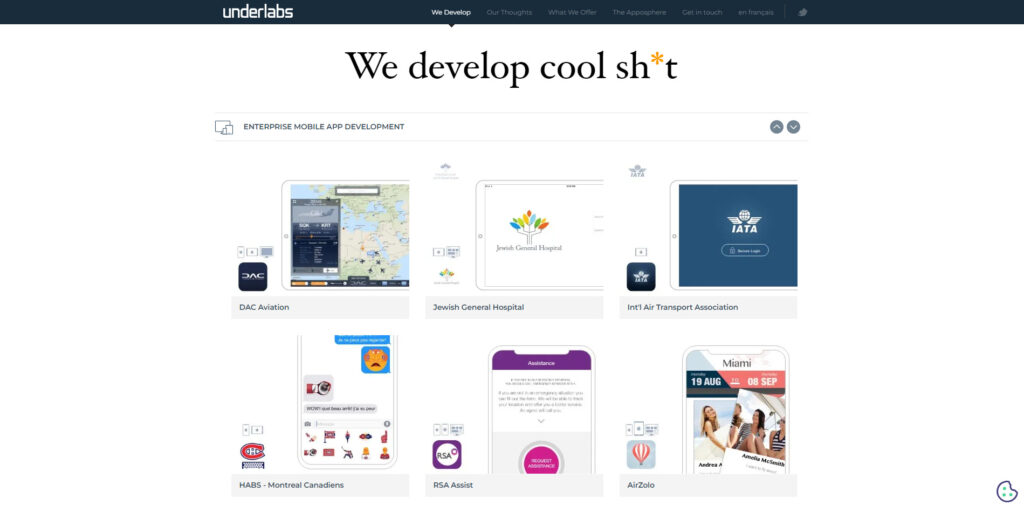
Underlabs is a genuinely Montreal-based agency, best known for iOS and Android development with growing blockchain and AI capability. Its local client roster includes aviation-sector names such as Montreal-Trudeau airport (YUL) and IATA, which is itself headquartered in Montreal. A good option when the product is mobile-first and blockchain is one component rather than the core.
About Underlabs Inc.
- Founded: 2009
- Founder: Joseph Sachs
- Headquarters: Montreal, Canada
- Employees: 10-49
8. Idealogic
Idealogic is a European technology partner with a 100-plus team covering mobile and blockchain development, discovery, MVP builds, and digital transformation. It serves fintech, logistics, aviation, and healthcare clients and holds ISO 27001 certification, which matters for projects with formal security requirements.
About Idealogic
- Founded: 2016
- Headquarters: Wroclaw, Poland
- Employees: 51-200
9. Digia Technology
Digia Technology, founded in 2016, is a software development company with teams in Canada and Eastern Europe. It positions on efficient, cost-effective delivery, with the Canadian side giving North American clients a closer point of contact than a purely offshore firm.
About Digia Technology
- Founded: 2016
- Presence: Canada and Eastern Europe
- Company Size: 11-50
10. Roobinium
Roobinium is a smaller Canadian studio focused on blockchain development, consulting, and decentralized applications, including digital asset management and exchange platforms. A team of a few dozen specialists makes it a candidate for tightly scoped dApp projects rather than large programs.
Why Build Blockchain Products From Montreal?
Location genuinely matters in this space, and Montreal has structural advantages that generic outsourcing hubs do not.
Onshore, Same-Timezone Delivery
Montreal runs on Eastern Time, so a Montreal team shares the full working day with New York, Toronto, and Boston. For blockchain projects that means incident response during your market hours, live architecture sessions instead of asynchronous handoffs, and contracts under Canadian law rather than a foreign jurisdiction.
Regulatory and Privacy Context
Canadian firms work daily inside PIPEDA and Quebec's Law 25 privacy regime. If your blockchain product touches personal data, identity, or financial records, a local partner already understands what can go on chain, what must stay off chain, and how consent and data-residency rules shape the architecture. That is much harder to get from a team that has never operated under Canadian rules.
Deep Technical Talent
The city graduates engineers from four major universities and hosts one of the world's dense AI research communities, anchored by institutes like Mila. That crossover shows up in blockchain work: teams here are comfortable combining ML pipelines, cryptography, and distributed systems in one product.
Cost Structure Without Offshoring
Hydro-Quebec's electricity rates are among the lowest in North America, which is why compute-heavy operations settled in the province, and Quebec offers refundable tax credits for e-business development that reduce the effective cost of local engineering. The result is onshore quality at rates meaningfully below US coastal hubs.
Bilingual Market Access
Montreal teams operate natively in English and French, which matters for products serving Quebec institutions, francophone markets, or European partners.
What to Consider When Choosing a Blockchain Company in Montreal
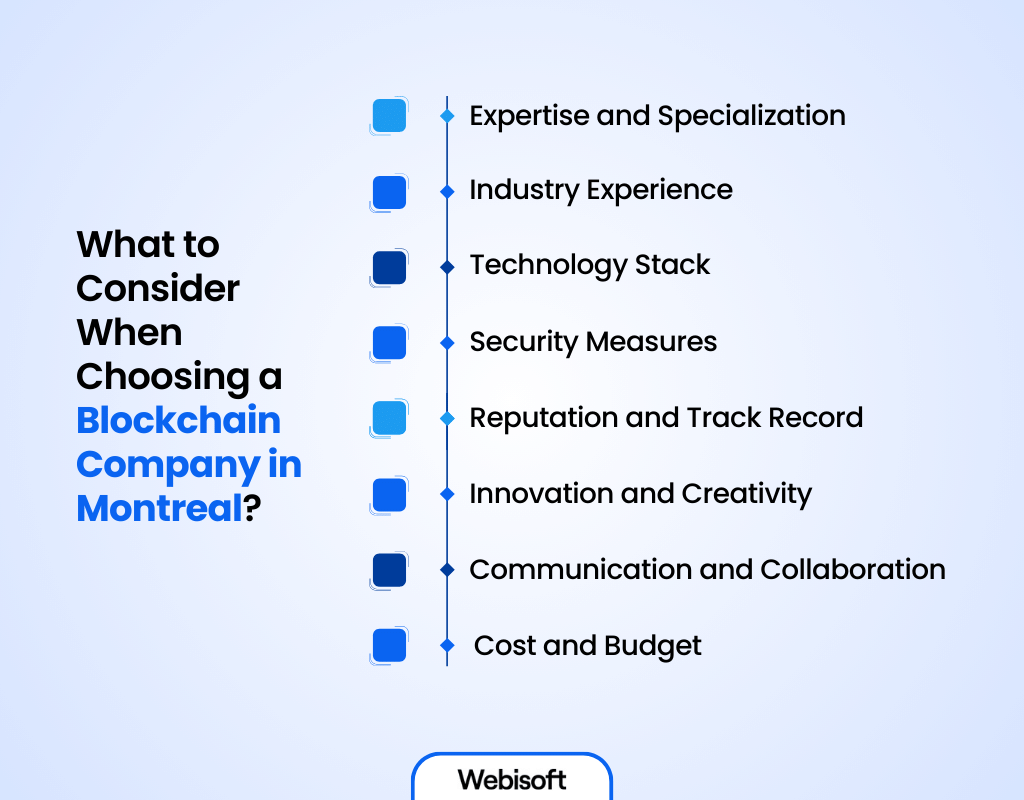
Before you sign with any firm on this list, pressure-test these areas:
Actual Location and Team Ownership
Ask where the engineers who will write your code actually sit. Many firms marketed under a Montreal label deliver from Eastern Europe through subcontractors. That is not automatically bad, but you should know before you price timezone overlap and accountability into the deal.
Expertise and Specialization
Match the firm's real specialization to your project: smart contracts, DeFi mechanics, dApps, or tokenization are different disciplines. Ask for contracts they have shipped to mainnet, not just designed.
Technology Stack
Confirm proficiency in the platforms your project needs: Solidity on EVM chains for the broadest ecosystem, CosmWasm and Rust for Cosmos-based chains, or Hyperledger Fabric when a permissioned consortium chain fits better than a public one. A firm that can explain the trade-off between public and permissioned for your use case, rather than defaulting to whatever it always builds, is worth more.
Security Practices
Contract bugs are permanent, so ask how the firm handles security: independent third-party audits before mainnet, key-management and multisig policy, testnet coverage, and a plan for pause mechanisms or upgrade paths if something goes wrong. Certifications like ISO 27001 signal process maturity for the off-chain side.
Industry Experience
A firm that has worked in your industry already knows its compliance constraints and data flows, which shortens discovery and reduces rework.
Reputation and Track Record
Read verified client reviews and shipped-product case studies. Live products with real users tell you more than a portfolio page.
Communication and Collaboration
Insist on named engineers, regular demos, and direct access to the people building, not just an account manager relaying messages.
Cost and Budget
Compare quotes on scope, not headline rate. A cheaper offshore rate can cost more after timezone friction, rework, and audit findings. Ask each firm to price the same written scope so quotes are comparable.
Why Choose Webisoft as Your Montreal Blockchain Partner
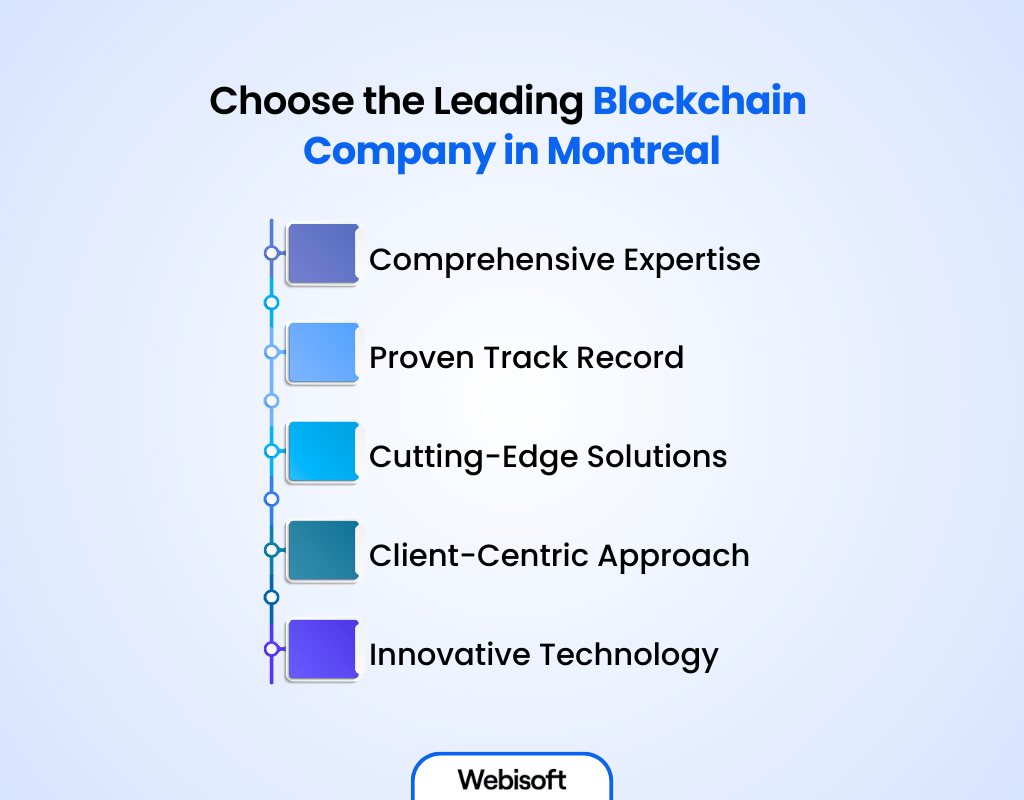
Webisoft is the option on this list that combines full-cycle blockchain capability with an actual Montreal address. Here is what that gets you:
Full-Cycle Expertise
One team covers the whole build: token and protocol design, smart contract development, dApp front ends, and the integrations that connect on-chain logic to your existing systems. No handoffs between a strategy shop and an offshore build shop.
Engineering Discipline
Contracts are built for auditability, tested on testnets, and deployed with deliberate upgrade and key-management decisions, because on-chain mistakes cannot be patched quietly later.
Local, Accountable Delivery
You work directly with the engineers, in your timezone, under Canadian contracts, with in-person sessions available in Montreal when the project benefits from a whiteboard.
Solutions Scoped to the Business Case
Every engagement starts from the business objective, and if blockchain is the wrong tool for part of the problem, Webisoft will say so and architect around it. That honesty up front is what keeps projects from becoming expensive experiments.
Next Steps
Montreal gives you something rare in blockchain development: onshore engineering depth, a favorable cost structure, and a regulatory home base, all in one city. The firms above cover the realistic range of options, from local boutiques to large remote delivery organizations.
If you want a partner that is actually in Montreal and covers the full build from token design to mainnet, contact Webisoft. Bring the business problem; the team will scope the architecture, the timeline, and whether blockchain is even the right answer before you spend on development.
Ask whether they commission independent third-party audits before mainnet, how they handle key management and multisig policy, what their testnet coverage looks like, and whether contracts include pause mechanisms or planned upgrade paths. Deployed contract bugs are permanent, so the firm's answer here matters more than its portfolio.
No, and that is worth knowing before you shortlist. Webisoft and Underlabs are headquartered in Montreal; several others on the list are based in Europe or the US and serve Montreal clients remotely. Remote firms can offer more raw capacity, while local firms offer same-timezone collaboration, on-site sessions, and Canadian contracts.
Three practical reasons: you share a full working day on Eastern Time with New York and Toronto, your contract sits under Canadian law, and the team already works inside PIPEDA and Quebec's Law 25, which shapes what data can go on chain. Quebec's e-business tax credits also keep local rates competitive with offshore options once rework and timezone friction are priced in.
Most production work happens on EVM chains using Solidity, on Cosmos-based chains using CosmWasm and Rust, and on permissioned frameworks like Hyperledger Fabric for consortium use cases. A good partner will recommend public versus permissioned based on your trust model and data constraints, not on what they happen to build most often.
A scoped proof of concept typically takes weeks; a production system with audited smart contracts, front-end product, and integrations usually runs several months. The biggest schedule driver is the security path: independent audit cycles and testnet validation before mainnet deployment should never be compressed.