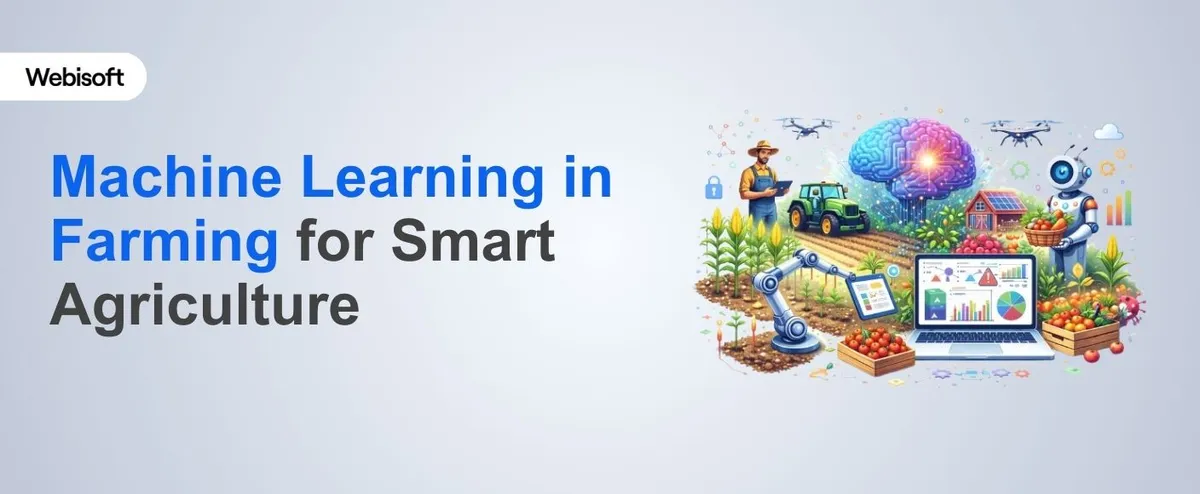
Machine learning in farming is changing how agriculture operates by turning raw farm data into actionable intelligence. From predicting crop yields to monitoring soil health and livestock behavior, machine learning enables farmers to make faster, more accurate decisions while reducing waste, risk, and operational costs.
As traditional farming methods struggle to keep up with climate variability, resource constraints, and rising food demand, AI in farming offers a scalable solution. By integrating smart agriculture technologies with data-driven models, modern farms can optimize productivity, sustainability, and long-term resilience.
What Is Machine Learning in Farming?
Machine learning in farming uses algorithms to analyze agricultural data, recognize patterns, and guide decisions. Unlike traditional software that follows fixed rules, these systems improve over time by learning from data collected from fields, crops, and equipment.
The Core Difference
Traditional farm software reports what happened. Machine learning explains why and predicts what could happen. For example, while a standard system might tell you “Field 12 yielded 180 bushels per acre last year,” a machine learning system correlates that yield with soil moisture, planting date, hybrid choice, weather conditions, and other factors to forecast outcomes under different scenarios.
Sources of Agricultural Data
Data comes from multiple sources:
- Field sensors measure soil moisture, pH, and nutrient levels.
- Weather stations track temperature, rainfall, humidity, and solar radiation.
- Farm equipment logs seeding rates, fertilizer application, and yields.
- Remote sensing includes satellite imagery and drone photography, capturing crop health patterns invisible to the naked eye.
This integration of data provides both broad coverage and detailed insights for smarter farming decisions.
How Machine Learning Works in Agriculture
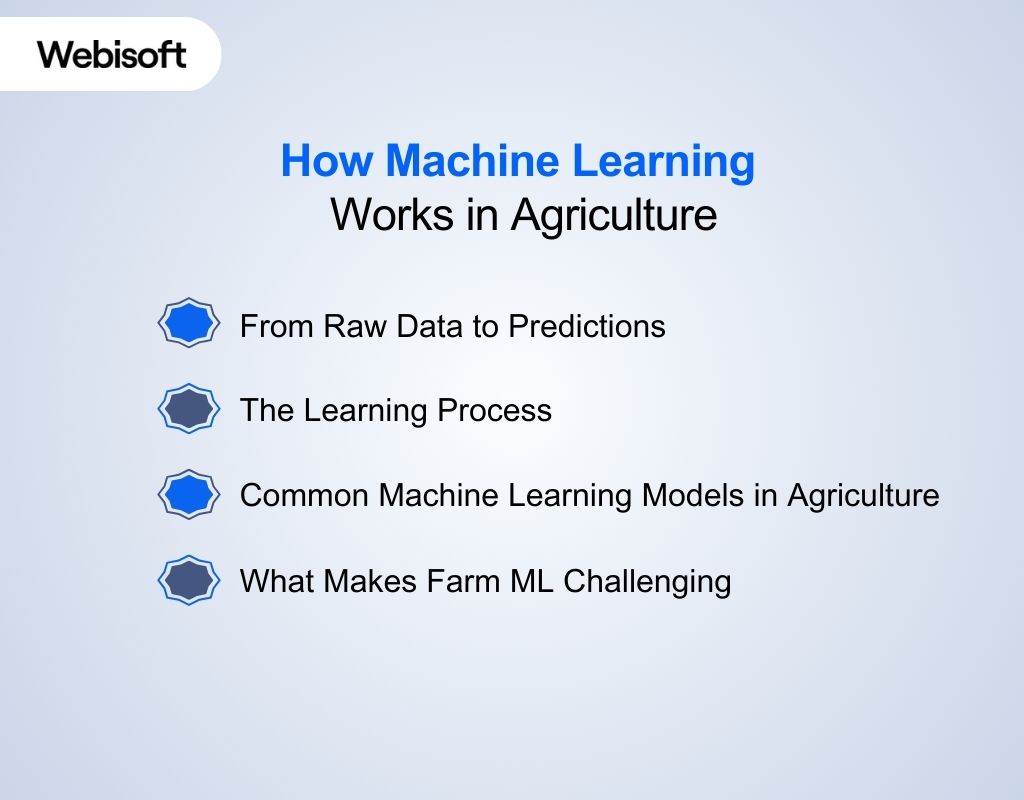
Machine learning isn’t magic. It’s a structured process that turns raw field data into predictions you can act on. Understanding this workflow helps you evaluate whether a system will actually work for your operation.
From Raw Data to Predictions
Data flows continuously: sensors track soil, weather, and crop conditions; equipment logs field operations; satellites capture regular images. But agricultural data is messy. Sensors fail, logs are missed, and weather events disrupt measurements.
Preprocessing cleans this data, removes errors, fills gaps, and aligns timestamps. Feature engineering then transforms raw inputs into meaningful metrics: temperature readings become growing degree days, satellite images convert to vegetation indices, and soil moisture combines with rainfall to estimate water balance.
The Learning Process
Models train on historical examples where inputs and outcomes are known. For instance, yield prediction systems identify which combinations of soil, weather, and management drive high or low yields.
Validation tests whether the model truly learns patterns or just memorizes past data. A model trained on 2020–2023 results must be tested on 2024 data before predicting 2025 outcomes.
Common Machine Learning Models in Agriculture
- Regression models: Identify relationships between variables, e.g., soil moisture vs. yield.
- Random forests: Ensemble decision trees that handle complex interactions and noisy data.
- Neural networks: Capture non-linear patterns in large datasets, useful for image or sensor analysis.
- Support vector machines (SVMs): Classify outcomes such as disease presence or absence.
- Reinforcement learning: Optimizes farm operations through trial-and-error simulations.
What Makes Farm ML Challenging
- Limited samples, massive variables: You might have 10 years of yield data but thousands of potential factors affecting outcomes.
- Seasonal constraints: Each test requires a full growing season. A failed experiment costs an entire year of production.
- Geographic variability: Models trained in Iowa may fail in California. Soils differ. Climates vary. Pests change by region.
- Weather unpredictability: Climate change pushes conditions outside historical ranges. Models must handle unprecedented events gracefully.
Webisoft builds machine learning systems designed specifically for real-world farming. Partner with us to turn your farm data into actionable insights that improve yields, reduce costs, and optimize resources.
Key Applications of Machine Learning in Farming
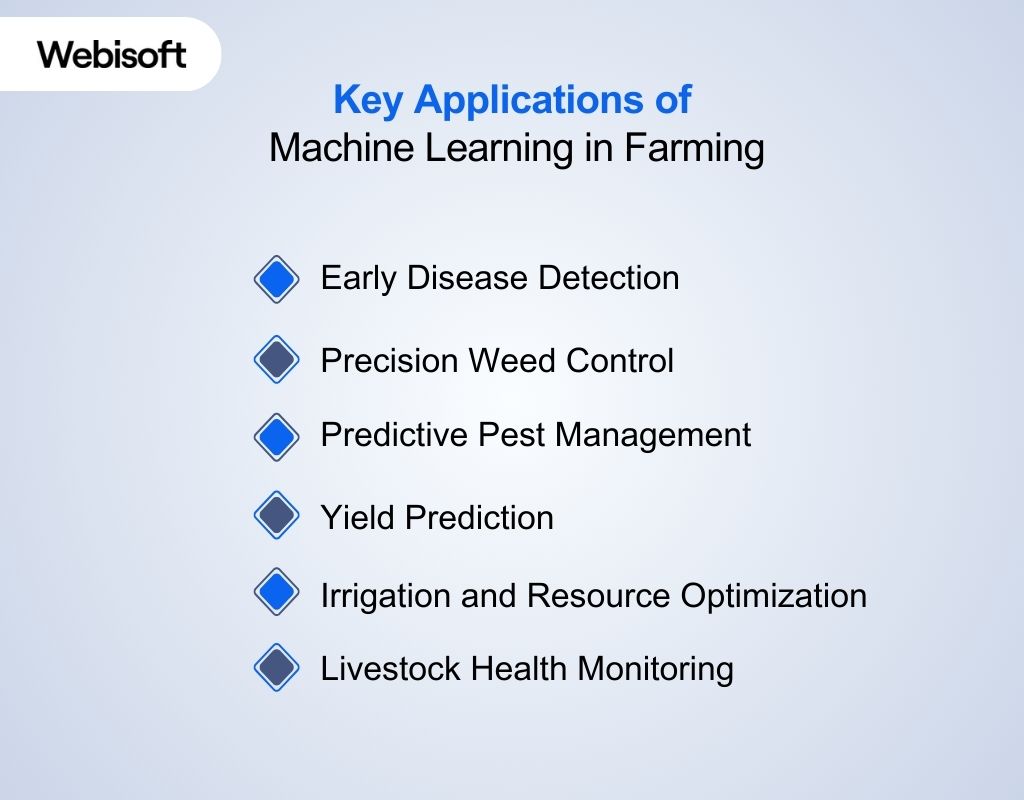
Machine learning in agriculture works across multiple use cases, from detecting crop diseases before visible symptoms to predicting yields months before harvest. These applications have moved beyond prototypes to systems delivering measurable results.
Early Disease Detection
Machine learning helps identify crop diseases days or even weeks before visible symptoms appear. By analyzing subtle changes in leaf color, texture, and plant structure from drone and satellite imagery, algorithms can alert farmers to potential outbreaks. This allows for targeted treatments, reducing chemical use and preventing large-scale yield losses.
Precision Weed Control
AI enables plant-by-plant identification of weeds, allowing herbicides to be applied only where needed. By distinguishing crops from weeds in real time, farmers save on chemical costs and reduce environmental impact, while maintaining effective weed control across large fields.
Predictive Pest Management
Machine learning predicts pest outbreaks instead of reacting to them. Models combine weather data, crop growth stages, trap counts, and regional reports to forecast pest pressure several days in advance.
Farmers receive actionable alerts indicating when treatment is economically worthwhile, improving crop protection and minimizing unnecessary pesticide use.
Yield Prediction
ML models forecast crop yields by analyzing soil conditions, weather patterns, crop type, and historical management practices. Accurate yield predictions help farmers plan harvests, optimize storage and logistics, and make informed decisions about planting and input investments.
Irrigation and Resource Optimization
Machine learning optimizes water, fertilizer, and energy use by analyzing soil moisture, weather forecasts, and crop needs. This improves efficiency, reduces waste, and supports sustainable farming practices while maintaining high crop productivity.
Livestock Health Monitoring
For farms with animals, ML can detect early signs of illness or stress through sensor data and computer vision. By monitoring behavior, movement, and vital signs, farmers can intervene early, reducing veterinary costs and improving overall herd health.
Precision Agriculture Powered by Machine Learning
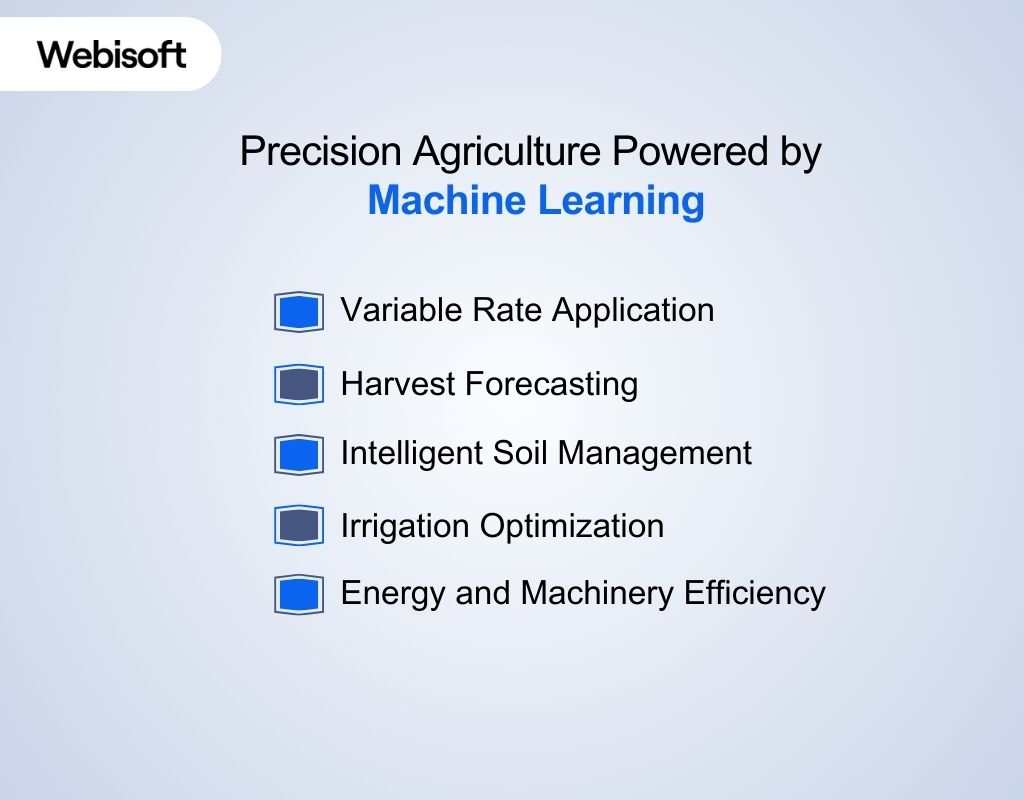
Precision agriculture recognizes that different parts of each field need different management. A hilltop with shallow soil can’t support the same seeding rate as deep bottomland. Precision agriculture machine learning makes variable management practical at commercial scale.
Variable Rate Application
Variable rate systems adjust seeding, fertilizer, and chemical application in real time, recognizing that different parts of a field require different management. Machine learning predicts optimal inputs based on GPS positioning, soil tests, and yield maps. Data-driven results:
- Input cost reduction: 15–25%
- Yield improvement: 8–15% in variable fields
- Payback period: 3–5 years depending on field variability
Harvest Forecasting
Machine learning predicts crop yields weeks before harvest by integrating multi-source data, enabling better business and logistics decisions. Data-driven results:
- Early season (30 days post-planting): 70–75% accuracy
- Mid-season (60 days pre-harvest): 80–85% accuracy
- Pre-harvest (30 days out): 90–95% accuracy
- Example: A wheat operation locked forward contracts 30 days before harvest at $6.20 per bushel, avoiding a post-harvest drop to $5.50 and securing $180,000 additional revenue over 4,500 acres
Intelligent Soil Management
Machine learning creates high-resolution soil maps by combining soil samples, terrain data, satellite imagery, and yield maps, improving nutrient management and field planning. Data-driven results:
- Sampling cost reduction: 60–70%
- Fertilizer and lime savings: 20–30%
- Targeted improvements: precise drainage solutions and cover crop selection
Irrigation Optimization
AI-driven irrigation systems analyze soil moisture, crop type, weather forecasts, and evapotranspiration rates to apply the right amount of water where and when it is needed. Data-driven results:
- Water savings: 20–40% depending on crop and field
- Energy cost reduction: 10–15% through optimized pump scheduling
- Yield increase: 5–10% due to reduced water stress
Energy and Machinery Efficiency
Machine learning optimizes farm equipment use, including fuel consumption, field operations scheduling, and machinery maintenance, improving overall operational efficiency. Data-driven results:
- Fuel savings: 8–12% through optimized routing and load management
- Equipment utilization: 10–20% improvement by reducing idle time
- Maintenance cost reduction: 15% via predictive maintenance alerts
AI in Farming for Smart Farm Management
Artificial intelligence in agriculture goes beyond managing individual tasks, enabling comprehensive farm optimization. Smart farming systems coordinate operations, allocate resources, and support strategic decisions that affect overall business performance.
Integrated Farm Planning
Modern farms generate data from field operations, equipment, labor, and market conditions. Integrated farm planning platforms unify these streams, helping farmers make informed decisions.
For instance, harvest timing can consider crop moisture, drying capacity, weather, equipment, labor, storage, and market prices all at once, beyond the reach of single-purpose tools.
Predictive Maintenance
Equipment failures during critical periods can be more costly than the repairs themselves, potentially affecting yield and market timing. AI-driven predictive maintenance monitors sensor data, operating hours, and historical failure patterns to forecast when components might fail.
Farmers can then plan repairs ahead of time, stage replacement parts, and minimize downtime, ensuring machinery is always ready when it matters most.
Resource and Workflow Optimization
AI can also optimize overall farm resource allocation. By analyzing patterns across multiple fields and operations, the system can suggest the best timing for planting, irrigation, fertilization, and harvesting. Labor and equipment are scheduled efficiently, reducing idle time and operational bottlenecks, while maximizing productivity and minimizing waste.
Machine Learning for Crop Yield Prediction
Accurate yield forecasting drives value across marketing, logistics, and financial planning. Modern machine learning systems achieve 90–95% accuracy, far above the 60–70% typical of traditional methods.
How the Models Work
Yield prediction combines environmental, crop, management, and soil data. Daily temperatures, rainfall, and solar radiation set the baseline. Crop monitoring provides real-time performance through vegetation indices and stress signals.
Planting dates, hybrid selection, and fertilizer timing influence growth, while soil properties and historical yields highlight consistently high-performing areas.
Business Applications
Accurate forecasts transform operations. Marketing decisions such as forward contracts, storage allocation, and pricing are data-driven.
Harvest scheduling, trucking, and grain drying become more efficient, while cash flow projections, loans, and crop insurance decisions align with expected outcomes.
Decision Support and Risk Management
Yield predictions also guide risk management. Farmers can model scenarios like drought or pest outbreaks to anticipate impacts, plan contingencies, and reduce financial exposure, enhancing overall farm resilience.
Machine Learning for Soil Analysis
Traditional soil testing samples fields sparsely, often every three years, leaving gaps in understanding. Machine learning enables high-resolution soil analysis, predicting properties across entire fields from limited samples.
Predictive Mapping
By combining strategic soil samples with terrain data, satellite imagery, and yield maps, machine learning identifies relationships between easily measured variables and expensive lab tests. Once trained, models can predict soil properties every 30 feet rather than every 2.5 acres.
For example, a 60-acre field might cost $1,500 using traditional sampling at one-acre resolution, while predictive mapping achieves similar detail for $375–$500.
Dynamic Nutrient Management
Soil conditions change continuously, influenced by rainfall, temperature, and crop growth. Machine learning updates recommendations in real time. For instance, spring nitrogen testing for corn establishes a baseline.
After three inches of rain on sandy soil in mid-June, the system calculates 30–40 pounds of nitrogen lost in specific zones and adjusts sidedress applications, adding 25–35 pounds per acre where needed, without overapplying in heavier soils.
Soil Health Monitoring
Beyond nutrient management, machine learning can track long-term soil health trends. By analyzing historical data, weather patterns, crop rotations, and input usage, systems can detect declining organic matter, compaction, or erosion risks.
Farmers receive actionable insights to implement cover crops, reduced tillage, or amendments, ensuring sustainable productivity over multiple seasons.
Machine Learning for Livestock Monitoring
Livestock operations generate continuous data from individual animals. Machine learning for livestock monitoring transforms this into health monitoring, production optimization, and management decisions.
Automated Health Monitoring
Early disease detection reduces spread and treatment costs. Machine learning tracks subtle changes in activity, feeding behavior, and social interactions, detecting issues days before traditional observation.
Wearable sensors, cameras, feed systems, and temperature monitors provide continuous, real-time insights.
Detection capabilities:
- Mastitis identification 24-48 hours before visible symptoms (dairy)
- Respiratory disease 2-3 days pre-symptomatic (beef)
- Lameness before visible gait changes
- Heat detection with 90%+ accuracy for breeding
Precision Feeding
Individual monitoring allows nutrition tailored to each animal. Feed efficiency analysis identifies top performers and poor converters, while ration optimization adjusts for production stage, body condition, and environment.
Dairy operations benefit most, as nutrition needs differ across lactation stages, metabolic transitions, and dry periods.
Financial returns:
- 8-15% feed cost reduction through precision feeding
- 10-20% better conception rates from improved health
- 20-30% fewer treatment interventions through early detection
- 30-40% reduction in monitoring labor time
Benefits of Machine Learning in Agriculture
When properly implemented, machine learning delivers measurable results, real outcomes from commercial deployments, not just vendor claims.
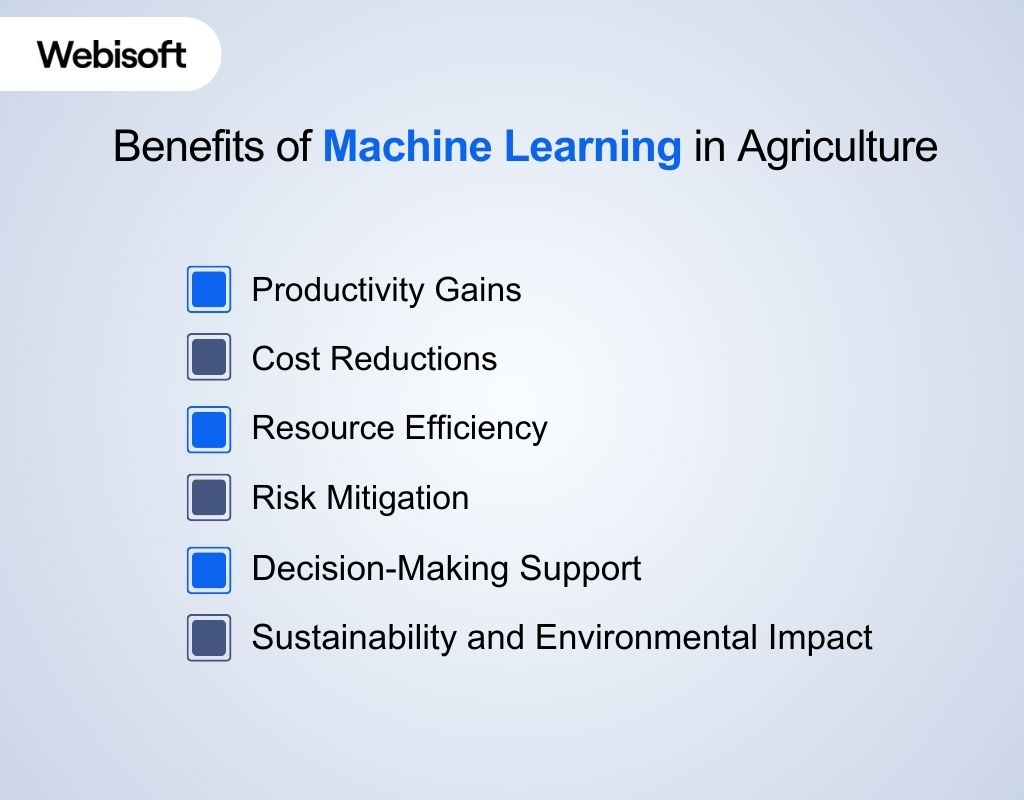
Productivity Gains
ML applications boost yields through precision management. Disease detection prevents losses, irrigation timing optimizes water use, and nutrient management enhances crop performance.
For example, a 3,000-acre corn and soybean operation saw corn yields rise from 195 to 228 bushels per acre and soybeans from 52 to 61 bushels, both 17% increases, generating roughly $450,000 additional annual revenue.
Cost Reductions
Precision applications reduce input costs immediately. Smart irrigation cuts water use by 20–30%, fertilizer costs drop 15–25%, and spot spraying reduces herbicide usage 70–90%. Variable rate planting lowers seed costs by 8–12%, applying optimal populations only where needed.
Resource Efficiency
Smart farming systems minimize waste while improving economics. Water savings reduce pumping costs, and precision chemical use protects the environment. For instance, nitrogen management using ML saves money while reducing leaching and environmental impact.
Risk Mitigation
Machine learning reduces yield variability and financial uncertainty. Predictive models identify pest outbreaks, disease risk, and extreme weather conditions in advance, enabling proactive interventions. This reduces losses, stabilizes production, and improves financial planning.
Decision-Making Support
Predictive insights from ML improve farm planning, crop rotations, and investment decisions. Farmers can schedule labor, equipment, and harvests more efficiently, plan input purchases, and make informed marketing and storage choices based on accurate forecasts.
Sustainability and Environmental Impact
ML supports long-term sustainability by optimizing inputs and conserving resources. Water and fertilizer efficiency reduce environmental contamination, while soil health monitoring and crop rotation recommendations promote soil fertility and lower the farm’s carbon footprint.
Challenges and Limitations of AI in Farming
Despite its potential, machine learning in agriculture faces real implementation barriers that can hinder adoption and results.
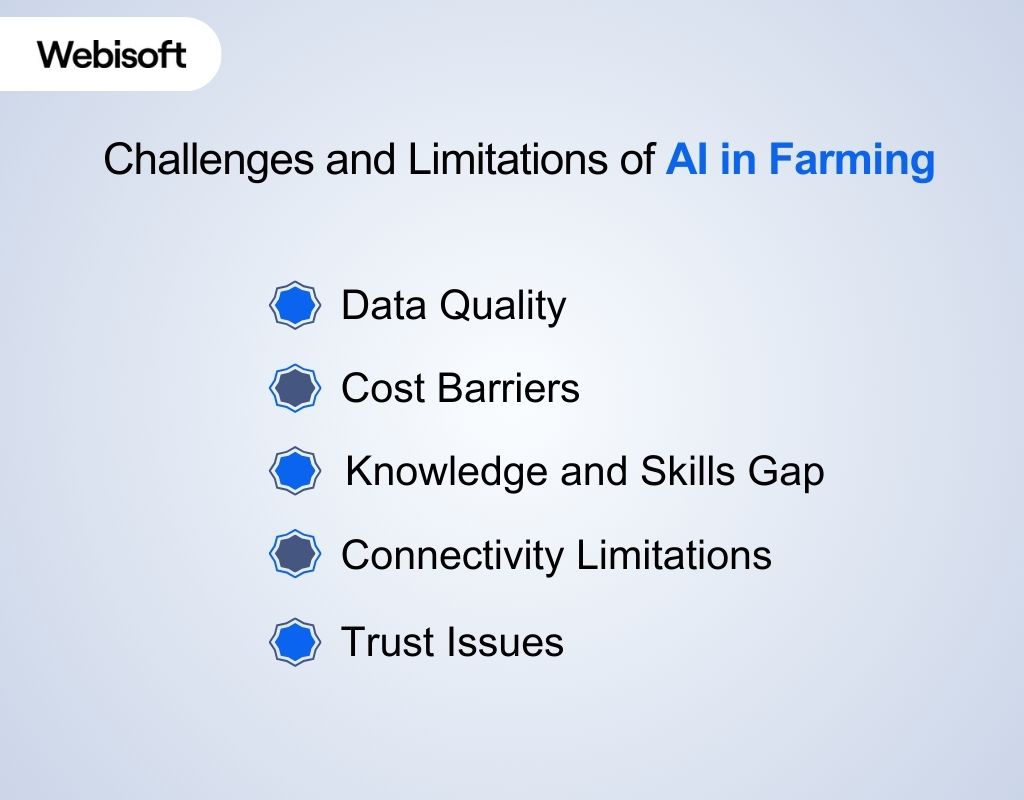
Data Quality
Agricultural data is often messy. Sensors fail in extreme conditions, connectivity drops in remote areas, and operators may skip logging. Small, inconsistent, or incomplete datasets lead to unreliable predictions and eroded trust.
Cost Barriers
Precision agriculture equipment and software require significant investment. Sensors and monitoring can cost $15,000–50,000 per farm, application equipment $30,000–150,000, and software $5,000–25,000 annually. ROI timelines often stretch 3–7 years, favoring larger operations.
Knowledge and Skills Gap
Effective use demands technical literacy. Interpreting model outputs, troubleshooting, and understanding predictions requires statistical and probabilistic knowledge that many farmers lack. Support and training in rural areas are limited, and technology evolves faster than educational programs.
Connectivity Limitations
Reliable internet is not always available in rural areas. Cloud-based and real-time systems demand consistent connections and high bandwidth, which may be costly or unavailable. Edge computing and offline-capable systems can help mitigate this challenge.
Trust Issues
Complex AI models can appear opaque, making farmers hesitant to follow recommendations. Building trust requires explainable AI, transparency about model confidence, local validation, and gradual adoption that demonstrates value.
Future of Machine Learning in Farming
Machine learning in agriculture continues evolving rapidly. Several trends shape where the technology heads next and how it will integrate into farming systems.
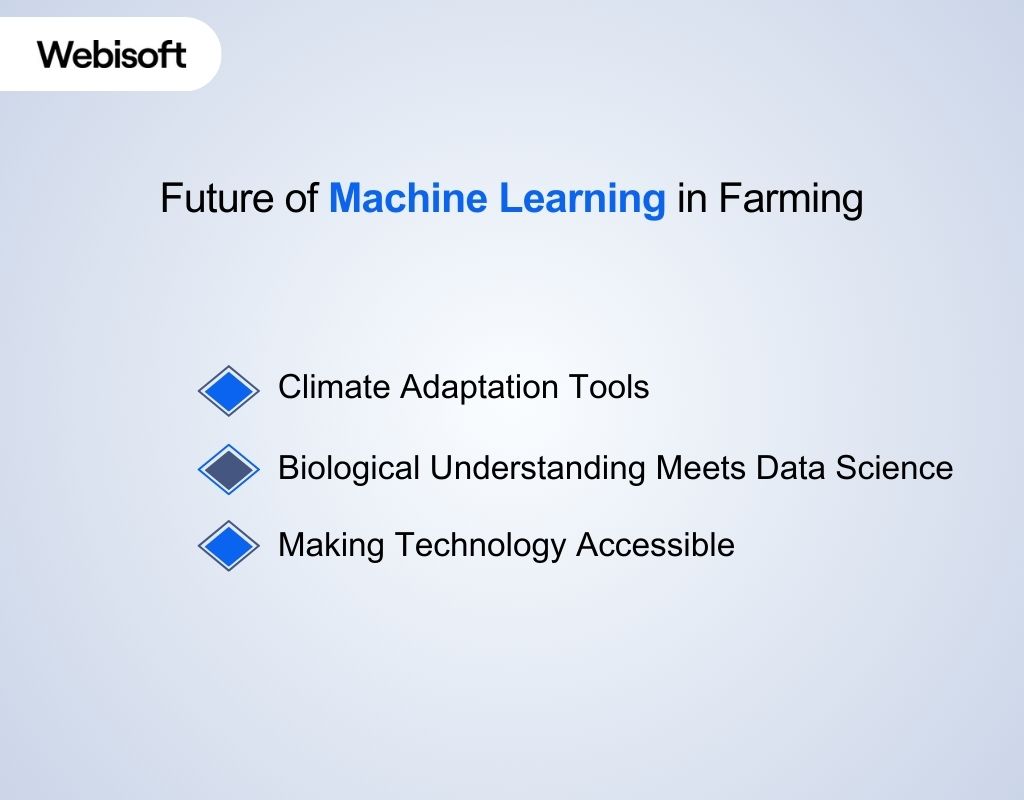
Climate Adaptation Tools
Weather patterns shift in ways that break historical assumptions. Temperature extremes occur more frequently. Rainfall becomes less predictable. Growing seasons shift. Machine learning will increasingly focus on helping farmers adapt.
Climate-informed variety selection will match genetics to projected conditions. Planting date optimization will adjust for changing frost dates. Irrigation strategies will account for greater rainfall uncertainty.
Biological Understanding Meets Data Science
Next-generation systems will combine data-driven learning with biological understanding. Crop growth models will integrate with ML predictions. Soil process models will enhance statistical approaches. Pest models incorporating life cycles will improve forecasting.
These hybrid approaches perform better with limited data by incorporating biological constraints. Predictions respect what’s biologically possible. Behavior outside training conditions is more robust. Interpretability improves when recommendations align with understood mechanisms.
Making Technology Accessible
Current precision agriculture concentrates among large commercial operations. Future development will focus on democratizing access so benefits reach small and medium farms. Mobile-first platforms designed for smartphones will provide sophisticated advice without expensive equipment.
Voice interfaces will reduce literacy barriers. Local language support will extend beyond English-dominant systems. Shared service models will make expensive equipment accessible without ownership.
Equipment cooperatives will pool resources. Drone imaging services will provide aerial monitoring. These approaches democratize precision agriculture while maintaining economic viability.
Webisoft’s Approach to Machine Learning in Farming
Implementing machine learning in agriculture requires more than algorithms. It demands systems that work reliably in real-world farm conditions. At Webisoft, we build ML solutions tailored to your operations, data, and business goals.
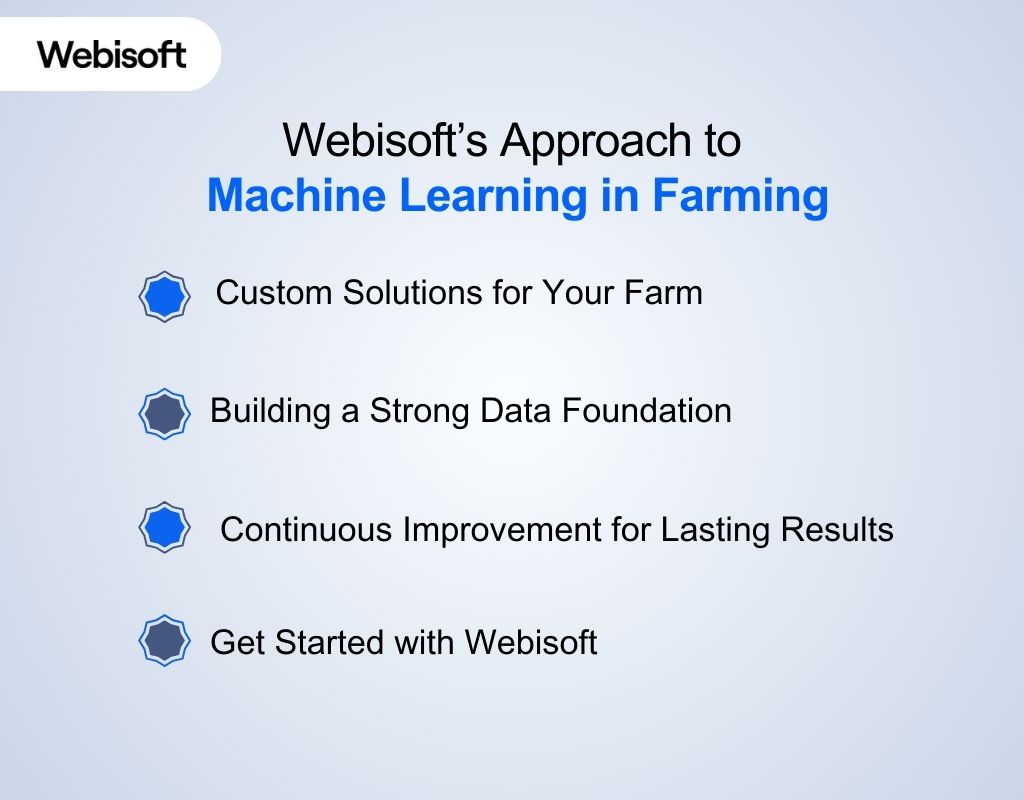
Custom Solutions for Your Farm
We design production-ready models that handle sensor failures, connectivity interruptions, and the messiness of outdoor operations. Our systems integrate seamlessly with your existing tools, equipment displays, mobile apps, and dashboards. So you can adopt AI without disruption.
Building a Strong Data Foundation
Reliable predictions start with reliable data. We assess your current sources, fill gaps, and implement automated pipelines for ingestion, cleaning, and preprocessing. Feature engineering extracts actionable insights, while storage ensures reproducibility and easy access.
Continuous Improvement for Lasting Results
Farming conditions change, and static models degrade. Webisoft’s systems monitor performance, detect drift, and retrain automatically using new data. Confidence scoring, A/B testing, and rollback features ensure updates improve outcomes before full deployment.
Get Started with Webisoft
Maximize yields, reduce costs, and make smarter decisions with machine learning built for real farms. Partner with Webisoft to transform data into measurable results.
Conclusion
Machine learning in farming has moved from concept to practical, results-driven technology. From precision inputs to yield prediction and livestock monitoring, it empowers farmers to make smarter, data-driven decisions. Success depends on thoughtful implementation that balances robust AI with human expertise.
Machine learning excels at analyzing vast data and detecting patterns, while farmers bring local knowledge and strategic judgment. Together, this partnership drives higher efficiency, productivity, and sustainability, unlocking the full potential of modern agriculture.
FAQ
Machine learning can power real‑time weed identification, allowing herbicides to be applied only where weeds are present, significantly reducing chemical use, cost, and environmental impact compared to broadcast spraying.
Yes. While adoption has historically skewed toward large farms, trends such as mobile‑first platforms, shared service models, and voice interfaces are helping make ML tools more accessible to small and medium operations.
ML systems analyze data such as soil moisture, weather forecasts, and crop needs to recommend precise watering schedules. Automated irrigation driven by machine learning reduces waste, conserves water, and maintains optimal crop hydration.
ML deployment requires good data infrastructure, preprocessing, and sometimes technical support. However, integrated platforms and partnerships with tech providers make it increasingly feasible, especially when systems are tailored to agricultural conditions.
ML models can incorporate climate trends and localized forecasts to help farmers adjust planting dates, crop varieties, and irrigation plans, making agricultural decisions more resilient under shifting conditions.
