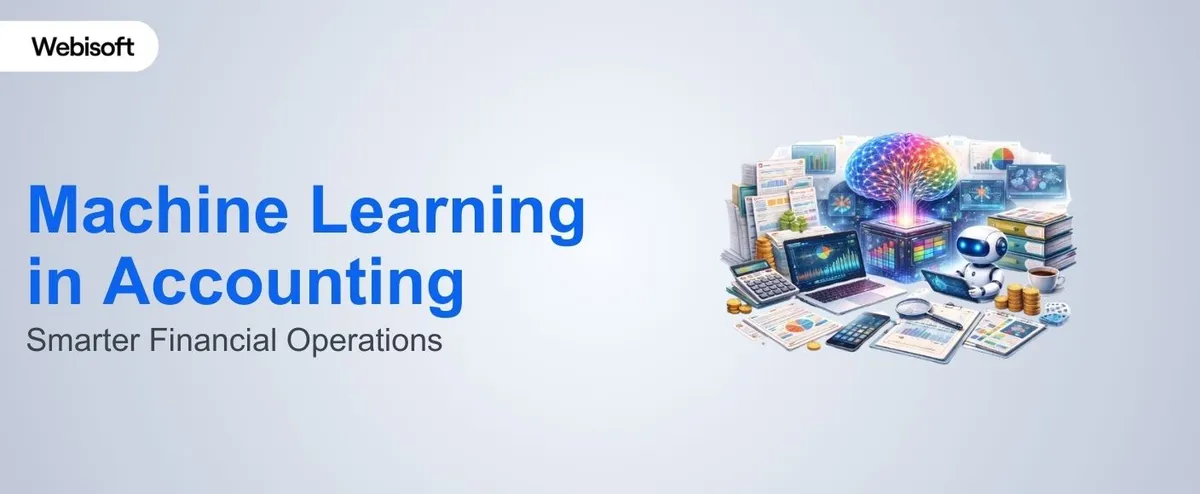
Machine learning in accounting is transforming how financial data is processed, analyzed, and acted upon. By enabling systems to learn from historical records, transactions, and patterns, organizations can automate routine accounting tasks, improve accuracy, and generate predictive financial insights that were previously difficult to achieve.
As accounting teams face increasing data volumes, compliance pressures, and demand for real-time reporting, AI-driven solutions are becoming essential. From invoice processing and fraud detection to forecasting and smart accounting systems, machine learning is redefining how modern finance operations function at scale.
What Is Machine Learning in Accounting?
Machine learning in accounting refers to the use of algorithms that analyze financial data, learn from historical records, and improve accounting processes without relying solely on fixed rules. These systems adapt as new data is introduced, allowing accounting workflows to become more accurate, efficient, and responsive over time.
Definition and Scope
In accounting, machine learning is used to process large volumes of financial data and identify patterns that support automation, risk detection, and financial analysis. Its scope extends across core accounting functions such as transaction classification, reconciliation, compliance monitoring, and financial forecasting.
Machine learning in accounting is applied at both operational and strategic levels, supporting day-to-day processing as well as higher-level financial planning and decision-making.
How It Differs from Traditional Accounting Software
Traditional accounting software follows predefined rules and requires manual configuration whenever workflows or business conditions change. While reliable for record-keeping, these systems struggle to adapt to evolving financial patterns.
Machine learning-based accounting systems continuously refine their behavior by learning from past outcomes. Instead of executing static instructions, they recognize trends, flag anomalies, and improve accuracy over time, reducing the need for constant manual intervention.
Role of Data-Driven Decision-Making
Machine learning enables accounting teams to base decisions on patterns and probabilities rather than assumptions or manual review. It supports data-driven decision-making by:
- Analyzing historical financial behavior to identify trends and risks
- Providing predictive insights for budgeting and forecasting
- Improving accuracy in financial reporting and compliance
- Enabling proactive responses to irregularities or performance changes
By turning financial data into actionable intelligence, machine learning helps organizations move from reactive accounting to forward-looking financial management.
How Machine Learning Works in Accounting
Machine learning in accounting works by processing financial data, identifying patterns, and refining outputs based on historical outcomes. These systems are designed to improve accuracy over time as they are exposed to more transactions, corrections, and feedback from accounting teams.
Data Collection and Preparation
The process begins with collecting structured financial data from accounting systems, ERPs, payment platforms, and external financial sources. This data is cleaned, normalized, and standardized so models can interpret it consistently. Accurate data preparation is critical, as the quality of input directly affects the reliability of machine learning outputs.
Model Training and Pattern Recognition
Once data is prepared, machine learning models are trained on historical financial records. During training, the system learns to recognize normal accounting behavior, such as typical expense patterns, payment cycles, or vendor activity. Over time, the model becomes capable of distinguishing expected financial behavior from irregular or high-risk activity.
Continuous Learning and Feedback Loops
Machine learning systems improve through feedback. When accountants approve, correct, or reject system outputs, that feedback is used to refine future predictions. This continuous learning process allows accounting workflows to adapt to changes in business operations, regulations, or transaction volume without constant reconfiguration.
Integration into Accounting Workflows
After training, machine learning models are integrated into accounting workflows where they operate alongside existing software. They assist with classification, validation, monitoring, and analysis tasks while maintaining alignment with internal controls and compliance requirements. This integration ensures machine learning enhances existing processes rather than disrupting them.
Key Applications of Machine Learning in Accounting
Machine learning in accounting supports a wide range of financial processes, from routine transaction handling to higher-level analysis and control. These applications help accounting teams reduce manual effort, improve accuracy, and gain deeper insight into financial performance.
Accounting Automation Using Machine Learning
Machine learning enables intelligent automation by learning from historical transaction data and accounting decisions. Instead of relying on fixed rules, systems adapt to changing transaction patterns and business activity. This allows automated classification, reconciliation, and validation of accounting entries with increasing accuracy over time.
Machine Learning for Invoice Processing
Invoice processing is one of the most common applications of machine learning in accounting. Models extract data from invoices, match them with purchase orders and payment records, and identify discrepancies. This reduces processing delays, minimizes errors, and improves efficiency across accounts payable workflows.
Machine Learning for Fraud Detection
Fraud detection relies on identifying patterns that deviate from normal financial behavior. Machine learning models analyze transaction timing, amounts, vendor activity, and historical behavior to detect anomalies. These systems continuously adapt as new fraud patterns emerge, improving detection accuracy while reducing false alerts.
Machine Learning for Financial Forecasting
Machine learning for financial forecasting uses historical financial data, trends, and operational variables to generate predictive insights. These models support cash flow forecasting, revenue projections, and expense planning, enabling accounting and finance teams to make more informed decisions under uncertainty.
AI in Accounting for Financial Reporting
AI in accounting enhances financial reporting by automating data aggregation, identifying variances, and highlighting significant changes in financial performance. Machine learning systems help generate consistent reports while drawing attention to trends or anomalies that require further analysis.
Machine Learning for Audit and Compliance Support
Machine learning assists audit and compliance processes by continuously monitoring transactions and controls. Instead of periodic reviews, models assess risk in real time, flag high-risk entries, and support audit readiness. This improves transparency and reduces the manual burden associated with compliance reporting.
Predictive Analytics for Accounting Decision-Making
Beyond operational tasks, machine learning enables predictive analytics that support strategic accounting decisions. By analyzing long-term trends and patterns, systems provide insights into cost behavior, profitability drivers, and scenario outcomes, helping organizations plan more effectively.
AI in Accounting and AI-Powered Accounting Software
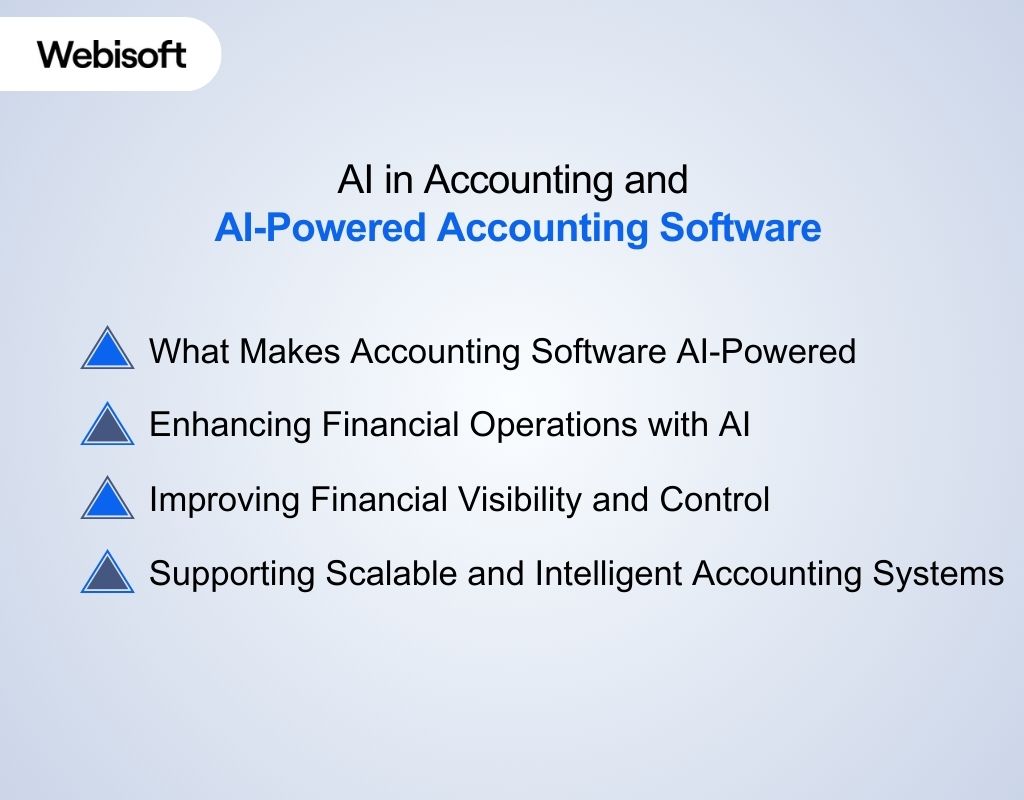
AI in accounting comes to life through AI-powered accounting software that embeds machine learning directly into financial operations. Rather than functioning as standalone tools, these systems integrate with existing accounting platforms to improve efficiency, visibility, and control across the finance function.
What Makes Accounting Software AI-Powered
AI-powered accounting software goes beyond basic automation by using machine learning models that learn from financial data and user interactions. These systems adapt to changing transaction patterns and business conditions without constant manual configuration. AI-powered accounting software typically includes:
- Machine learning models trained on historical accounting data
- Automated classification, validation, and anomaly detection
- Continuous learning based on user feedback and outcomes
This distinguishes intelligent systems from traditional software that relies on static rules and predefined workflows.
Enhancing Financial Operations with AI
AI in accounting strengthens financial operations by embedding intelligence into everyday workflows. Machine learning supports transaction processing, reconciliation, reporting, and monitoring tasks while maintaining alignment with internal controls. Key operational improvements include:
- Faster and more accurate transaction processing
- Reduced manual reviews and exception handling
- Improved consistency across accounting records
These capabilities help accounting teams manage increasing data volumes without compromising accuracy.
Improving Financial Visibility and Control
Machine learning-driven accounting systems continuously analyze financial activity, providing real-time insights into performance and risk. Instead of waiting for periodic reports, finance teams gain early visibility into anomalies, trends, and potential issues. This improves:
- Oversight of spending and cash flow
- Detection of irregular or high-risk transactions
- Confidence in financial reporting and compliance
Supporting Scalable and Intelligent Accounting Systems
As organizations grow, accounting complexity increases across entities, geographies, and transaction types. AI-powered accounting software scales with this complexity by adapting to new data patterns and operational requirements. Machine learning enables automated accounting systems to remain effective as transaction volumes rise, supporting sustainable growth without linear increases in accounting effort.
Smart Accounting Solutions for Modern Businesses
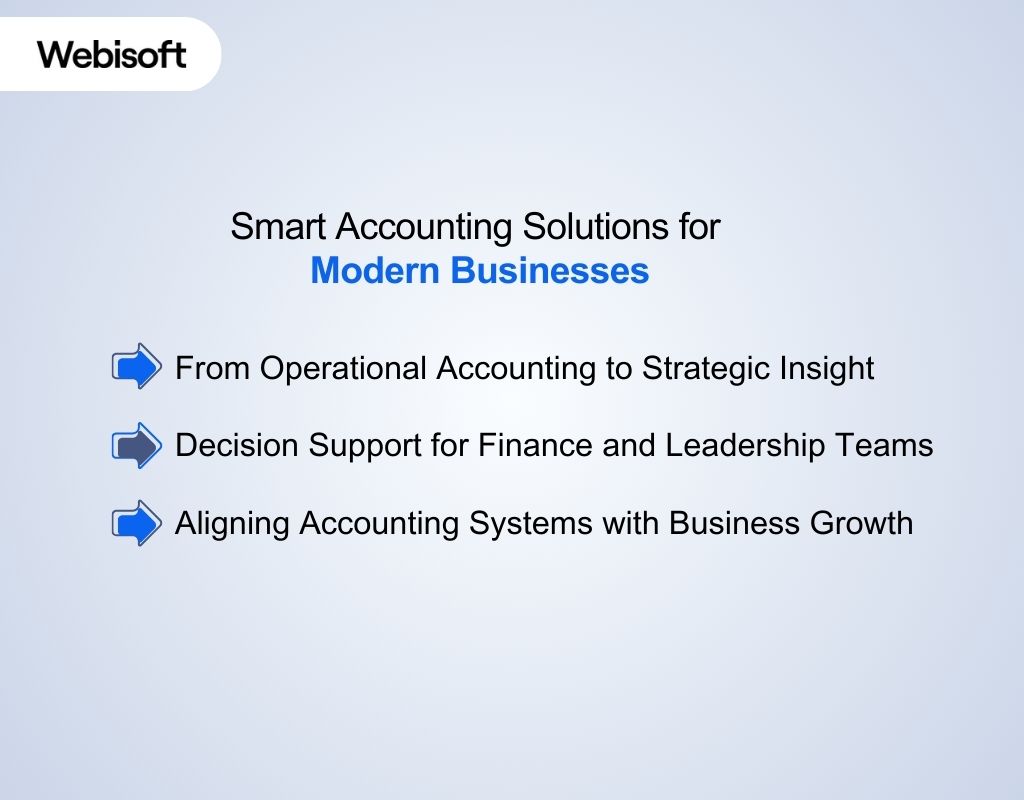
Smart accounting solutions use machine learning to transform accounting from a reactive, record-keeping function into a proactive, insight-driven operation. By analyzing financial data continuously, these systems support better decision-making, stronger controls, and improved operational efficiency.
From Operational Accounting to Strategic Insight
Machine learning enables accounting systems to go beyond transaction processing and support higher-level financial analysis. Smart accounting solutions identify trends, detect inefficiencies, and surface insights that help finance leaders understand not just what happened, but why it happened and what may happen next. These insights allow accounting teams to contribute more directly to business strategy and performance management.
Decision Support for Finance and Leadership Teams
Smart accounting solutions support data-driven decisions by turning complex financial data into clear, actionable information. Machine learning models analyze historical and real-time data to provide context around financial performance and potential outcomes. This decision support helps organizations evaluate risks, optimize costs, and plan more effectively across departments.
Aligning Accounting Systems with Business Growth
As businesses expand, accounting systems must handle increased complexity without slowing operations. Smart accounting solutions scale across entities, currencies, and transaction types while maintaining accuracy and consistency.
By adapting to evolving business needs, machine learning-powered accounting systems help organizations maintain control and insight as financial operations grow. Streamline your accounting operations and unlock predictive insights with Webisoft’s machine learning solutions. Schedule a free consultation today and see how AI can transform your financial workflows.
Automated Accounting Systems vs Traditional Automation
| Comparison Factor | Traditional Rule-Based Automation | Machine Learning–Driven Accounting Systems |
|---|---|---|
| Core Logic | Operates on predefined rules and conditions | Learns patterns from historical accounting data |
| Adaptability | Requires manual rule updates when workflows change | Adapts automatically as transaction patterns evolve |
| Handling Exceptions | Struggles with edge cases and unusual transactions | Identifies and learns from exceptions over time |
| Scalability | Performance degrades as volume and complexity increase | Scales effectively with growing data and transactions |
| Maintenance Effort | High ongoing maintenance due to frequent rule tuning | Lower long-term maintenance through continuous learning |
| Accuracy Over Time | Accuracy remains static or declines without updates | Accuracy improves as more data is processed |
Machine learning-powered automated accounting systems provide greater resilience and long-term efficiency compared to traditional automation. By learning from real financial behavior rather than following rigid rules, they offer a more sustainable foundation for modern accounting operations.
Benefits of Machine Learning in Accounting
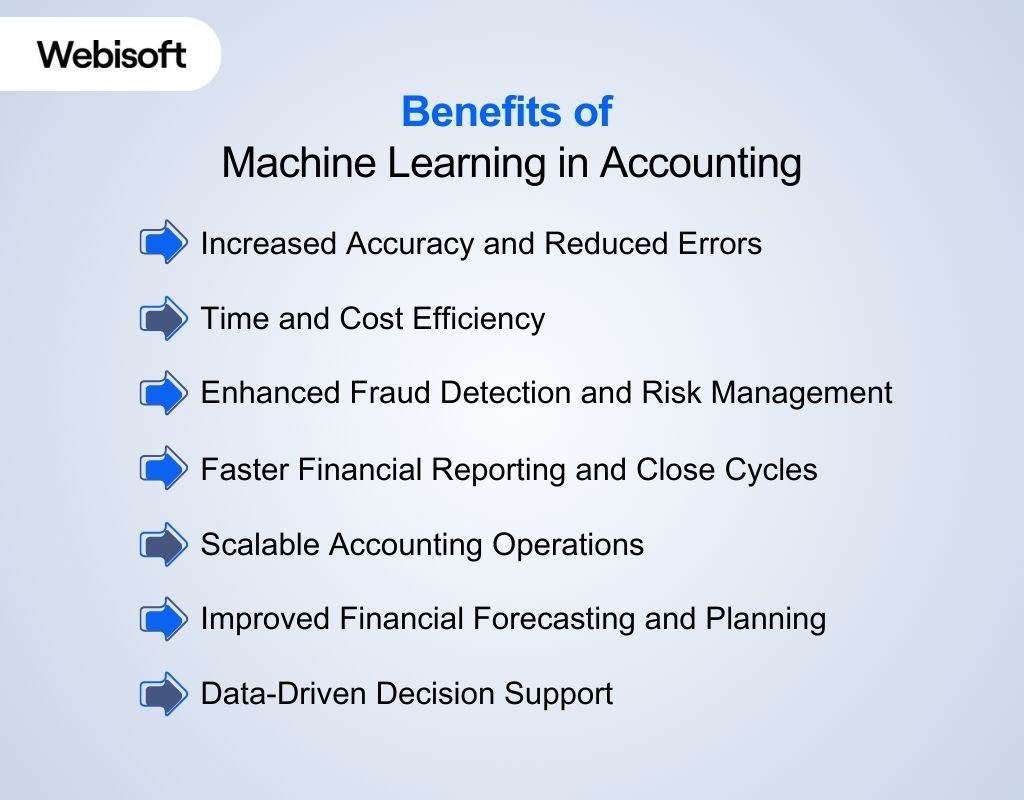
Machine learning in accounting delivers measurable advantages across efficiency, accuracy, risk management, and strategic insight. When implemented correctly, it enhances both operational accounting and higher-level financial decision-making.
Increased Accuracy and Reduced Errors
Machine learning models analyze patterns across large financial datasets, reducing the likelihood of manual errors in transaction classification, reconciliation, and reporting. As systems learn from corrections and historical outcomes, accuracy improves over time.
Time and Cost Efficiency
By automating repetitive accounting tasks, machine learning significantly reduces processing time and operational costs. Accounting teams spend less time on manual reviews and more time on analysis and oversight.
Enhanced Fraud Detection and Risk Management
Machine learning improves fraud detection by continuously monitoring transactions and identifying anomalies that deviate from normal behavior. This proactive approach reduces financial risk and supports stronger internal controls.
Faster Financial Reporting and Close Cycles
AI-powered accounting systems accelerate data aggregation and validation, enabling faster month-end and year-end close processes. This improves reporting timeliness and decision-making speed.
Scalable Accounting Operations
Machine learning allows accounting systems to scale as transaction volumes, entities, and data complexity increase. Organizations can grow without needing proportional increases in accounting staff or manual effort.
Improved Financial Forecasting and Planning
Machine learning supports more accurate forecasting by analyzing historical data, trends, and operational variables. This enables better budgeting, cash flow planning, and scenario analysis.
Data-Driven Decision Support
By transforming financial data into actionable insights, machine learning helps accounting teams support strategic business decisions. Finance leaders gain visibility into trends, risks, and performance drivers.
Challenges and Limitations of AI in Accounting
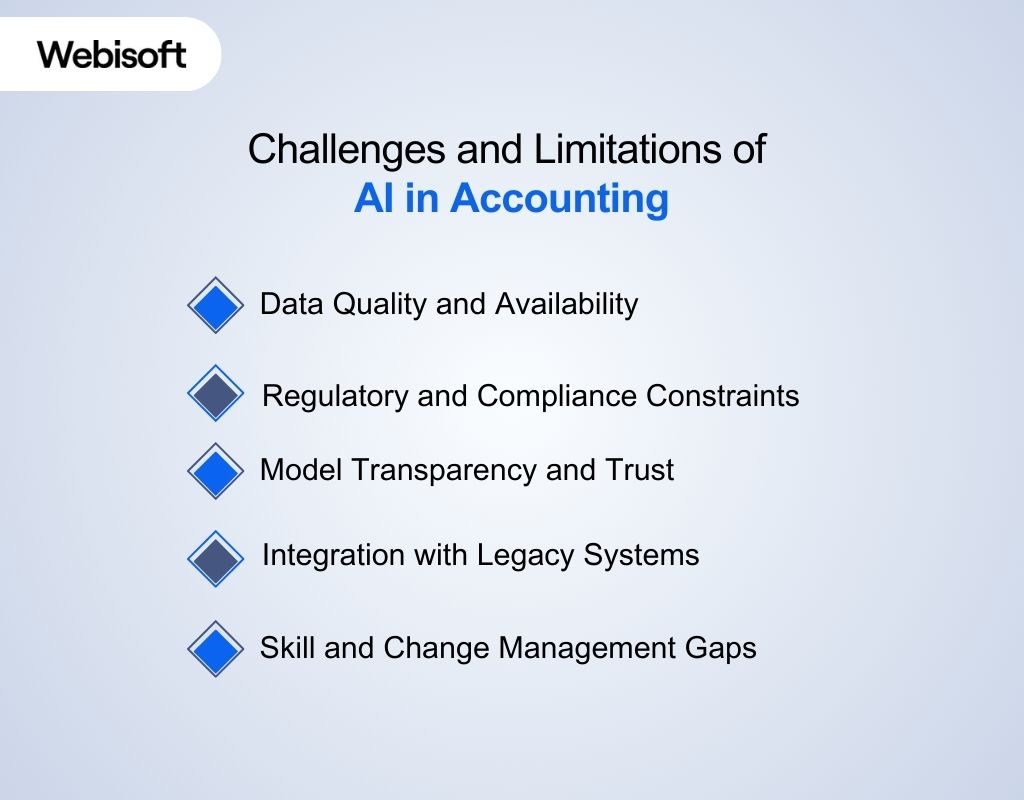
Despite its benefits, implementing AI in accounting comes with practical challenges that organizations must address to ensure reliable and compliant outcomes. These limitations are often operational, technical, and organizational rather than purely technological.
Data Quality and Availability
Machine learning systems depend on high-quality financial data. Inconsistent records, missing entries, or poorly structured historical data can lead to inaccurate predictions and unreliable automation. Without strong data governance, AI-driven accounting systems struggle to deliver value.
Regulatory and Compliance Constraints
Accounting operates within strict regulatory frameworks. AI models must align with financial reporting standards, audit requirements, and data protection regulations. Ensuring transparency and explainability in machine learning outputs is essential to maintain compliance and audit readiness.
Model Transparency and Trust
Many machine learning models function as complex statistical systems that are not easily interpretable. This lack of transparency can make accounting teams hesitant to rely on AI-generated recommendations, especially for high-risk decisions. Building trust requires explainable models and clear confidence indicators.
Integration with Legacy Systems
Integrating AI into existing accounting and ERP platforms can be technically challenging. Legacy systems may lack the flexibility or data accessibility required for machine learning, increasing implementation complexity and cost.
Skill and Change Management Gaps
Effective use of AI in accounting requires both technical understanding and organizational readiness. Accounting teams must adapt to new workflows, interpret AI outputs correctly, and collaborate closely with technology teams. Without proper training and change management, adoption may stall.
Future of Machine Learning in Accounting
The landscape of accounting is evolving rapidly, and machine learning is at the forefront of this transformation. As organizations seek faster, smarter, and more predictive financial management, AI-driven accounting systems are expanding their capabilities beyond automation.
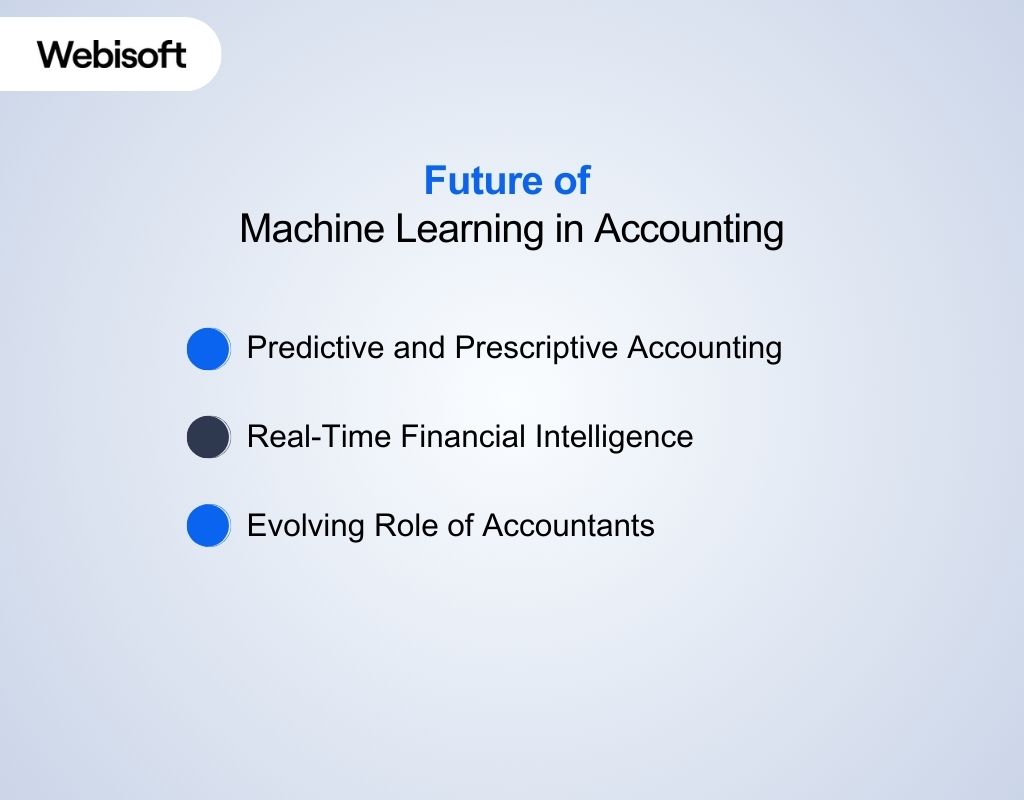
Predictive and Prescriptive Accounting
Machine learning enables predictive accounting, where historical data informs forecasts and scenario modeling. Organizations can anticipate cash flow issues, revenue fluctuations, and expense trends with unprecedented accuracy.
- Predictive insights: Forecast future financial outcomes based on historical patterns, seasonal trends, and operational variables.
- Prescriptive recommendations: Suggest actionable steps, such as optimizing budget allocations, adjusting payment schedules, or managing working capital.
- Scenario modeling: Evaluate “what-if” scenarios to guide strategic decisions and mitigate financial risks.
This shift moves accounting from reactive bookkeeping to proactive financial management, giving finance leaders the tools to make informed, forward-looking decisions.
Real-Time Financial Intelligence
Traditional accounting often relies on periodic reports, leaving gaps between events and insights. Machine learning enables real-time financial intelligence by continuously analyzing transactions and operational data.
- Instant anomaly detection for unusual spending or potential fraud
- Continuous monitoring of accounts payable and receivable for improved cash flow management
- Dynamic dashboards and alerts that keep stakeholders informed
Real-time insights help organizations respond quickly to financial events, reduce risk exposure, and improve operational agility.
Evolving Role of Accountants
As machine learning handles routine tasks, the role of accountants is shifting toward strategic advisory and oversight.
- Focus on interpreting AI-generated insights rather than manual data entry
- Provide context and judgment on predictive recommendations
- Collaborate with finance and business teams to optimize performance
Accountants become partners in strategic decision-making, leveraging ML accounting workflows to enhance business outcomes rather than merely processing transactions.
Webisoft’s Approach to Machine Learning in Accounting
At Webisoft, we provide businesses with machine learning solutions that transform accounting into a smarter, faster, and more proactive function. Our technology automates routine tasks, detects anomalies, and delivers predictive insights, all while fitting seamlessly into your existing accounting systems.
By combining advanced ML models with a secure and compliant framework, Webisoft empowers finance teams to focus on strategy and decision-making, not just manual processing.
Strategic Advantages of Webisoft’s ML Solutions
- Efficiency Boost: Automate invoice processing, reconciliation, and transaction classification
- Enhanced Accuracy: Reduce errors and improve compliance with continuously learning ML models
- Predictive Insights: Support cash flow, revenue forecasting, and risk management with real-time data
- Scalability: Systems grow with your transaction volume and business complexity
- Seamless Integration: Works alongside ERP and cloud accounting platforms with minimal disruption
Take the Next Step
With Webisoft, your accounting operations gain intelligence, speed, and clarity, allowing your team to focus on driving business growth. Let us help you leverage machine learning in accounting to unlock the full potential of your financial data.
Conclusion
Machine learning in accounting is no longer a futuristic concept. It is reshaping financial operations today. By automating repetitive tasks, improving accuracy, and generating predictive insights, ML enables organizations to operate with efficiency, intelligence, and strategic foresight.
From real-time monitoring and fraud detection to predictive accounting and decision support, AI-powered solutions transform accounting into a proactive, insight-driven function. Webisoft’s tailored ML solutions deliver measurable business value while integrating seamlessly with existing workflows, ensuring finance teams can focus on strategic decision-making rather than manual processing. Investing in machine learning empowers organizations to scale operations, improve financial visibility, and gain a competitive edge in an increasingly data-driven world.
FAQ
Predictive accounting uses historical financial data and machine learning models to forecast future outcomes, such as cash flow, revenue, and expenses. It helps organizations plan proactively and make data-driven financial decisions.
No. While machine learning automates routine tasks, accountants’ roles evolve toward strategic analysis, oversight, and advisory functions. ML supports accountants rather than replaces them.
Webisoft designs solutions that seamlessly integrate with ERP systems, cloud accounting platforms, and financial databases. This allows organizations to leverage machine learning without disrupting existing workflows.
Yes. Webisoft ensures all ML accounting solutions comply with financial reporting standards, audit requirements, and data protection regulations while maintaining transparency and explainability.
Key benefits include enhanced accuracy, faster reporting, reduced operational costs, improved fraud detection, predictive insights for decision-making, and scalable financial operations.