Share


How to Create a Cryptocurrency & Launch an ICO: Ultimate 2025 Guide

- BLOG
- Crypto
- October 20, 2025
In 2025, launching a cryptocurrency and Initial Coin Offering (ICO) means more than just writing code or designing a flashy website. The crypto space has evolved, and success now requires careful planning, transparency, and an understanding of the challenges that past projects have faced.
Unlike the ICO boom of 2017, today’s environment includes stronger regulations, more educated investors, and higher technical standards. Failure rates remain high, but well-prepared teams can still carve out success.
Contents
- 1 The Reality of ICOs in 2025
- 2 What This Guide Covers
- 3 What Is an ICO & Why Launch One
- 4 Step-by-Step Token & ICO Planning
- 5 Technical Setup: Blockchain and Smart Contracts
- 6 Launch Mechanics: Pre-sale, ICO, and Liquidity
- 7 Legal, Regulatory, and Compliance Essentials
- 8 Smart Contract Security and Auditing
- 9 ICO Marketing and Community Execution
- 10 Alternatives and When to Consider Them
- 11 Post-ICO Execution and Growth
- 12 Costs and Budgeting
- 13 Common Pitfalls and How to Avoid Them
- 14 Frequently Asked Questions
- 15 Conclusion & Next Steps
The Reality of ICOs in 2025
Here’s why it’s important to approach your launch with a solid strategy:
- Only about 10% of ICOs survive beyond the early stages. Many collapse within months because they lack clear goals or sustainable models.
- Over 80% of ICOs that failed to raise capital or get listed became inactive after just 120 days.
- Scams and poor planning wiped out billions during past ICO waves, making trust and transparency more important than ever.
What This Guide Covers
This guide is designed to help you:
- Break down the technical, legal, and marketing steps needed for a compliant and effective launch
- Build realistic budgets, timelines, and operational plans
- Use frameworks that have worked for successful projects
- Access decision tools and checklists that keep your launch organized
Whether you’re creating a utility token, a Layer 2 asset, or tokenized equity, you’ll find a structured path forward. If you’re also exploring how to design a token economy that supports your project’s growth, check out our detailed article on tokenomics design.
By focusing on strategy rather than speculation, you’ll give your project the best chance to thrive in today’s competitive Web3 landscape.
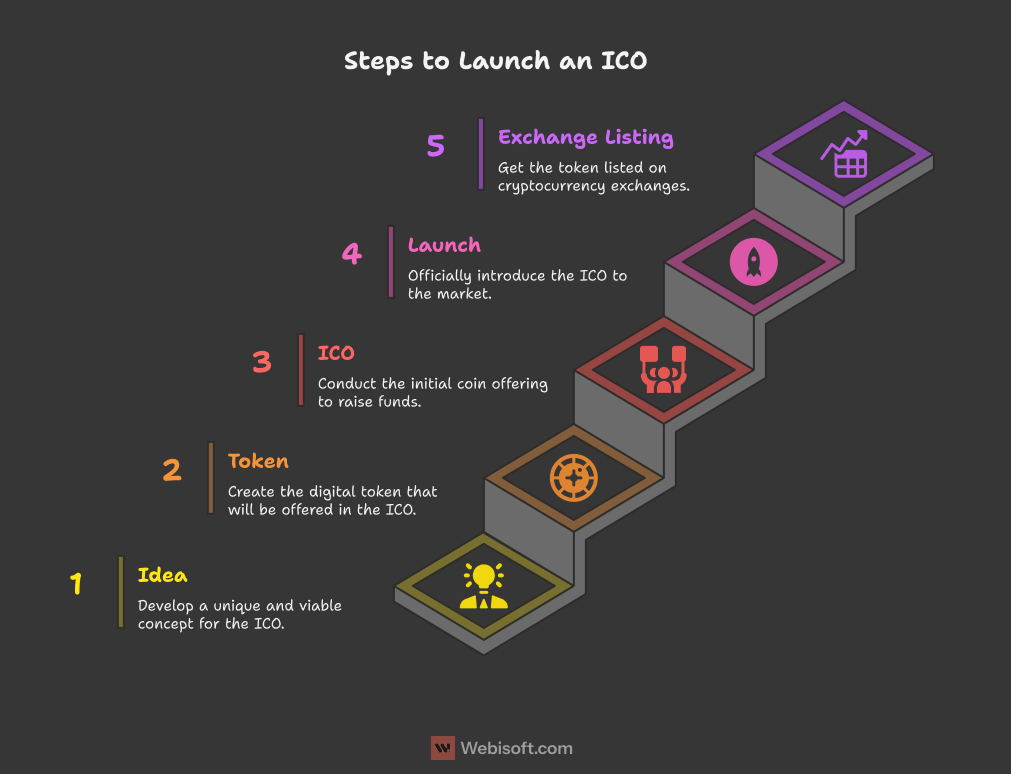
What Is an ICO & Why Launch One
An Initial Coin Offering (ICO) is a fundraising model where blockchain projects issue crypto tokens in exchange for cryptocurrencies like Ethereum or stablecoins. These tokens might provide access to a network, governance rights, or ecosystem incentives. In most cases, they do not represent equity or legal ownership.
ICOs gained traction during the 2017 to 2018 crypto boom with projects like Ethereum, EOS, and Tezos leading the way. Unlike traditional fundraising, ICOs bypass banks and venture capital firms. A smart contract, a wallet, and a whitepaper are often enough to get started, making ICOs both accessible and controversial.
ICO vs IPO vs STO vs IEO: Key Differences
| Offering Type | Asset Type | Platform | Regulation |
| ICO | Utility token | Own website or dApp | Lightly regulated or unregulated in many regions |
| IPO | Equity | Stock exchange | Strictly regulated |
| STO | Security token | Blockchain with legal framework | Fully compliant with bodies like SEC |
| IEO | Utility token | Centralized exchange | Vetted by exchange, often with KYC |
Why Launch an ICO
ICOs remain attractive for teams that want to raise funds quickly while engaging a global audience.
Key benefits include:
- Speed to market: With preparation, an ICO can go live within weeks.
- Global fundraising: Raise capital from supporters worldwide without traditional gatekeepers.
- Early liquidity: Tokens can often be traded soon after launch.
- Community engagement: Token buyers frequently become advocates and users of the project.
If you want to explore how to align incentives through tokens, you might also find value in our article on: How to Choose the Right Blockchain for Real-World Asset Tokenization.
The Risks to Consider
ICOs are not without downsides.
- High scam rate: In 2018, over half of ICOs were identified as scams and many failed within months.
- Regulatory scrutiny: Authorities like the SEC monitor ICOs for unregistered securities offerings.
- Market volatility: Token values can swing wildly, hurting both project credibility and investor confidence.
Who Might Launch an ICO
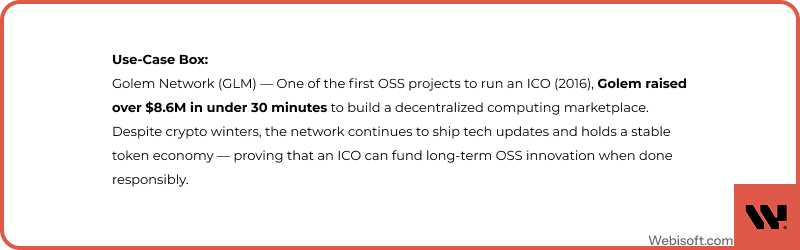
- Open-source projects aiming to bootstrap capital
- Web3 startups introducing utility tokens
- DeFi and NFT platforms launching native tokens
- DAOs distributing community ownership
Step-by-Step Token & ICO Planning
Planning an ICO is about much more than minting a token. From defining a meaningful use case to structuring tokenomics and ensuring regulatory compliance, success depends on thoughtful preparation. This guide breaks down the essentials every project team should nail before launch.
Define Your Vision and Token Use Case
Before any code is written, define the purpose of your token. Strong crypto projects are built around solving problems, not just raising funds. A token without clear purpose risks becoming just another speculative asset that fades after launch.
Common token use cases include:
- Utility tokens that provide access to platform features, discounts, or services
- Governance tokens that let holders vote on proposals, DAO actions, or protocol updates
- Incentive tokens that reward users for staking, contributing, or providing liquidity
- Deflationary models where part of the supply is burned over time to create scarcity
Tip: If you cannot explain in one sentence why someone would want to hold or use your token long-term, revisit your use case.
Tokenomics Design
Your tokenomics is the financial architecture behind your ICO. It determines how tokens are created, distributed, and what gives them value over time.
1. Total Supply and Inflation or Deflation Model
Decide whether your token will have a fixed supply (like Bitcoin) or allow controlled inflation (to incentivize participation).
- Fixed supply tokens are scarce, often helping maintain value if demand grows.
- Inflationary tokens can fund growth, staking, and rewards but risk devaluation without careful limits.
- Dynamic models might include:
- Small percentage burns on transactions
- Controlled minting only after DAO approvals
- Scheduled emission reductions over time
2. Strategic Allocation Planning
A balanced allocation builds trust. A common structure looks like this:
| Category | Allocation % |
| Team & Founders | 15 to 20% (with vesting) |
| Advisors | 3 to 5% |
| Public Sale | 25 to 35% |
| Community & Incentives | 20 to 25% |
| Treasury / DAO | 10 to 15% |
Key points:
- Avoid over-rewarding insiders.
- Hold back tokens for future growth, partnerships, and user incentives.
- Be transparent about token unlock schedules to avoid panic sell-offs.
3. Vesting and Emission Schedules
Without vesting, early holders may dump tokens, damaging your market. Consider:
- Team tokens: 6 to 12 month cliff, then gradual vesting over 2 to 4 years
- Public ICO tokens: Often no lockup, or very short-term lockup to maintain confidence
- Incentives: Released over time, tied to milestones
4. Utility-Driven Demand
Tokens need in-protocol demand beyond hype. Some proven methods:
- Require tokens for dApp feature access
- Use staking to reward participation or secure the network
- Enable governance participation through token-weighted votes
- Burn tokens as part of core actions, like minting or using certain features
5. Real Examples of Good Tokenomics
- Chainlink (LINK): Ongoing demand because LINK is required to pay for oracle data
- Uniswap (UNI): Governance token that builds value through community-driven protocol decisions
- SHIB: Evolved from meme status to include burns and DeFi use cases
Poor tokenomics was one of the top reasons so many ICOs failed during the last cycle. Projects that skipped careful planning saw massive price drops and community exit soon after launch.
Technical Setup: Blockchain and Smart Contracts
Once your tokenomics are defined, the next step is building a secure and functional technical foundation. This includes selecting the right blockchain, writing your smart contract, and ensuring the code is airtight through testing and audits. Even a great idea can fail without solid technical execution.
1. Choosing the Right Blockchain
Your choice of blockchain impacts cost, scalability, ecosystem reach, and developer experience. Compare your options carefully:
- Ethereum (ERC-20, ERC-721, ERC-777): The most established platform for ICOs, with strong DeFi integration and tooling. It offers credibility and liquidity but gas fees can be high during busy periods.
- Binance Smart Chain (BEP-20): Affordable and fast, making it great for early projects targeting quick adoption. However, it faces criticism over decentralization.
- Solana: Known for speed and low fees, but requires technical expertise. The network has also experienced downtime, so stability may be a concern.
- Layer-2 solutions (Arbitrum, Base, zkSync): These provide lower costs and faster transactions while leveraging Ethereum security. Many modern ICOs now choose Layer-2 to balance cost and ecosystem access.
If you want to explore blockchain platform strengths in more detail, you can check out our blockchain development services overview.
2. Smart Contract Standards and Development
Most ICO tokens follow ERC-20 or BEP-20 standards to ensure compatibility with exchanges and wallets. If you need more advanced logic, you might look at:
- ERC-777 for flexible, modular token architecture
- OpenZeppelin upgradeable contracts for secure, reusable components
OpenZeppelin libraries are widely trusted for minimizing security risks. Avoid coding from scratch unless you have deep experience, and always get your contracts peer-reviewed.
3. Testing and Security Validation
Every contract is a potential attack target. Testing is essential.
Best practices include:
- Deploy on testnets like Goerli, Sepolia, or BSC Testnet
- Write unit tests covering minting, burning, approvals, and permissions
- Stress test under simulated high transaction volumes
Recommended tools:
- Hardhat for local development and automated testing
- Truffle for contract development and integration tests
- Remix IDE for browser-based testing and deployments
Bug bounties through platforms like Immunefi or Hats Finance can help uncover vulnerabilities before launch.
4. Deployment and Verification
When ready, deploy using tools like Hardhat scripts or MetaMask with Remix. Post-deployment, be sure to:
- Verify the contract on explorers like Etherscan or BscScan
- Publish your source code and ABI for transparency
- Consider upgradeable proxies if further updates are anticipated
For more on secure token launches, our guide to creating a cryptocurrency offers additional frameworks.
Secure smart contract deployment is non-negotiable. A single flaw can erode trust and derail your ICO in hours.
Launch Mechanics: Pre-sale, ICO, and Liquidity
Your ICO is not a one-off event. A successful token launch relies on a carefully planned, multi-phase sale strategy combined with robust liquidity provisioning. This structure helps stabilize your token’s price and builds long-term trust.
ICO Sale Rounds
Most projects break their ICO into stages to balance early supporter incentives and broader community access:
- Private sale: Tokens are sold at a discounted rate to strategic backers or partners. These usually include vesting periods to prevent immediate sell-offs.
- Pre-sale: Often offered to a whitelisted group with participation caps to ensure fair distribution.
- Public ICO: Open to everyone with transparent pricing and smart contract-enforced participation limits.
Smart contracts should manage vesting schedules, cliffs, and anti-whale limits automatically. This helps avoid centralization of supply and potential market manipulation.
Pricing Models
Your pricing strategy impacts both demand and community sentiment. Common models include:
- Fixed pricing: Keeps things simple and builds trust, as participants know exactly what they’re paying.
- Staged pricing: Prices increase with each tranche, encouraging early participation.
- Dutch auction: A decentralized price discovery process where prices adjust dynamically based on demand. This model requires careful execution but can be highly fair.
You can explore more about structuring token sales effectively in our crypto fundraising services.
Liquidity Planning
Liquidity is the foundation of a healthy token market. Plan ahead to avoid post-ICO price crashes.
- Fund liquidity pools on platforms like Uniswap, PancakeSwap, or Camelot if you’re on Arbitrum or similar Layer-2s.
- Lock liquidity using trusted tools such as Unicrypt, Team Finance, or PinkSale to reassure participants.
- Define trading fees and slippage limits in line with expected volatility to help protect your pool and community.
Without strong liquidity, your token may technically launch but fail to gain traction on the open market. This erodes investor confidence quickly and can derail momentum.
Legal, Regulatory, and Compliance Essentials
As ICO activity rises again in 2025, regulatory scrutiny has intensified across major jurisdictions. Legal missteps — whether from oversight or poor planning — can result in penalties, forced shutdowns, and reputational harm. For founders preparing a token launch, compliance is not optional. It is the foundation that protects your project and community.
1. Jurisdictional Considerations
Where your project is based shapes everything from tax obligations to token classification. Each region applies different rules to ICOs.
- United States
The SEC generally treats ICOs as unregistered securities offerings if they meet the Howey Test. This makes the U.S. one of the most challenging regions for token sales unless you pursue exemptions like Reg D or Reg A+. Even utility tokens have faced scrutiny. In 2025, the SEC provided some clarity by noting that most meme coins resemble collectibles rather than securities, but caution is still advised. - European Union
The MiCA framework requires issuers to register and publish a compliant whitepaper. Projects offering asset-referenced or e-money tokens face stricter oversight, while pure utility tokens have fewer obligations but must still meet disclosure standards. - Asia
Singapore and Japan offer clear licensing paths for ICOs. Hong Kong is emerging as a regulated yet crypto-friendly jurisdiction. In contrast, China has fully banned ICOs.
Many successful ICOs choose crypto-positive jurisdictions like Switzerland, Liechtenstein, or the UAE while ensuring they block investors from restricted regions.
2. Token Classification
Understanding whether your token is a security is essential.
- Utility token: Provides access to services or features. No rights to profits or ownership.
- Security token: Represents equity, ownership rights, or claims on future profits. Subject to full securities regulation.
If your token raises funds for a product that does not yet exist, regulators may treat it as a security. A formal token classification analysis from legal counsel is a smart early move.
3. KYC / AML Compliance
Most regions now require ICOs to meet Know Your Customer (KYC) and Anti-Money Laundering (AML) standards.
- Collect identity documents from participants
- Screen buyers against sanctions lists and restricted jurisdictions
- Use compliance tools like Sumsub, Veriff, or IdentityMind to automate onboarding
Failing to apply these checks has caused delistings and enforcement actions, even for decentralized projects.
4. Disclosures and Transparency
Clear, honest documentation reduces legal risk and builds trust. Ensure you prepare:
- A detailed whitepaper with realistic claims and clear token utility
- A public sale agreement with refund policies and allocation details
- Terms of service if your platform processes user data or funds
- Risk warnings about volatility and loss potential
Avoid suggesting guaranteed profits or framing your token as an investment. For example, review how Webisoft’s blockchain product development services support compliant token models.
5. Work With Legal Experts
Secure formal legal opinions and guidance from crypto-focused law firms. A strong legal partner will help you:
- Validate your token classification
- Ensure securities law compliance
- Draft investor protections and governance structures
Well-regarded firms in this space include DLx Law, Perkins Coie, and PwC Legal in crypto hubs.
Pro Tip Box: Red Flags That Trigger SEC or Regulator Attention
- Promising token price growth or ROI in marketing materials
- No utility at launch, but token still sold to public investors
- Lack of KYC/AML, especially for U.S. participants
- Holding token sale funds in private, untracked wallets
- Token sold via influencers without disclosures
- No legal opinion or formal classification documented
Compliance is no longer optional, it’s a competitive advantage. Most of the 90%+ failure rate in ICOs between 2018–2019 stemmed from either legal issues or rug-pull-level mismanagement. In 2025, with more clarity and better tooling, legal prep can mean the difference between listing on a top exchange or getting blocked at the gate.
Smart Contract Security and Auditing
Smart contracts form the core infrastructure of your ICO. A single bug or overlooked vulnerability can result in lost funds, shattered trust, and long-term damage to your project’s reputation. Historical data from OneSafe shows that over 10% of all ICO funds have been lost or stolen due to unaudited or poorly secured contracts. In today’s climate of tighter regulation and cautious investors, strong contract security is not a bonus — it is essential.
Why Audits Matter
A smart contract audit is a deep, independent review of your code by experienced security professionals. The goal is to identify vulnerabilities, logic errors, inefficiencies, and areas where the contract does not follow best practices.
While an audit cannot guarantee that your contract is flawless, it greatly reduces the risk of exploits and signals professionalism. Projects with audited contracts are more likely to secure exchange listings, attract serious investors, and handle post-launch scrutiny effectively. As highlighted in our blockchain consulting services, well-audited protocols have stronger market credibility and smoother integrations.
What Audits Typically Cover
An effective audit will examine several critical areas:
- Access control: Ensuring only authorized accounts can mint, burn, or upgrade the contract.
- Reentrancy protection: Blocking recursive call exploits that have caused major DeFi breaches.
- Arithmetic safety: Preventing overflows or underflows that could break token math.
- Gas efficiency: Identifying unnecessary computations that could drive up fees.
- Event logs: Verifying key functions generate the right transparency signals.
- Fallback logic: Reviewing how your contract handles native token transfers and defaults.
- Upgrade patterns: Ensuring proxy contracts or modular designs have safe admin controls.
Trusted Audit Firms
For serious ICOs, working with a recognized audit firm is non-negotiable. These providers combine automated tools with manual reviews to deliver actionable insights:
- CertiK: Provides detailed reports, post-deployment monitoring, and security scores.
- Quantstamp: Offers manual reviews and formal verification for critical logic.
- PeckShield: Known for advanced exploit detection, especially in complex smart contracts.
Other reputable firms include Trail of Bits, Halborn, Hacken, and OpenZeppelin Security.
Formal Verification
Formal verification uses mathematical proofs to confirm that contract logic behaves as expected in all cases. This is particularly valuable for contracts handling vesting, multi-signature wallets, or DAO governance. While formal verification requires additional investment, it is increasingly seen as a mark of quality in high-value or institutional-grade ICOs.
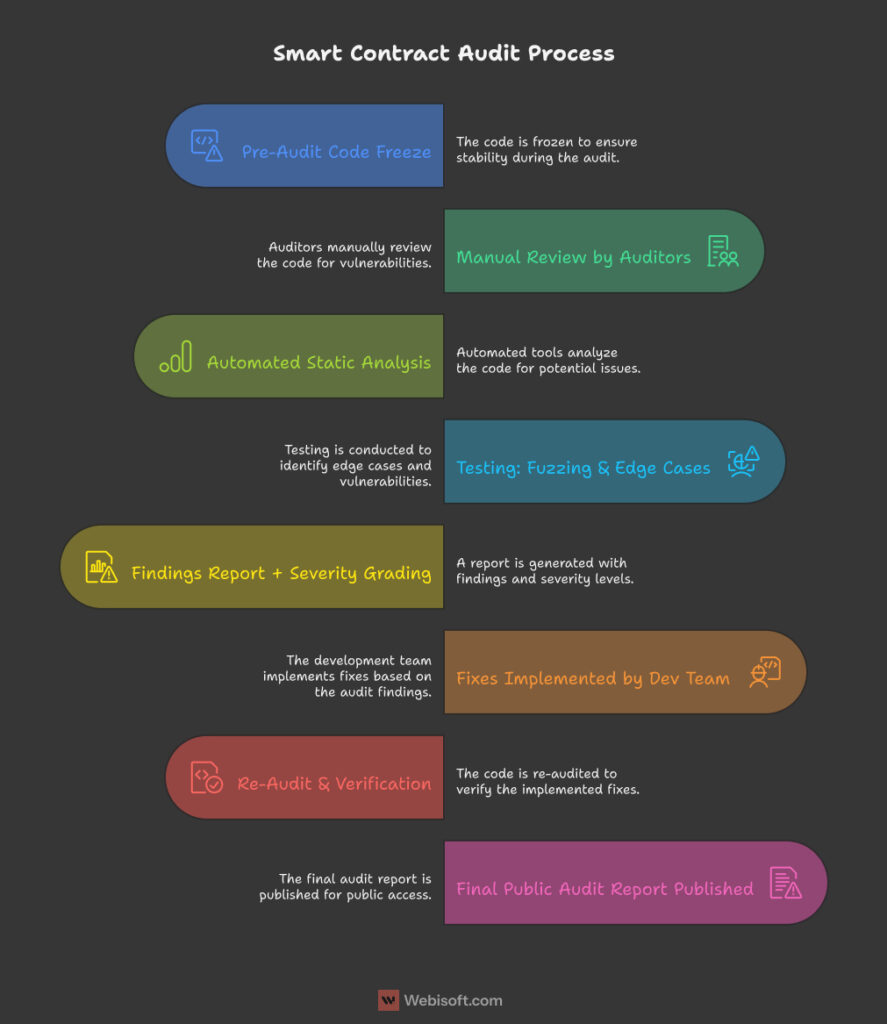
A clean, verified smart contract backed by a third-party audit isn’t just about security, it’s also a trust-building asset in your marketing and fundraising. Projects that skip audits fall into the same trap as the 80% of ICOs that either vanished or failed within months (source).
ICO Marketing and Community Execution
A technically solid ICO will fail without strong visibility, trust, and an engaged community. In 2025, where investors are cautious and regulators are watching closely, marketing is not just important, it is essential. With thousands of ICOs launching every year and the majority failing within months, your project’s communication strategy could determine whether you succeed or fade away.
Crafting Your Messaging: Storytelling Meets Clarity
Investors do not fund code alone, they buy into a vision. A strong message starts by answering key questions clearly:
- What problem does your token aim to solve?
- Who is your target audience?
- Why is this the right time to launch?
- How does your project stand apart from other ICOs?
Focus on real substance over hype. If your token involves complex technology, such as Layer-2 staking or cross-chain compatibility, use simple explanations supported by visuals or practical examples. A relatable statement like “We are building the Stripe for crypto payments — fast, gasless, and open-source” connects much better than technical jargon.
Community Platforms: Building Your Base
Community is the engine of any successful ICO. In 2025, communities help govern, test, and promote projects — they are not just spectators.
- Telegram: Good for direct communication and fast updates. Set up both announcement and discussion groups.
- Discord: Better for organizing contributors, offering support, and hosting builder chats.
- Twitter (X): The top channel for crypto updates, meme culture, and influencer threads.
- Reddit: Useful for AMAs, in-depth discussions, and engaging specific subreddits like r/CryptoCurrency.
Ensure you appoint moderators, establish rules, and host regular interactive events to keep the energy alive. For more on building blockchain communities, see our blockchain advisory services.
Content Marketing: Educate to Build Trust
A steady content strategy builds authority and visibility. Use a blend of formats:
- Blog posts with updates, tokenomics explainers, or governance proposals
- Guest podcasts and interviews on well-known crypto shows
- Webinars or live demos covering your tech and roadmap
Convert your audit reports or tokenomics diagrams into shareable graphics and include them in press kits for greater reach.
Influencers and Partnerships
Choose partners carefully. Authenticity beats hype. Micro-influencers with dedicated audiences often outperform bigger names when it comes to driving real engagement. Seek creators with a technical following or ties to specific ecosystems like Solana or Ethereum.
Strategic partnerships with tools, wallets, or NFT platforms can also extend your reach without relying solely on ads.
Media Coverage and Listings
Aim to secure coverage in both crypto-specific and mainstream outlets. Focus on respected sources where serious investors look for news:
- Crypto media: CoinTelegraph, Decrypt, The Block
- Mainstream tech/finance: Bloomberg Crypto, Forbes, TechCrunch
Coordinate press releases with major milestones, like completing your audit or finalizing your pre-sale. Make sure to list on ICO trackers such as ICOBench or ICO Drops, which continue to send meaningful traffic.
When the time comes, apply for listings on CoinMarketCap and CoinGecko. These platforms require your contract details, website, whitepaper, audit results, and social links.
Growth Strategy Snapshot
| Strategy | Pros | Cons | Best For |
| Organic Community | Builds deep trust, loyal supporters | Takes time, effort, and consistency | DAO-driven or long-term projects |
| Paid Ads / Launchpads | Fast reach, scalable targeting | Ad restrictions, lower trust signals | Niche awareness, short-term campaigns |
| Influencer Partnerships | High engagement, viral potential | Risk of shill accusations | Culture-heavy or meme-driven tokens |
ICO marketing requires more than one-time hype. The projects that succeed are those that cultivate lasting relationships, ship consistently, and stay transparent. Building a community that thrives beyond the token launch is your strongest defense against early project failure.
Alternatives and When to Consider Them
While ICOs were once the go-to method for crypto fundraising, today’s regulatory landscape and investor expectations have given rise to new models. Each has its own trade-offs in terms of control, compliance, speed, and decentralization. Understanding these options can help you align your funding strategy with your goals and market conditions.
1. IEO — Initial Exchange Offering
An IEO is a token sale hosted by a centralized exchange such as Binance Launchpad or KuCoin Spotlight. The exchange vets the project and manages the sale, offering an added layer of trust.
Benefits:
- Access to the exchange’s user base and liquidity
- Exchange-managed KYC and compliance
- Easier post-sale listing
Drawbacks:
- High fees and revenue sharing
- Centralized approval process
- Less flexibility in setting sale terms
IEOs work well for teams aiming for rapid exposure and exchange listings without managing token distribution directly.
2. STO — Security Token Offering
An STO is a fully regulated token sale where the token represents a security such as equity, debt, or ownership of a real-world asset.
Benefits:
- Compliant with securities regulations (SEC, EU MiCA, others)
- Appeals to institutional investors
- Can tokenize assets like real estate or revenue streams
Drawbacks:
- Expensive legal setup and ongoing disclosures
- Slower fundraising timelines
- Limited options for secondary trading
This model suits projects looking for legal legitimacy, especially in sectors like fintech, real estate, or SaaS. For guidance on secure token development, you might explore our tokenization services.
3. IDO — Initial DEX Offering
An IDO launches directly on a decentralized exchange such as Uniswap or PancakeSwap, or via launchpads like Polkastarter.
Benefits:
- Fast, permissionless fundraising
- Immediate liquidity post-sale
- Community-driven participation
Drawbacks:
- Vulnerable to front-running bots
- Often linked to speculative, short-lived projects
- Lower investor protections
Best for Web3-native projects seeking exposure within DeFi communities.
4. DAICO — DAO + ICO Hybrid
A DAICO combines an ICO with DAO governance. Contributors vote on when and how funds are released, using smart contracts to manage disbursement based on milestones.
Benefits:
- Fund release tied to community-approved progress
- Lower risk of misuse or rug pulls
Drawbacks:
- Complex to implement
- Requires active governance and engaged users
This approach works well for teams that want accountability and decentralization while still raising capital up front.
5. Launchpads, NFT Raises, and Hybrid Models
- Launchpads: Platforms like PinkSale provide end-to-end services, including audits, marketing, and liquidity setup.
- NFT Raises: Projects mint NFTs as a pre-funding tool, distributing tokens later or tying them to ecosystem utility.
- Hybrids: Combine token sales with VC rounds, grants, or DAO treasury mechanisms for diversified funding.
Comparison Snapshot
| Model | Pros | Cons |
| ICO | Full control, low setup barrier | Regulatory risk, higher scam potential |
| IEO | Exchange backing, easier liquidity | Costly, centralized process |
| STO | Compliant, institution-friendly | Expensive, slower, less retail appeal |
| IDO | Fast, decentralized, accessible | High volatility, front-running risks |
| DAICO | Community-controlled fund use | Complex setup, governance dependency |
| Launchpad | Turnkey marketing and compliance support | Fees, branding limitations |
The right choice depends on your product, audience, and legal environment. For example, a DeFi app may benefit from an IDO, while a real estate tokenization platform might require the structure of an STO.
Post-ICO Execution and Growth
Launching your ICO is only the start. What truly defines your project’s success is how you manage growth, liquidity, and trust after funds are raised. The reality is that as many as 90% of ICO-funded startups fail within the first six months. This makes your post-ICO plan not just important, but essential for survival and long-term credibility.
1. Liquidity Management
Maintaining liquidity goes beyond getting listed on an exchange. It is about creating a healthy trading environment that reassures investors and encourages participation.
- Lock a portion of raised assets (ETH, USDT) to support depth in your trading pairs on platforms like Uniswap or PancakeSwap.
- Secure LP tokens using tools such as Unicrypt or TrustSwap to protect against accusations of rug pulls and build community confidence.
- Add liquidity incrementally as your user base grows or new listings occur.
A good practice is to monitor slippage regularly and adjust fee structures or incentives within your pools to promote balanced trading activity.
2. Staking and Reward Systems
Staking mechanisms can help limit token supply on the open market while rewarding loyal holders.
- Design pools that provide real utility. Examples include staking for governance participation, access to product features, or liquidity bonuses.
- Avoid offering unsustainable yields that can harm token value in the long run. Ensure reward levels align with your tokenomics.
- Consider implementing time-locked staking options that encourage longer-term holding, such as 30, 90, or 180-day periods.
If you are considering integrating staking into your ecosystem, you might explore our custom blockchain app development services for help with secure implementation.
3. Governance and DAO Structures
Effective governance frameworks help decentralize decision-making and strengthen community alignment.
- Begin with off-chain tools like Snapshot for community proposals and token-weighted voting.
- Transition to on-chain governance using established platforms such as Aragon, Tally, or Safe to manage treasury decisions, upgrades, and grants.
- Allocate a portion of funds to a community treasury that can support builder incentives, marketing, or ecosystem partnerships.
Early adoption of DAO structures signals transparency and helps retain community trust as your project scales.
4. Roadmap Execution and Transparency
A clear, well-communicated roadmap is crucial for retaining investor and community confidence.
- Publish quarterly milestones and provide updates on development progress through blogs or public dashboards like Notion or GitHub.
- Share meaningful metrics including burn schedules, treasury reserves, and staking reward distributions through regular reports.
- Use transparency as a competitive advantage. This becomes especially valuable during market downturns when trust is harder to maintain.
Case Box: How Uniswap Transitioned to a DAO Model
Uniswap’s UNI token began with airdrops, but its growth came from turning holders into governors. With 1 billion UNI tokens allocated across the community, team, and treasury (with a 4-year vesting), Uniswap progressively shifted key decisions—like fee distribution and LP incentives—to a DAO. Their transparent treasury dashboard and structured governance proposals set a standard for post-ICO evolution.
Costs and Budgeting
Launching a cryptocurrency and running an ICO is not just about coding and minting tokens. It requires full-stack operations with proper financial planning. Many projects fail because they underestimate costs and run out of funds before achieving meaningful traction or regulatory compliance. Careful budgeting extends your runway and builds investor confidence.
Core Cost Breakdown
Development
- Includes smart contract coding, testing, and deployment
- Tools like Hardhat, Remix, and Truffle are often used
- Estimated cost:
- Solo developer: $3,000 to $10,000
- Professional development agency: $15,000 to $50,000 or more
Legal and Compliance
- Covers jurisdiction selection, KYC/AML systems, disclaimers, and legal documentation
- Important for drafting token sale terms, privacy policies, and obtaining legal opinions for listings
- Estimated cost:
- Basic advisory: $5,000 to $10,000
- Full legal package: $20,000 to $100,000 or higher
Smart Contract Audits
- Essential for credibility and to build investor trust
- Top firms include CertiK, Quantstamp, and Hacken
- Estimated cost:
- Single contract: $8,000 to $15,000
- Complex ecosystem: $30,000 to $80,000 or more
Marketing and Community
- Includes website creation, branding, social media campaigns, influencer partnerships, press releases, and AMAs
- Estimated cost:
- Lean organic effort: $5,000 to $15,000
- Full-scale marketing push: $50,000 to $200,000 or beyond
Exchange Listing
- DEX listings are typically free but require liquidity provisioning
- CEX listings can cost anywhere from $10,000 to $150,000 depending on exchange tier and expected volume
- Additionally, liquidity pools often require 10 to 20 percent of token supply or a portion of raised capital
If you are planning your budget and want technical support that scales with your needs, explore our custom cryptocurrency development services to avoid overspending on the wrong solutions.
Bootstrapped vs Fully Staffed Budget
| Mode | Estimated Budget Range |
| Solo / Lean Team | $25,000 to $75,000 |
| Full Team + Legal + Audit | $150,000 to $500,000 or more |
Mitigation Strategies
- Use no-code tools for prototyping and white-label platforms.
- Partner with incubators or launchpads that provide bundled services.
- Start with a testnet community MVP before committing to full-scale tokenomics.
- Delay non-essential expenses like major PR until post-ICO traction is validated.
Common Pitfalls and How to Avoid Them
The ICO space has seen thousands of failures, many of which could have been avoided with stronger planning and execution. More than 90 percent of ICOs during the 2018 to 2019 cycle ultimately failed, often due to just one or two key mistakes. In today’s more mature environment, avoiding these traps is critical to building a credible and lasting project.
1. Overly Aggressive Token Releases
Launching with rapid token unlocks might generate short-term excitement, but it almost always leads to price crashes and loss of trust.
How to avoid it: Create multi-year vesting schedules with clear cliffs for founders and advisors. Align token unlocks with actual utility milestones rather than just exchange listings.
2. Centralized Control and Governance
When founders keep full control over treasury keys or protocol decisions, it undermines decentralization and scares off serious investors.
How to avoid it: Use multisig wallets such as Gnosis Safe, build a roadmap toward DAO-based governance, and progressively hand over control to your community.
3. Hiring Inexperienced Teams
Many ICOs fail because they rely on generic Web2 marketing firms, inexperienced developers, or teams unfamiliar with crypto culture.
How to avoid it: Hire blockchain-native developers, work with Web3-savvy marketing professionals, and ensure all smart contracts undergo thorough audits. You can explore options like blockchain development services to access trusted expertise.
4. Legal Shortcuts and Compliance Gaps
Trying to skip legal costs or operating in regulatory grey zones is one of the top reasons projects face lawsuits or get delisted from exchanges.
How to avoid it: Always secure a formal legal opinion on token classification. Implement proper KYC and AML procedures if you plan to fundraise from regulated jurisdictions.
5. Lack of Community Transparency
Silent founders, hidden fund allocations, and vague roadmaps destroy community trust faster than any market dip.
How to avoid it: Commit to weekly updates, share treasury balances publicly, and provide clear, honest communication about progress and delays.
⚠️ Warning Box: High-Profile Failures
- Envion raised over $100M but was shut down due to internal disputes and regulatory violations.
- BitConnect, infamous for its referral-based pump model, collapsed after being labeled a Ponzi scheme.
- REcoin was billed as the “first real estate-backed crypto” but was found to have no actual holdings.
Each failed due to a combination of hype-driven launches, lack of legal structure, and community betrayal.
Frequently Asked Questions
These are some of the most common questions founders ask when preparing to launch a cryptocurrency and ICO in 2025. Each answer is concise and beginner-friendly while rooted in the latest industry standards.
How long does an ICO take?
A well-executed ICO typically takes 3 to 6 months from concept to launch. This includes token development, legal review, smart contract audits, marketing, and community building. Rushing can expose your project to security flaws and regulatory scrutiny, especially in today’s maturing compliance environment.
Can I launch with no-code?
Yes, no-code platforms like Thirdweb, Moralis, and TokenMint allow you to create tokens without writing code. However, they often limit customization and flexibility. For security and scalability, especially when handling real funds, having developer support or technical audits is highly recommended.
Minimum team size and budget?
A lean but capable ICO team can start with 3 to 5 people: a founder/product lead, a smart contract developer, a community/marketing manager, and legal counsel. As for budget, expect a minimum of $25,000–$50,000 to cover development, legal, marketing, and basic liquidity provision.
How to list on an exchange post-ICO?
For DEX listings, deploy liquidity pairs (e.g., ETH/TOKEN) on platforms like Uniswap or PancakeSwap. For CEX listings, you’ll need to apply, pay listing fees (ranging from $10K to $150K+), provide legal documentation, and submit smart contract audits. Most major exchanges require KYC and legal opinions.
What happens if ICO fails to reach its cap?
It depends on how your token sale is structured. If you’ve implemented a soft cap, and it’s unmet, best practice is to refund contributors. Many smart contracts now support automatic refunds if funding goals aren’t achieved. Clear terms should be outlined in your whitepaper and token sale agreement.
Conclusion & Next Steps
Creating a cryptocurrency and launching an ICO in 2025 isn’t just about raising capital, it’s about building a real, trusted project in one of the most rapidly evolving and scrutinized industries. From defining your vision and designing sound tokenomics to developing smart contracts, navigating legal compliance, securing audits, and executing a strategic marketing plan, every step plays a critical role in your success.
This guide has walked you through the full lifecycle: planning → launch → growth. But the real work begins after the ICO. Building a loyal community, maintaining open communication, delivering on your roadmap, and remaining compliant with regulations are non-negotiables for long-term impact.
Given that over 80% of ICOs have historically failed, transparency, legal clarity, and user trust aren’t luxuries; they’re necessities. Make use of reputable audit firms, engage with your community early, and keep your operations open and decentralized.
As your journey continues, we recommend diving deeper into our related guides on:
- How to Design Effective Tokenomics
- Launching NFTs with Utility in 2025
- How to Set Up a DAO for Governance
These resources will help you build not just a token, but an ecosystem that can thrive beyond the initial raise.Let your project stand out by doing what most don’t: Plan deeply. Build transparently. Grow sustainably.
