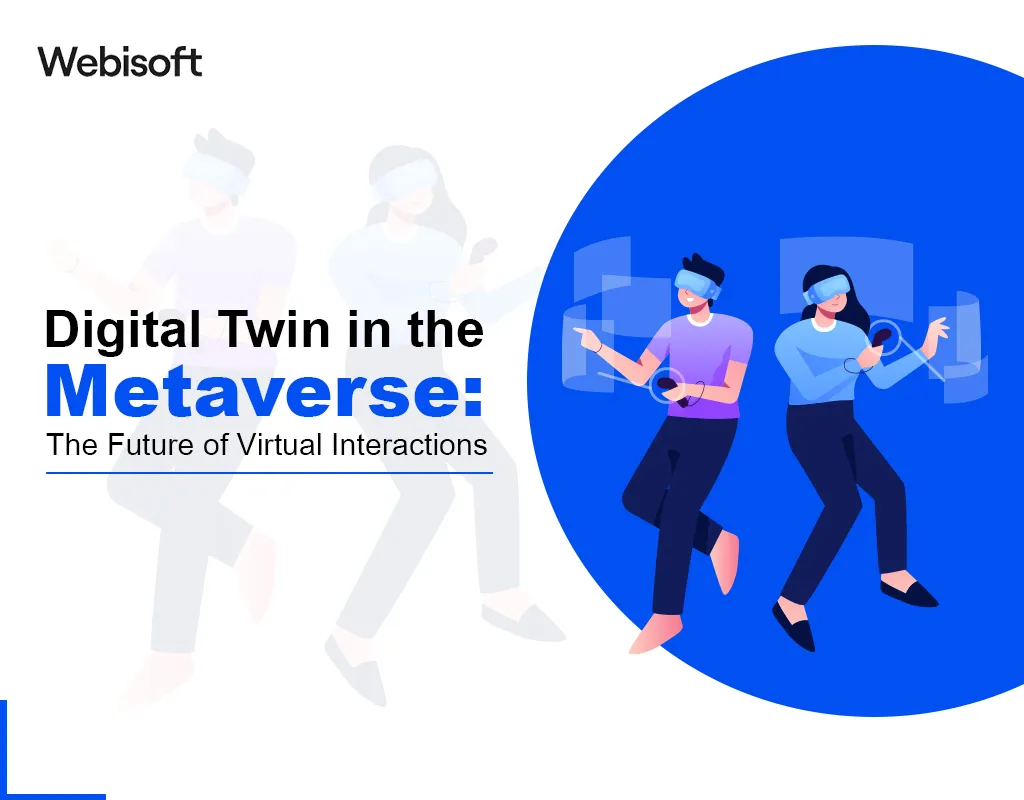
A digital twin is a computational replica of a physical system, updated with live sensor data and used to simulate behavior. Twin = model + current state + feedback loop.
The metaverse is persistent virtual space accessible via internet. The two combine: use a digital twin to populate the metaverse with realistic, sensor-synchronized replicas of real assets (buildings, equipment, vehicles). Users in the metaverse interact with these replicas, and the simulation responds as the physical system would.
The appeal is clear: test designs in simulation without building physical prototypes, train workers on equipment they'll operate, or let customers tour a facility without traveling. But digital twins in the metaverse face a hard constraint: simulation latency. A user in New York requests an action. That request travels to the cloud, the simulator runs the physics, the results render and stream back to the user's headset. At 50-200ms latency, the interaction feels responsive. At 500ms, it feels sluggish. At 1s+, it's unusable.
Physics simulation and level of detail
A digital twin's realism is set by what physics it simulates and at what precision.
High fidelity: Full contact dynamics, deformation, fluid flow, heat transfer. Used for engineering validation (will this robot's gripper reliably pick up this part?). Simulation runs at 10-100 Hz on expensive hardware. Not real-time. Results are computed offline and rendered later.
Medium fidelity: Rigid body dynamics, collision detection, simplified materials. Used for training and design review. Runs at 60 Hz on a GPU. Latency ~16ms per frame plus network round-trip.
Low fidelity: Kinematic constraints (move object A, it drags object B). No collision response, just animation playback. Runs at 60+ Hz on a phone. Latency ~10ms local plus network.
The choice depends on use case:
- Testing equipment designs? High fidelity, offline. Results inform physical prototypes.
- Training workers on complex assembly? Medium fidelity, real-time, can tolerate 50-100ms latency.
- Retail virtual try-on? Low fidelity, keyframe animation, must be instant.
Metaverse applications almost always use medium or low fidelity because latency and rendering bandwidth are constraints. You trade simulation accuracy for responsiveness.
Sensor data and staleness
A digital twin is only as current as its input sensors. If sensors update every 5 seconds, the simulation lags 5 seconds behind reality. If the physical equipment changes (a machine is turned off, a door is locked), the twin doesn't know until the next sensor reading.
For static assets (buildings, layouts), staleness is acceptable. Users see the space as it was when sensors last reported. For dynamic assets (moving equipment, changing parameters), staleness is a problem: a user sees the twin in one state but the physical asset has moved.
Solutions:
- Higher sensor frequency - read sensors every 100ms. Latency drops but network traffic and server load increase. Typical cost: $100-500/month per asset on a commercial IoT platform.
- Predictive modeling - extrapolate the next state based on current velocity and typical behaviors. Works if patterns are stable (a robot on a fixed path). Fails if behavior is unpredictable (a person moving in the factory floor).
- Accept staleness - users interact with a time-delayed replica. Acceptable for viewing, not for real-time collaboration on the same asset.
Multiplayer synchronization
When multiple users interact with the same digital twin simultaneously, their actions must be synchronized. User A moves a virtual part. User B's view must update. The simulation must reflect both A's and B's inputs.
This requires a central authority (a server) computing the shared state and streaming updates to both clients. The server is a bottleneck: if one client's action takes 500ms to reach the server, be processed, and reflected back, the interaction feels delayed.
Alternatives:
- Client-side prediction - assume your action succeeds locally and render it immediately, then reconcile with the server's truth. If the server says "your action failed," rollback. Smooth but can create weird ghosting (your action appeared to work, then disappeared).
- Deterministic lockstep - all clients run the same simulation locally, consuming the same ordered input stream. No latency, but any disagreement breaks synchronization. Hard to recover from.
Most metaverses use a hybrid: client predicts, server authorizes, clients reconcile. Acceptable for slow-moving simulations (industrial equipment), awkward for fast games.
When digital twins in the metaverse make sense
Justified for:
- Factory floor visualization - workers can see equipment status and logs in 3D, reducing time spent on the actual floor. Sensor staleness (5-10 seconds) is acceptable because you're reading, not controlling.
- Design review - engineering teams review architectural or mechanical designs in VR. Latency and slight physics inaccuracies are acceptable because the goal is human judgment, not precision.
- Training on rare equipment - replicate expensive machines (an industrial press, a medical device) so trainees practice without risk or cost. Medium fidelity simulation is sufficient.
Not justified for:
- Real-time remote control - operating a machine in another country via virtual interface requires latency < 100ms, which is hard over intercontinental distance.
- Precision assembly - tasks requiring tolerances tighter than the simulation can model (assembling a circuit board, threading a needle) won't transfer from simulation to reality.
- Highly dynamic environments - if equipment or people are moving unpredictably, staleness and latency make the virtual representation misleading.
Data ownership and compliance
A digital twin captures real-time data from a factory: temperature, pressure, vibration, location. This data is proprietary. Storing it on a metaverse platform means another company has access.
Options:
- Private metaverse - run a closed virtual space accessible only to your employees. Cost is high (infrastructure + DevOps), but data stays under your control.
- Third-party platform with privacy controls - some metaverse vendors offer private spaces and data residency guarantees. Verify in writing: what data they collect, who can access it, how long they retain it.
- Accept centralized access - use a commercial metaverse (Fortnite, Roblox, a Web3 platform). Your data is on their servers. Acceptable if the data is non-proprietary (a public building tour), risky if it's sensitive (production metrics, facility layout).
The integration gap
A digital twin requires sensors, network connectivity, data pipelines, simulation software, and rendering. These are separate tools that must be glued together. The glue is expensive and proprietary to each company.
Building this end-to-end: $500k - 5M depending on scale and complexity. Off-the-shelf software (Siemens' digital twin suite, Dassault's 3DEXPERIENCE) reduces the cost to $200k - 1M but locks you into one vendor's ecosystem. Open-source stacks (open-source physics engine + WebGL rendering + a custom data layer) cost less upfront but require in-house development.
The real cost is not the software license. It's the engineering work to integrate your specific sensors, assets, and workflows.