Video is the heaviest workload on the consumer internet, and almost all of it flows through centralized infrastructure: hyperscale clouds, commercial CDNs, and platform-owned transcoding farms. That architecture works, but it concentrates cost, control, and revenue with the platform operator. Creators accept the platform's take rate, its recommendation algorithm, and its moderation decisions because there has been no practical alternative.
Blockchain video streaming proposes one. It pairs peer-to-peer content delivery with an on-chain coordination and payment layer, so transcoding, storage, and distribution are supplied by a network of independent operators instead of a single company. This article explains how these systems actually work, what they solve, where they still fall short, and how Webisoft approaches building on them.
Why Centralized Streaming Hits Its Limits
Traditional streaming runs on a client-server model. A viewer requests a stream, and an origin server (usually fronted by a CDN) delivers it. Every additional viewer adds load to infrastructure the platform must provision and pay for, which produces three structural problems:
- Flash crowds: A sudden audience spike can exhaust an origin's concurrent session capacity. The platform either over-provisions for peaks it rarely hits or degrades quality when the peak arrives.
- Bandwidth economics: Egress is the dominant recurring cost of a streaming business, and in the client-server model the content provider bears all of it. Viewers contribute nothing back to the delivery network even though most of them have idle upstream bandwidth.
- Single point of control and failure: One operator owns the servers, the encoding pipeline, and the payment rails. An outage takes every creator offline at once, and a policy change can demonetize a channel overnight.
None of these are engineering oversights. They are consequences of an architecture in which supply (servers, bandwidth, transcoding) is owned by one party and consumed by everyone else.
How Decentralized Video Streaming Works
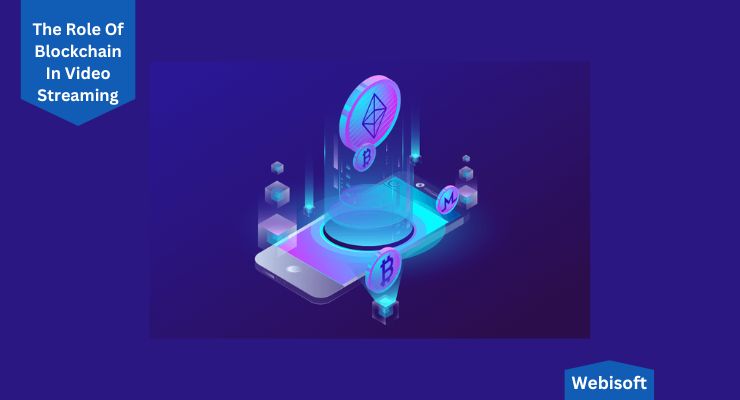
A decentralized streaming network replaces the single operator with a marketplace of node operators, each performing one part of the pipeline:
- Broadcasters (an individual creator or an OTT service) push a source stream into the network.
- Orchestrator or transcoder nodes convert that source into the ladder of renditions (1080p, 720p, 480p, and so on) that adaptive streaming requires, using their own CPU and GPU capacity. They are paid per unit of work.
- Relay and storage nodes cache segments and serve them to viewers, so popular content is replicated across many peers instead of hammering one origin. Viewers with spare disk and upstream bandwidth can join this tier and earn for the capacity they contribute.
Because delivery is peer-to-peer, replication scales with demand: the more viewers a stream has, the more peers hold its segments and the more sources the next viewer can pull from. That is the inverse of the client-server model, where popularity is a cost problem.
Where the Blockchain Actually Sits
A common misconception is that video is stored or transmitted "on the blockchain." It is not, and it could not be: block space is far too scarce and expensive for video bytes. The video itself moves over an off-chain data plane (P2P transfer, distributed storage such as the InterPlanetary File System). The chain is the control plane. It handles four jobs:
- Coordination: Matching broadcasters who need transcoding or delivery with operators who supply it, at prices set by an open market rather than a rate card.
- Staking and slashing: Operators lock tokens as collateral. Verifiably faulty or malicious work (a bad transcode, a withheld segment) forfeits part of that stake, which is what keeps an open network of anonymous operators honest.
- Payments: Micropayments settle per second of transcoded video or per gigabyte delivered, typically through payment channels or probabilistic micropayments so that thousands of tiny payments do not each pay full transaction fees.
- Rights and provenance: Content identifiers, licensing terms, and ownership records are anchored on-chain, where they cannot be silently edited after the fact.
Livepeer is the clearest production example of this model: an Ethereum-based network where broadcasters pay a distributed pool of GPU operators for transcoding, with staking to secure work quality. It illustrates the realistic scope of the technology today, which is decentralizing specific expensive stages of the pipeline rather than replacing YouTube wholesale.
The Benefits, Stated Precisely
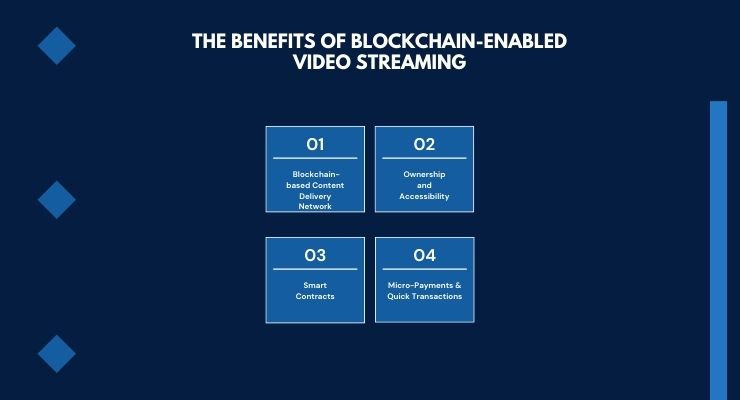
1. A CDN Built From Idle Capacity
Households and small data centers hold enormous amounts of unused disk and upstream bandwidth. A token incentive turns that idle capacity into cache nodes, giving broadcasters a delivery network whose marginal cost tracks actual usage instead of committed CDN contracts.
2. Ownership You Can Verify
Content-addressed storage identifies a file by the hash of its bytes, so the identifier proves the content has not been altered. Anchoring that identifier on-chain with the creator's key gives a tamper-evident record of who published what, and when. This does not stop piracy by itself, but it makes provenance disputes cheap to resolve.
3. Smart Contract Monetization
Subscriptions, pay-per-view, revenue splits between collaborators, and royalty terms execute as code. The creator's share arrives the moment the viewer pays, without a platform sitting between them taking a discretionary cut or holding funds through a payout cycle.
4. Micropayments That Are Actually Micro
Card networks make sub-dollar payments uneconomical, which is why centralized platforms bundle everything into subscriptions and ad revenue. Payment channels make per-minute or per-view pricing viable, so viewers can pay only for what they watch and creators can price niche content directly.
5. Portable Licensing
When license terms live on a public ledger rather than in a platform's private database, any application can read and honor them. A creator's catalog and its rights metadata survive the death of any single front-end.
Centralized vs Decentralized: A Practical Comparison
| Dimension | Centralized (client-server + CDN) | Decentralized (P2P + blockchain) |
|---|---|---|
| Delivery cost | Borne entirely by the provider; grows with audience | Shared across participating peers; popularity adds supply |
| Failure mode | Origin or CDN outage takes everyone down | No single point of failure; individual nodes are replaceable |
| Creator payout | Platform-defined take rate, delayed payout cycles | Smart contract settlement, near-immediate |
| Latency and QoS | Predictable, contractually guaranteed | Variable; depends on peer availability and geography |
| Content control | Platform moderates and can remove or demonetize | No central remover; moderation must be designed in |
| Operational maturity | Two decades of tooling and talent | Young ecosystem, fewer proven patterns |
The Trade-Offs Nobody Should Skip
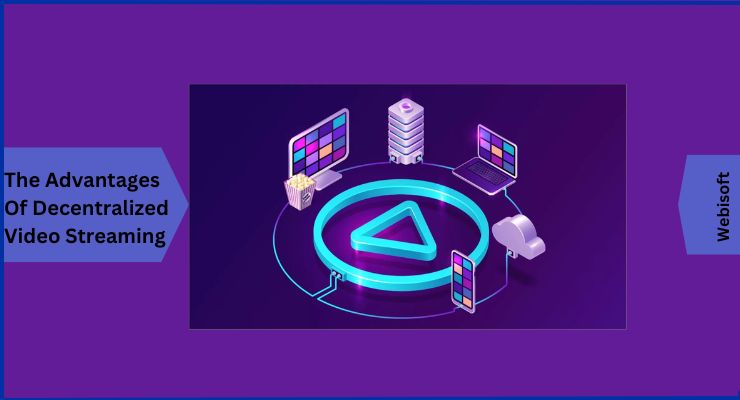
An honest assessment matters more than enthusiasm, because these systems fail in different places than centralized ones:
- Quality of service is probabilistic. A commercial CDN signs an SLA; a peer network offers whatever its current node population can deliver. Live, latency-sensitive streaming is the hardest case, and most production deployments today decentralize transcoding or storage while keeping a conventional edge for last-mile delivery.
- Moderation and compliance need deliberate design. "Nobody can take content down" is a feature for censorship resistance and a liability for illegal content. Serious platforms layer curation, allowlists, or governance on top of the neutral base protocol.
- Token volatility leaks into unit economics. If operators are paid in a volatile token, the real cost of transcoding a minute of video changes daily. Stablecoin settlement or fiat-pegged pricing mitigates this and should be a first-class design decision.
- Cold start is real. A delivery network with few nodes is worse than a CDN, and a marketplace with few viewers attracts few operators. Bootstrapping usually means subsidizing one side or building on an existing protocol's supply rather than launching your own.
- Wallet UX filters your audience. Requiring key management from mainstream viewers costs conversions. Custodial or embedded-wallet onboarding, with self-custody as an option, is the pragmatic default.
The Components of a Blockchain Streaming Platform
A production system assembles these pieces, and each is a build-or-integrate decision:
- Broadcaster ingest: Accepts the source stream, handles encryption and packaging before it enters the network.
- Transcoding marketplace: The orchestrator layer described above; integrating an existing protocol is usually far cheaper than bootstrapping your own operator pool.
- Delivery layer: Decentralized relay nodes, a conventional CDN, or a hybrid that fails over between them based on measured performance.
- Storage: Content-addressed distributed storage for the catalog, with pinning arrangements so unpopular content does not silently disappear when no peer keeps it.
- Consensus and settlement chain: The base blockchain (Proof-of-Stake in every serious current design) that hosts the staking, payment, and rights contracts.
- Smart contract suite: Payment splitting, subscription logic, staking, and slashing conditions, all of which need auditing before real money flows through them.
- Client applications: The player and creator dashboard, where all of the above must disappear behind an experience that feels like ordinary streaming.
How Webisoft Helps You Build One
Webisoft is a Montreal-based software engineering firm that builds blockchain products full-cycle: architecture, smart contract development and auditing, protocol integration, and the web and mobile applications on top. For streaming projects, that typically means an honest scoping exercise first: which stages of your pipeline actually benefit from decentralization, which existing protocols you should build on rather than reinvent, and where a hybrid architecture (decentralized transcoding and rights, conventional edge delivery) gets you to market faster with fewer failure modes. From there, we design the token and payment mechanics, write and test the contracts, and ship the viewer-facing product.
Final Thoughts
Blockchain video streaming is not a wholesale replacement for the platforms viewers already use. It is a rebalancing of the pipeline's economics: delivery costs shared with the audience, transcoding bought on an open market, payments settled directly between viewer and creator, and rights recorded where no single party can rewrite them. The engineering is real, the trade-offs are real, and the teams that succeed will be the ones that decentralize the stages where it pays and stay pragmatic everywhere else. For a broader look at where this fits in the production stack, see our guide to blockchain tools for media, or contact Webisoft to scope your platform.
No. Video files are far too large for block space. The video moves over an off-chain peer-to-peer network and distributed storage systems such as IPFS, while the blockchain acts as the control plane: it records operator stakes, settles micropayments for transcoding and delivery, and anchors ownership and licensing records.
Operators are paid per unit of useful work: transcoder nodes earn for each segment of video they convert into playback renditions, and relay or storage nodes earn for the bandwidth and disk they contribute. Most networks require operators to stake tokens as collateral, and provably faulty work forfeits part of that stake.
For some stages, yes. Decentralized transcoding and storage are used in production today. Last-mile delivery is harder because peer networks offer probabilistic rather than contractual quality of service, so most commercial builds use a hybrid: decentralized transcoding, payments, and rights, with a conventional CDN edge for latency-sensitive delivery.
The big four are variable quality of service from peer delivery, content moderation and compliance (which the base protocol does not solve for you), token volatility leaking into your unit economics, and the cold-start problem of attracting both node operators and viewers. Each has known mitigations, but they must be designed in from the start.
Yes. Webisoft is a Montreal-based firm that handles the full cycle: architecture and protocol selection, smart contract development and auditing, integration with existing networks such as decentralized transcoding marketplaces, and the viewer-facing web and mobile applications. Contact Webisoft to scope your project.