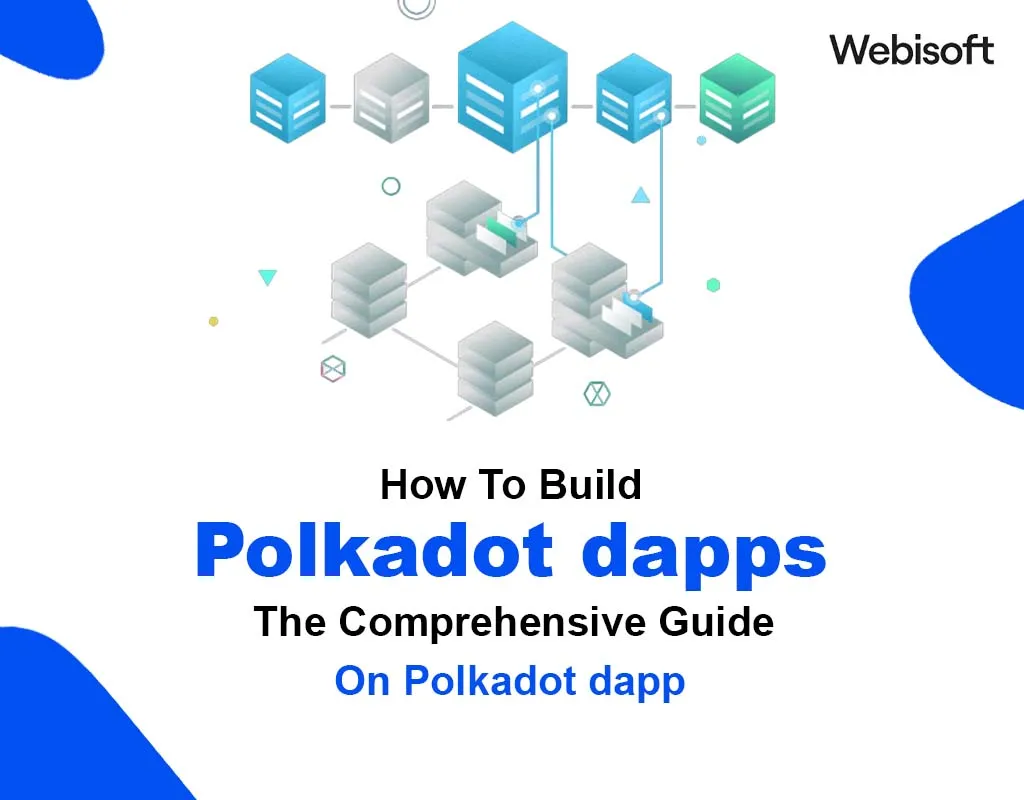
Polkadot is a multi-chain blockchain protocol that allows different blockchains (called parachains) to connect, validate transactions together, and exchange data via a central relay chain. Unlike isolated blockchains, Polkadot parachains can interoperate without individual security overhead.
The Polkadot Architecture
Polkadot's design centers on three components:
The Relay Chain
The relay chain provides consensus and security for the entire network. Validators stake DOT (Polkadot's native token) and produce blocks on the relay chain. Parachains do not produce their own security; instead, they inherit it from the relay chain. This pooled security model reduces the capital required to secure a new parachain.
Parachains
Parachains are application-specific blockchains that run in parallel. Each parachain can be optimized for its use case: one parachain might prioritize throughput, another low-latency, another specialized state transitions. Parachains submit blocks to the relay chain for validation.
Bridges
Bridges connect external blockchains (like Ethereum) to Polkadot, allowing cross-chain message passing and asset transfers. A bridge is a specialized parachain or off-chain infrastructure that monitors both networks and forwards messages between them.
How Parachains Achieve Interoperability
Polkadot uses the Cross-Chain Message (XCM) standard. When a parachain wants to send data to another, it includes a message in its block. The relay chain validators verify this message and route it to the destination parachain. The destination parachain's runtime processes the message, executing state changes if needed.
This is different from peer-to-peer messaging between separate blockchains, which requires bridges and manual coordination. On Polkadot, interoperability is built into the protocol layer.
Why Build a dApp on Polkadot
Interoperability Without Custom Bridges
A dApp on a Polkadot parachain can communicate with other parachains natively. If your app needs to access liquidity, identity, or storage services on another parachain, you can compose them directly instead of building custom bridge infrastructure.
Shared Security Model
New parachains inherit security from the relay chain's validator set. A startup doesn't need to bootstrap its own validator network from scratch. This reduces the operational burden and security risks of launching a new blockchain.
Heterogeneous Sharding
Parachains are not all identical. You can optimize one parachain for throughput (processing many simple transfers), another for storage (handling large state), and another for computation (running complex smart contracts). This is different from homogeneous sharding (like Ethereum 2.0), where all shards have the same design.
Forkless Upgrades
Parachains can upgrade their runtime code without a hard fork. Validators vote on governance changes, and once approved, the relay chain automatically applies the new code to all validators of that parachain. Users don't need to manually upgrade clients.
Parallel Transaction Processing
The relay chain processes blocks from multiple parachains in parallel. If Ethereum processes 15 transactions per second, and Polkadot has 50 parachains each processing 15 tps in parallel, the effective throughput is 50 times higher (ignoring relay chain overhead).
Technical Requirements for Building a dApp
Building on Polkadot requires understanding Substrate, a blockchain development framework written in Rust. Developers define their parachain's logic (state, transitions, messaging) in Rust. The Substrate framework handles consensus, networking, and relay chain communication.
Most dApps do not require a custom parachain. Instead, they deploy contracts on existing parachains (like Astar or Moonbeam) which provide smart contract execution. These parachains use Substrate + a contracts module (supporting Solidity or WebAssembly bytecode).
Parachain Slot and Lease
To run a parachain, you must secure a slot on the relay chain. Slots are leased through auctions where teams bid DOT to claim a slot for 96 weeks. Auction costs range from hundreds of thousands to tens of millions of dollars depending on parachain demand. Many teams crowdfund slot leases, incentivizing supporters with tokens.
Development Flow
Start on a testnet (Rococo or Westend) to test your parachain logic without staking real DOT. Deploy your chain, verify message passing and interoperability with other testnet parachains. Once stable, prepare for a mainnet slot auction. If you win, register your parachain and start producing blocks on the relay chain.
Smart Contract vs. Parachain Trade-offs
A smart contract on Moonbeam (a Polkadot smart-contract parachain) deploys faster and costs less than securing a dedicated parachain slot. However, you inherit the parachain's state machine design; you cannot optimize for your specific use case.
A custom parachain offers full flexibility in state representation, consensus rules, and messaging but requires significant engineering and capital (slot auction) to launch.
Most dApps start with smart contracts, then graduate to parachains once they reach sufficient scale and funding.
Governance and Upgrades
Polkadot's governance is on-chain. DOT holders vote on proposals, including parachain upgrades, relay chain changes, and treasury spending. Council members (elected by DOT holders) can fast-track non-controversial changes. This provides both decentralization and operational agility.
Takeaway
Polkadot's multi-chain architecture reduces the friction of cross-chain communication through built-in interoperability and shared security. For dApps requiring integration across multiple chains, Polkadot parachains offer efficiency advantages over custom bridge infrastructure. The trade-off is learning Substrate and competing for parachain slots. Most early-stage dApps begin with smart contracts on existing parachains, accessing interoperability benefits without the slot cost.
A Polkadot dApp is an application whose on-chain logic runs in the Polkadot ecosystem, either as a smart contract on a parachain that supports contracts, or as its own purpose-built parachain secured by the relay chain's validators. Both kinds can exchange assets and messages with other chains natively through XCM.
No. Most teams start by deploying smart contracts to an existing parachain, using Solidity on EVM-compatible chains such as Moonbeam or Astar, or Rust with ink!. A dedicated parachain makes sense when you need protocol-level control: custom fee logic, dedicated blockspace, or features a general-purpose virtual machine cannot express.
Paseo is the community-run testnet for application and parachain testing; it replaced the deprecated Rococo network. Westend is the protocol-level testnet, useful when you need to validate against upcoming relay chain changes before they reach production.
Agile Coretime. Instead of winning a long lease through an auction backed by a crowdloan, teams now purchase blockspace (coretime) in bulk or on demand. This lowers the cost of launching a chain and lets projects scale capacity with actual usage rather than committing years in advance.
Runtime code for parachains and ink! smart contracts are written in Rust. EVM-compatible parachains accept standard Solidity contracts with the usual Ethereum tooling. Frontends are ordinary web applications that talk to nodes through TypeScript client libraries such as polkadot-api or the polkadot.js API.