Patient engagement software gives patients a direct, secure channel into their own care: scheduling, messaging, medical records, reminders, and education in one place. For providers, it is the operational layer that reduces phone volume, cuts no-shows, and keeps treatment plans on track between visits.
This guide explains what a patient engagement platform actually does, the architecture and integrations behind it, the compliance obligations it carries, and how to evaluate a development partner if you decide to build one rather than license an off-the-shelf product.
What Is a Patient Engagement Platform?
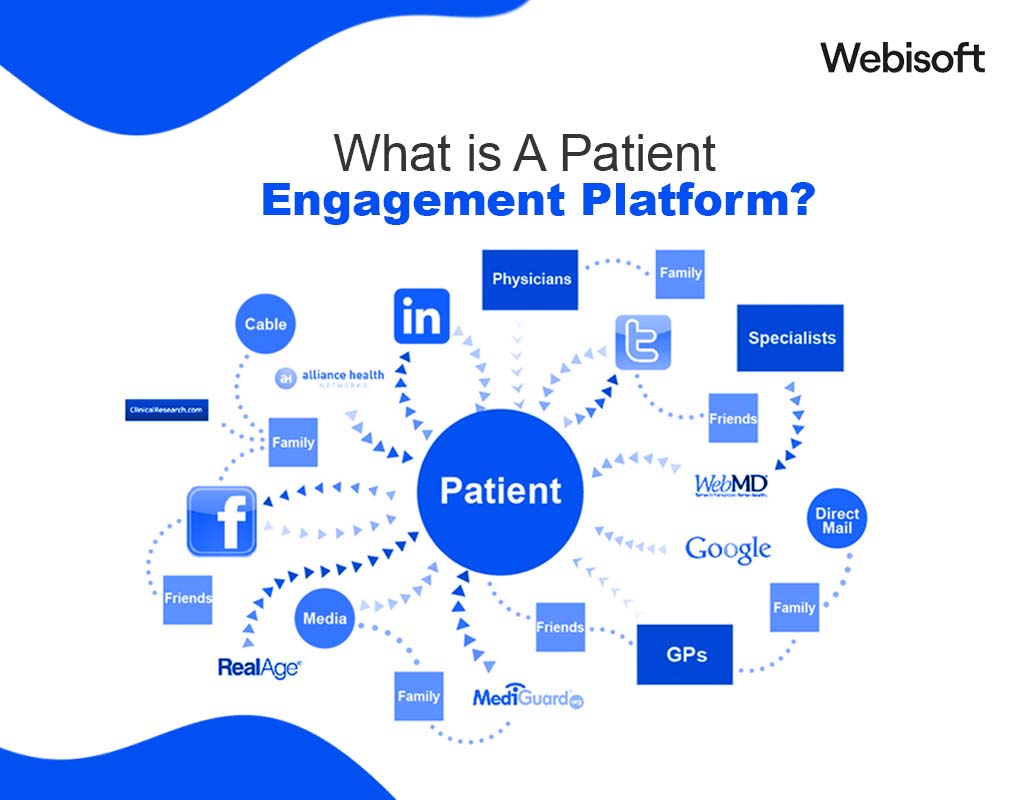
A patient engagement platform is a software layer that sits between a healthcare organization's clinical systems and its patients. On one side it connects to the electronic health record (EHR), the practice management system, and often billing and pharmacy systems. On the other side it exposes a web and mobile experience where patients book appointments, message their care team, complete intake forms, review results, and receive reminders.
How It Differs from a Patient Portal
The terms get used interchangeably, but they describe different things. A patient portal is typically a read-mostly window into the EHR: patients log in, view results, and maybe pay a bill. It is passive. The patient has to remember to visit it.
An engagement platform is proactive. It initiates contact: appointment reminders, medication prompts, pre-visit instructions, post-discharge check-ins, recall campaigns for overdue screenings. The portal waits for the patient; the engagement platform reaches out based on rules and clinical events. That direction of communication is what actually changes behavior, because most adherence failures are failures of memory and friction, not intent.
What It Connects To
A useful platform is only as good as its integrations. At minimum it needs:
- EHR read/write access for demographics, problem lists, results, and clinical notes, usually via FHIR APIs or HL7 v2 interfaces.
- Scheduling integration with the practice management system, so a patient-booked slot is a real slot, not a request that staff must re-key.
- A notification layer for SMS, email, and push, with deep links into the authenticated app.
- Identity and consent management, including proxy access for parents and caregivers.
Why Patient Engagement Platforms Matter
The case for these platforms is not abstract goodwill. Each core function maps to a specific operational or clinical failure mode that costs providers money and costs patients health.
1. Medication and Care-Plan Adherence
Most non-adherence is mundane: a patient forgets a dose, runs out of refills, or never understood the instructions. Automated reminders, refill prompts, and plain-language care instructions attack each of those failure points directly. When the platform also records whether the patient acknowledged the prompt, care teams can intervene with the patients who actually need it instead of calling everyone.
2. Fewer No-Shows
A missed appointment is unrecoverable clinic capacity: the clinician sits idle, the practice loses the revenue, and another patient who wanted that slot waits longer. Two features work together here. Automated reminders reduce simple forgetting, and self-service rescheduling converts would-be no-shows into filled slots, because a patient who can rebook in thirty seconds at 10 p.m. will do so, while one who must call during office hours often just does not show up.
3. Chronic Condition Management
Chronic care fails in the gaps between visits. An engagement platform closes those gaps by collecting patient-reported data such as blood pressure or glucose readings, symptom check-ins, and weight, then applying escalation rules so a nurse sees the outlier readings without reviewing every submission. The clinician's picture of the patient stops being a snapshot taken every three months.
4. Lower Administrative Load
Digital intake forms, self-service scheduling, and asynchronous messaging replace phone tag and paper. Staff time shifts from data entry and hold music to work that requires judgment. This is usually the fastest benefit to materialize and the easiest to measure: count inbound calls and manual form transcriptions before and after rollout.
Core Features of a Patient Engagement Platform
1. Self-Service Scheduling
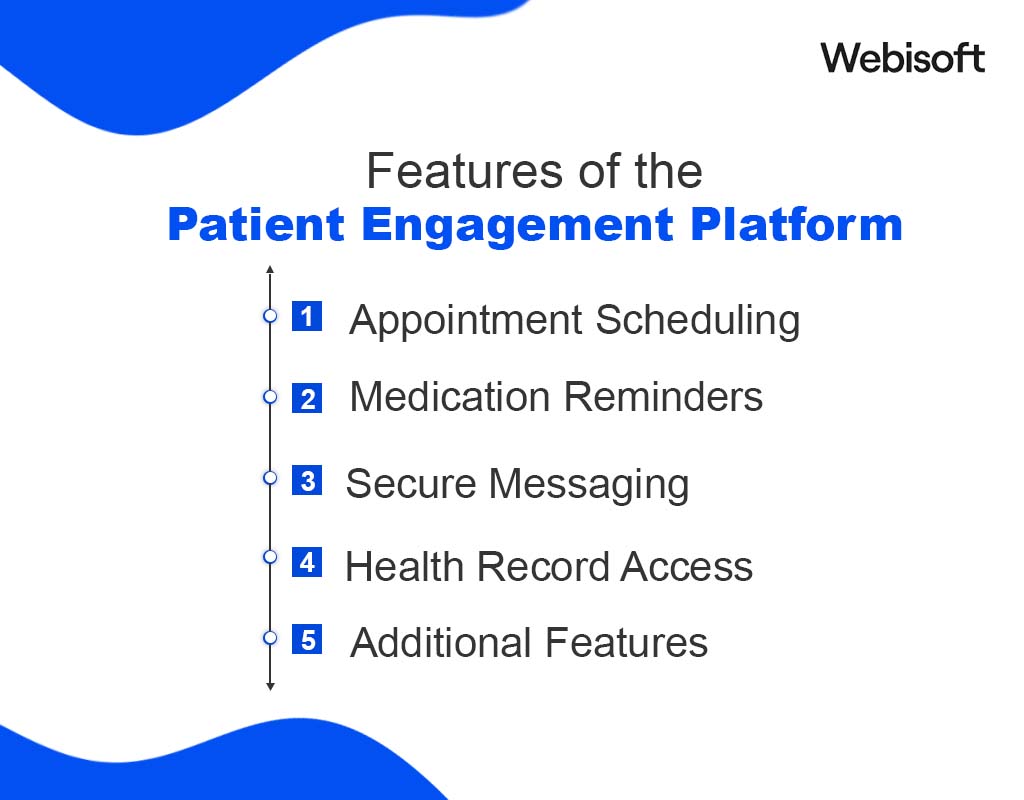
Patients book, reschedule, or cancel against the practice's real availability. The hard part is not the calendar UI; it is the scheduling rules engine underneath: visit types, provider-specific durations, location constraints, and insurance rules. A platform that gets these wrong creates double-bookings and staff distrust, after which the feature quietly gets turned off. Insist on a two-way sync with the practice management system, not a request queue.
2. Medication and Care Reminders
Reminders should be event-driven, tied to the actual prescription and care plan in the record, and acknowledgeable, so the system knows the difference between a delivered message and a confirmed action. Blanket reminder blasts train patients to ignore notifications.
3. Secure Messaging
Asynchronous messaging between patients and care teams, with triage routing so messages reach the right role rather than one overloaded inbox. Message content is protected health information and must stay inside the authenticated channel; the SMS or email notification should say only that a message is waiting, never what it contains.
4. Health Record Access
Patients can view results, visit summaries, immunizations, and clinical notes, and share them with other providers. In the United States this is no longer optional courtesy: under the 21st Century Cures Act, providers may not unreasonably restrict patients' electronic access to their own health information, a practice the rules define as information blocking. Design for immediate release of results with sensible clinician review workflows, not for withholding by default.
5. Telehealth, Intake, and Education
Video visits, digital intake and consent forms, and condition-specific education content round out the feature set. Education works best when it is triggered by clinical context, for example sending pre-operative instructions automatically when a surgery is scheduled, rather than living in a generic library nobody browses.
The Technology Behind a Patient Engagement Platform
1. EHR Integration: FHIR and HL7 v2
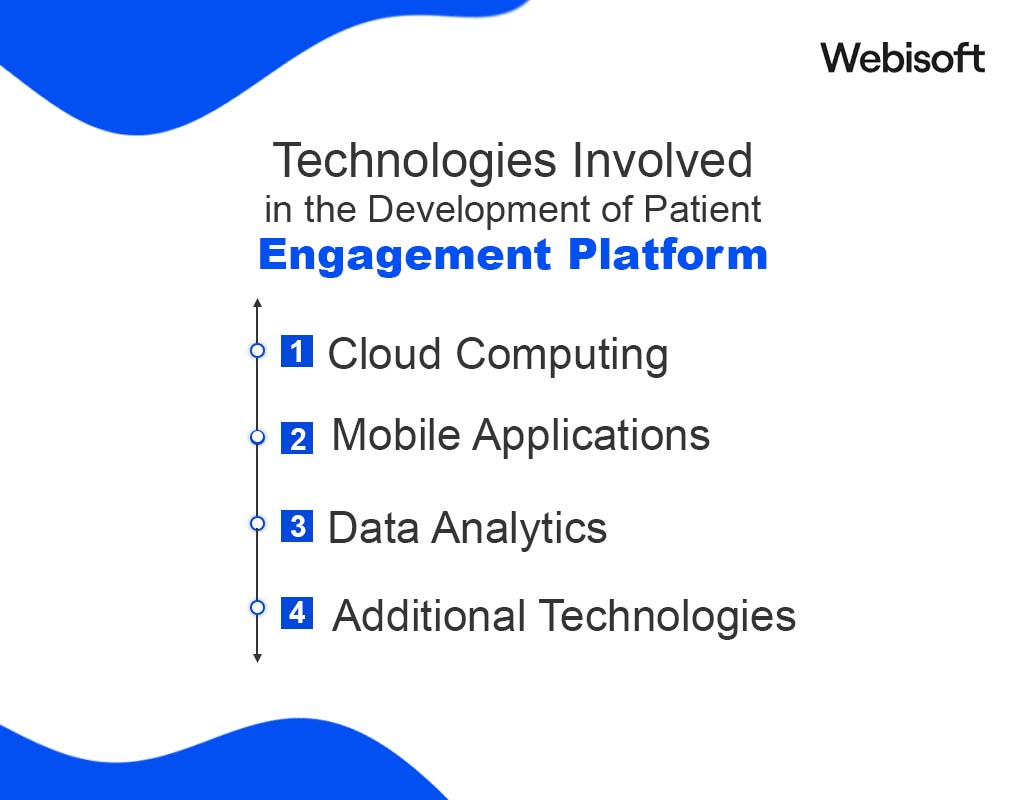
Integration is where these projects succeed or die. Two mechanisms dominate. HL7 v2 interfaces are event feeds (admissions, results, scheduling changes) that most hospital systems already emit; they are near real time but positional, brittle, and vary by site. FHIR is the modern REST-and-JSON standard with clean resource models and OAuth-based authorization through SMART on FHIR. The trade-off: FHIR is far easier to build against, but API coverage differs by EHR vendor and version, so real deployments usually combine a FHIR API for reads and patient-facing flows with v2 feeds for event-driven triggers. Budget integration work per site, not per project.
2. Cloud Infrastructure
Major cloud providers offer HIPAA-eligible services and will sign a business associate agreement, which makes cloud hosting the default choice for scalability and managed security primitives. The platform still owns its share of the work: encryption at rest and in transit, role-based access control, comprehensive audit logging of every PHI access, and environment isolation. A signed BAA does not make an architecture compliant; it makes compliance possible.
3. Mobile and Web Clients
Patients skew heavily toward mobile. Native apps enable push notifications and biometric login, which measurably improve both engagement and security, at the cost of maintaining two codebases and app-store release cycles. A responsive web app is cheaper and always current but depends on SMS or email to initiate contact. Many organizations start web-first and add native apps once messaging volume justifies push.
4. The Notification Layer
SMS and email are unencrypted channels, so payloads must be minimal: a prompt and a deep link into the authenticated app, never clinical content. Getting this wrong is one of the most common HIPAA findings in patient-facing software. The notification service also needs preference management and quiet hours, because notification fatigue is the fastest way to lose the engagement you built the platform for.
5. Analytics
Engagement funnels (invited, activated, active monthly), adherence dashboards, and no-show trends tell you whether the platform is working. If analytics data leaves the treatment and operations context, for example for research or product benchmarking, it must be de-identified first. Build that boundary into the data pipeline from day one rather than retrofitting it.
Build or Buy: The Real Trade-Off
Off-the-shelf engagement products exist, and for a standard ambulatory clinic they are often the right call. Custom builds earn their cost when workflows, integrations, or the patient population are non-standard.
| Dimension | Off-the-Shelf Product | Custom Build |
|---|---|---|
| Time to launch | Weeks to a few months | Several months minimum |
| Workflow fit | You adapt to the product | The product adapts to you |
| EHR integration | Strong for major EHRs, weak for niche systems | Built for your exact stack, including legacy systems |
| Cost shape | Recurring per-patient or per-provider licensing | Higher upfront investment, no per-seat licensing |
| Differentiation | Same experience your competitors offer | Owned product and roadmap |
| Compliance burden | Largely vendor-managed, verify their attestations | Yours, engineered in from the start |
A common middle path is composing licensed components, such as a telehealth SDK or a messaging service, inside a custom-built patient experience. You avoid rebuilding commodity infrastructure while owning the workflows that differentiate you.
Implementing a Patient Engagement Platform Successfully
1. Define Measurable Objectives
Pick a small set of KPIs before writing a line of code or signing a contract: portal activation rate, share of appointments self-scheduled, no-show rate, message response time, readmission or recall completion rates. Vague goals like improving engagement produce dashboards nobody acts on.
2. Involve Clinicians, Staff, and Patients Early
Clinicians will not adopt a tool that adds clicks to their day; involve them in workflow design so messages and patient-reported data land inside the systems they already use. Front-desk and administrative staff know where the scheduling rules actually break. And test with real patients, including older and less technical ones, because they are the population with the most chronic-care contact and often the least tolerance for confusing software.
3. Phase the Rollout
Launch with one clinic or one service line, one or two features, and a defined success threshold. A phased rollout surfaces integration defects and workflow gaps while the blast radius is small, and an early visible win builds the internal support you need for the wider deployment.
4. Measure and Iterate
Review the KPIs monthly, read the support tickets, and watch where patients drop out of flows. Most platforms underperform at first not because the concept is wrong but because one step, often registration and identity verification, is silently losing users. Fix the funnel before adding features.
Compliance Requirements
Patient engagement platforms process protected health information by definition, so compliance is an architecture input, not a review stage.
1. HIPAA
In the United States, the HIPAA Privacy Rule governs how PHI may be used and disclosed, and the Security Rule requires administrative, physical, and technical safeguards for electronic PHI. In practice that means encryption in transit and at rest, unique user authentication, automatic session timeouts, audit trails, and a breach response process. Every vendor in the chain that touches PHI, including your cloud, SMS, and analytics providers, needs a signed business associate agreement.
2. GDPR
If the platform serves EU residents, the GDPR applies, and health data is a special category with stricter processing conditions. The platform must support explicit consent, data portability, and erasure requests. Penalties for the most serious infringements can reach 20 million euros or 4 percent of worldwide annual turnover, whichever is higher, so this is not a formality.
3. Canadian Privacy Law
In Canada, PIPEDA governs commercial handling of personal information federally, and several provinces layer their own health-information statutes on top. Quebec's Law 25 adds consent, transparency, and breach-notification obligations with real teeth. Platforms serving Canadian patients should treat provincial health-privacy rules as the binding constraint, since they are typically stricter than the federal baseline.
4. Information Blocking
Under the 21st Century Cures Act, US providers and health IT developers may not engage in information blocking: practices that unreasonably interfere with patients' access to their electronic health information. For an engagement platform this cuts in the patient's favor. Build for open, timely record access rather than gatekeeping.
Choosing the Right Patient Engagement Software Development Company
1. Proven Healthcare Integration Experience
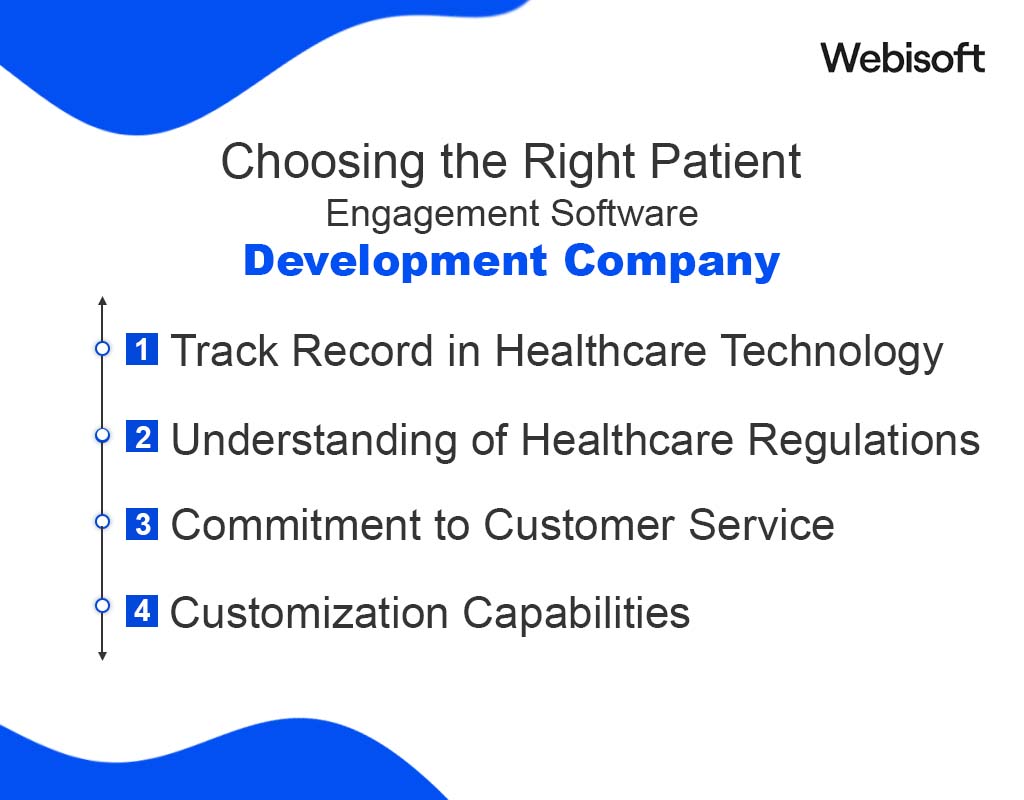
Ask specifically about FHIR and HL7 v2 work: which EHRs they have integrated with, how they handled vendor API gaps, and what their per-site integration process looks like. A portfolio of generic web apps does not transfer; the integration layer is where healthcare projects differ from everything else.
2. Compliance Fluency in Engineering, Not Just Sales
The team should be able to explain, unprompted, how they handle audit logging, PHI in notifications, environment isolation, and BAA chains with subprocessors. If compliance only comes up as a checklist item at the end, the architecture will need expensive rework.
3. Post-Launch Commitment
EHR vendors ship breaking API changes, regulations evolve, and mobile platforms deprecate features. Evaluate the maintenance model, response times, and how the partner handles upgrades before signing, not after the first outage.
4. Customization Capability
Every organization's scheduling rules, triage workflows, and consent requirements differ. The partner should design around your workflows and your patient population rather than reskinning a template, and should be candid about which requirements are better served by licensing an existing component.
How Webisoft Helps You
Webisoft is a Montreal-based software development company that takes products from architecture through launch and maintenance: backend systems, API integrations, web and mobile clients, and the security engineering that regulated data demands. If you are scoping a patient engagement platform, weighing build against buy, or need a partner to integrate patient-facing software with your existing systems, contact Webisoft to talk through the architecture before you commit to a direction.
Patient engagement software is a platform that connects patients to their healthcare providers through self-service scheduling, secure messaging, medical record access, reminders, and education. Unlike a passive patient portal, it proactively reaches out based on clinical events, such as sending medication prompts or post-discharge check-ins.
A patient portal is a read-mostly window into the EHR that patients must remember to visit. An engagement platform initiates contact: appointment reminders, care-plan prompts, recall campaigns, and symptom check-ins driven by rules and clinical events. The proactive direction of communication is what changes patient behavior.
In the United States, HIPAA's Privacy and Security Rules govern how protected health information is handled, and the 21st Century Cures Act prohibits information blocking. Platforms serving EU residents must comply with GDPR, where health data is a special category. In Canada, PIPEDA and provincial health-privacy laws, including Quebec's Law 25, apply.
Typically through a combination of FHIR REST APIs, which handle reads and patient-facing flows with OAuth-based authorization via SMART on FHIR, and HL7 v2 interfaces, which deliver near-real-time event feeds such as results and scheduling changes. Real deployments usually need both, and integration effort varies by EHR vendor and site.
Off-the-shelf products launch faster and suit standard clinic workflows, but carry recurring per-user licensing and force you to adapt to the vendor's model. Custom builds cost more upfront but fit non-standard workflows, legacy integrations, and differentiated patient experiences. A common middle path is licensing commodity components, such as telehealth, inside a custom-built experience.
