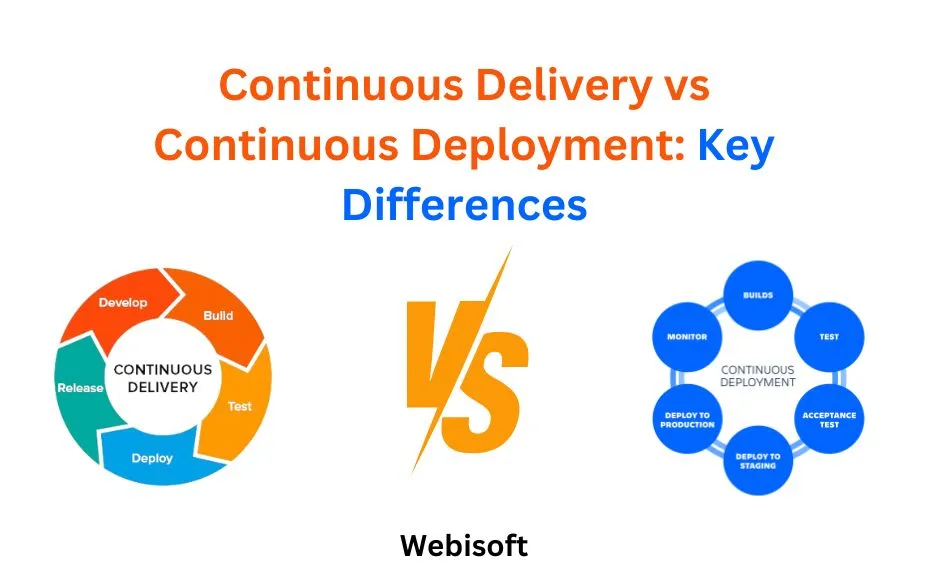
Continuous Integration (CI), Continuous Delivery (CD), and Continuous Deployment are three layers of automation in software release pipelines. They are not the same.
Continuous Integration
Developers commit code to a main branch (ideally daily). A CI server (Jenkins, GitHub Actions, GitLab CI) automatically builds the code, runs tests, and reports pass/fail. If tests fail, the build is marked broken.
Benefit: catch integration problems (merge conflicts, API mismatches, dependency breaks) within hours, not weeks. Without CI, 10 developers merging once per month means a 1-2 week debug cycle.
CI requires fast tests (< 10 minutes ideal, < 30 minutes acceptable). If the test suite takes 2 hours, developers stop waiting for results and commit without validation.
Continuous Delivery
After CI passes, an automated pipeline builds a release artifact (compiled binary, Docker image, or JAR), runs integration and smoke tests, and stages it to production. A human then reviews logs and decides whether to push the button and deploy.
The key: deployment is automatic, but the decision to deploy is manual and human-gated.
Benefit: deployments are fast (< 15 minutes) and repeatable, because they are not ad-hoc scripts. Rollback is single-click because the rollback path is tested in every pipeline run.
Trade-off: requires automation investment upfront. Writing the pipeline takes 1-2 months. Small teams sometimes skip this and deploy manually (slower, more error-prone, but fewer lines of pipeline code).
Continuous Deployment
The pipeline does not stop at the gate. After all automated tests pass, code is deployed to production automatically, with zero human approval. Rollback is either automatic (if monitoring detects errors) or manual after the fact.
Benefit: fastest feedback loop. A user sees a bug fix 5 minutes after a developer merges, not days later. High-velocity teams (social media, ad platforms) often use this to iterate on features in real time.
Risk: bad code can reach production before humans notice. If your test coverage is < 70%, or if your monitoring is weak, a continuous deployment pipeline will propagate bugs to users fast.
Organizations that deploy more than once per day typically use continuous deployment. Organizations that deploy once per week use continuous delivery with manual approval. Organizations that deploy monthly are not doing either.
Deployment Frequency and Reliability
Counter to intuition, continuous deployment does not increase outages. Research on software release practices (DORA metrics) shows that high-deployment-frequency organizations have fewer defects in production, not more, because they ship smaller changes and catch issues faster.
The critical ingredients: automated testing (unit + integration, > 70% coverage), automated rollback on error metrics, and monitoring that alerts within seconds of anomalies.
When to Use Which
- CI: mandatory for any team larger than 2 people. Non-negotiable baseline.
- Continuous Delivery: right for most B2B SaaS, internal tools, and backend services. Fast feedback without the risk of automatic production pushes.
- Continuous Deployment: appropriate for user-facing consumer products, A/B testing platforms, and high-traffic systems where iteration speed is paramount. Not appropriate for regulated software (healthcare, finance) or systems where a bad deployment has safety implications.
Implementation
Start with CI (integrate daily, run automated tests). Then add Continuous Delivery (build once, deploy to staging automatically, require manual approval for production). Finally, add Continuous Deployment (remove the manual gate) only after you have 80%+ test coverage and monitoring that catches errors within 60 seconds.
Do not start with continuous deployment. Teams that skip the delivery step and go straight to automatic production pushes often experience high outage rates until they mature their testing and monitoring practices.
Continuous delivery keeps every change in a deployable state but requires a manual approval to release to production. Continuous deployment removes that approval: every change that passes the automated pipeline deploys to production automatically. In short, delivery means every change can ship immediately; deployment means every change does.
No. Continuous deployment is a superset of continuous delivery. Automatic releases are only safe when the pipeline already proves that every change is deployable, which is exactly what continuous delivery establishes. Teams typically run continuous delivery first and remove the manual gate only after the test suite and observability have earned full trust.
Neither is universally better. Continuous deployment maximizes release speed and removes coordination bottlenecks, but it demands near-total trust in automated tests plus tooling like feature flags, canary rollouts, and automated rollback. Continuous delivery fits regulated industries, coordinated product launches, and teams still building pipeline maturity. Many strong engineering organizations keep the manual gate permanently.
Four things: an automated test suite the team genuinely trusts to mean production-safe, feature flags so incomplete work can ship dark, progressive rollout such as canary or blue-green deployments, and production observability with automated rollback when error rates or latency degrade after a deploy. Without these, removing the gate just automates the shipping of defects.
Not fully. App store review inserts a mandatory gate between your pipeline and end users, so true continuous deployment to production is not achievable for mobile clients. Mobile teams instead deploy continuously to internal test tracks and release store builds on a regular cadence, while their backend services can practice full continuous deployment.